Most people overpay taxes, not because they have to, but because they don’t understand the rules. This is where the confusion around tax avoidance vs tax evasion begins.
One is completely legal and widely used by high-income earners to keep more of their money, and the other is illegal, and can lead to severe penalties, audits, or even jail time.
The problem? The line between them isn’t always obvious.
Understanding the difference between tax avoidance and tax evasion is essential if you want to grow wealth, stay compliant with tax laws, and avoid costly mistakes.
In this guide, you’ll learn:
- The difference between tax avoidance and tax evasion
- Real examples of both
- Proven legal tax planning strategies
- How to reduce taxes legally without risk
Want to keep more of your income long-term? Read: Tax-Efficient Investing 101: How to Keep More of What You Earn
Tax Avoidance vs Tax Evasion (Quick Comparison)
| Feature | Tax Avoidance | Tax Evasion |
|---|---|---|
| Legality | Legal | Illegal |
| Method | Uses tax laws | Breaks tax laws |
| Risk Level | Safe | High (penalties, jail) |
| Purpose | Reduce taxes legally | Avoid paying taxes illegally |
| Examples | Retirement contributions | Hiding income |
What is Tax Avoidance?
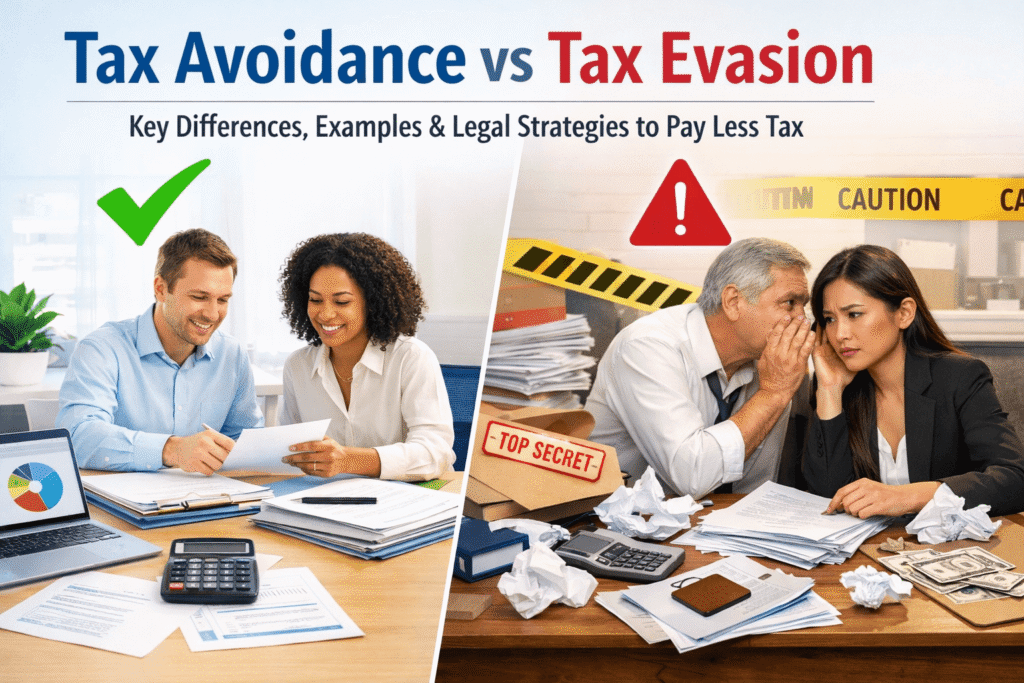
Tax avoidance refers to the use of legal tax planning strategies to minimize your tax liability. It involves understanding tax laws and using them to your advantage, without breaking any rules.
This is not only lega, it’s encouraged.
Governments design tax systems to reward behaviors like:
- Investing
- Saving
- Business growth
- Charitable giving
Using these incentives is part of staying compliant with tax laws while optimizing your finances.
Common Legal Strategies for Tax Avoidance
These are core methods used to reduce taxes legally and build long-term wealth.
- Retirement Contributions: Contributions to retirement accounts reduce taxable income
- Tax Credits: Education credits, child tax credits, and more
- Deductions: Mortgage interest, business expenses, and donations
- Tax-Advantaged Investments: Certain investments offer reduced or deferred taxes
Related: How to Stay Compliant with Tax Laws While Paying Less
Examples of Tax Avoidance
- Contributing to a retirement plan to lower taxable income
- Claiming legitimate business expenses
- Donating to charity and deducting it from taxable income
- Investing in tax-efficient funds
All of these are examples of staying compliant with tax laws while reducing your tax burden.
Benefits of Proper Tax Planning
Using legal tax planning strategies helps you:
- Keeps more money in your pocket
- Encourages long-term wealth building
- Reduces financial stress
- Improves financial clarity
Tax avoidance is not a loophole, it’s a system for smarter money management.
What is Tax Evasion?
Tax evasion is the illegal act of deliberately avoiding taxes by misrepresenting financial information.
Unlike tax avoidance, tax evasion involves breaking the law, and it is the dangerous side of tax avoidance vs tax evasion.
This could mean hiding income, inflating deductions, or failing to report financial activity.
Examples of Tax Evasion
- Not reporting income from freelance or side jobs
- Hiding money in undisclosed accounts
- Claiming false deductions or fake expenses
- Underreporting earnings
These actions violate tax laws and trigger serious consequences.
Real-Life Tax Evasion Scenarios
- A freelancer receives cash payments but doesn’t report them
- A business owner inflates expenses to reduce taxable profit
- An individual hides income in offshore accounts without disclosure
Consequences of Tax Evasion
Understanding tax avoidance vs tax evasion matters because the risks are severe:
- Heavy financial penalties
- Interest on unpaid taxes
- Criminal charges
- Possible imprisonment
- Long-term damage to reputation
Even small violations can escalate into serious legal issues.
Grey Areas: When Tax Avoidance Becomes Tax Evasion
This is where most people get into trouble, because tax avoidance can turn into tax evasion when you cross the line from legal strategy to illegal behavior.
Tax avoidance crosses into evasion when:
- Overstating deductions
- Misclassifying personal expenses as business expenses
- Failing to report partial income
- Using aggressive loopholes incorrectly
- Income is misreported
- Deductions are exaggerated
- Transactions are hidden
The key difference in tax avoidance vs tax evasion is intent and accuracy.
If you are intentionally misleading tax authorities, it becomes evasion.
Key Differences Between Tax Avoidance and Tax Evasion
| Aspect | Tax Avoidance | Tax Evasion |
|---|---|---|
| Legal Status | Legal | Illegal |
| Ethics | Ethical | Unethical |
| Risk | Low | Extremely high |
| Strategy | Uses legal tools | Uses deception |
| Outcome | Wealth growth | Legal consequences |
Understanding these differences helps you make smarter financial decisions.
How to Stay Compliant While Reducing Taxes
The goal is simple: pay less tax legally without taking unnecessary risks.
1) Implement Smart Legal Tax Planning Strategies
- Maximize retirement contributions
- Take advantage of tax credits and deductions
- Use tax-efficient investments
- Track all income and expenses carefully
- Plan taxes in advance (not last minute)
Related: How to Implement a Year-Round Tax Planning System
2) Work with Professionals
- Tax Advisors (CPA): Identify legal savings opportunities
- Financial Planners: Align tax strategies with wealth goals
- Legal Experts: Ensure full compliance
Professional guidance reduces risk and improves efficiency.
Why Tax Planning Matters for Wealth Building
Taxes are one of the biggest expenses you’ll ever face.
Reducing them legally can significantly accelerate your financial growth.
Mastering tax avoidance vs tax evasion allows you to:
- Invest more money
- Grow wealth faster
- Reduce unnecessary losses
- Build long-term financial stability
Common Mistakes People Make
- Ignoring tax planning entirely
- Confusing avoidance with evasion
- Waiting until tax season to plan
- Not keeping proper records
- Trying to “outsmart” the system illegally
Avoiding these ensures you stay aligned with legal tax planning strategies.
How to Build a Tax Strategy That Works
To succeed long-term, your tax strategy should be:
- Legal (fully compliant)
- Consistent (year-round planning)
- Strategic (aligned with goals)
Think of taxes as part of your financial system, not a once-a-year obligation.
FAQ: Tax Avoidance vs Tax Evasion
What is tax avoidance vs tax evasion?
Tax avoidance is legal and strategic; tax evasion is illegal and involves deception.
Can tax avoidance become tax evasion?
Yes, if you misreport or hide financial information.
Is tax avoidance ethical?
Yes. It uses legal systems designed to encourage certain behaviors.
How can I reduce taxes legally?
Use deductions, credits, and tax-efficient strategies consistently.
What is the difference between tax avoidance and tax evasion?
Tax avoidance is legal and involves using strategies to reduce taxes, while tax evasion is illegal and involves hiding or misreporting income.
Is tax avoidance ethical?
Yes. It uses legal methods encouraged by tax laws.
Can tax avoidance become tax evasion?
Yes, if you cross legal boundaries or misrepresent financial information.
Is tax avoidance used by the rich?
Yes. High-income earners use structured legal tax planning strategies to minimize taxes.
Can I reduce taxes without a financial advisor?
Yes, but working with a professional increases efficiency and reduces risk.
Final Thoughts
Understanding tax avoidance vs tax evasion is not just about avoiding trouble, it’s about building wealth intelligently.
Legal tax strategies allow you to:
- Keep more of your income
- Grow your investments faster
- Stay fully compliant with tax laws
The goal is not to avoid taxes illegally, it’s to reduce them strategically and ethically.
If you want a complete roadmap, start here: How to Achieve Financial Independence: 10 Proven Steps to Financial Freedom
Start planning early. Stay consistent. And make every dollar work smarter for you.