Most people treat taxes like a once-a-year problem. That’s the mistake. A year-round tax planning system turns taxes into a strategic advantage instead of a last-minute burden.
If your goal is financial freedom, then tax planning isn’t optional, it’s essential. Every dollar you save through legal tax planning is a dollar you can reinvest, compound, and use to build long-term wealth.
This is exactly why high earners and financially intelligent individuals don’t “file taxes”, they manage taxes continuously.
If you’re new to this concept, start with Legal Tax Avoidance Strategies: How to Reduce Taxes Without Breaking the Law to understand the foundation before building a system.
A proper tax optimization system ensures every decision you make, income timing, deductions, investments, and contributions, works together to reduce taxes legally while keeping you fully compliant.
Think of it like building a financial engine. Without a system, you leak money. With a system, you scale wealth.
Why a Year-Round Tax Planning System Matters
A year-round tax planning system allows you to optimize taxes proactively instead of reacting under pressure.
Key benefits include:
- Maximizing deductions and credits consistently
- Improving cash flow management
- Reducing financial stress
- Aligning taxes with long-term wealth goals
When taxes become part of your system, they stop being a burden and start becoming a tool for wealth building.
The 10 Step Plan to Implement a Year-Round Tax Planning System
Here are the 10 steps you need to follow to implement a year-round tax planning system.
Step 1: Organize Your Financial Records
Every effective year-round tax planning system starts with organization. Without accurate records, even the best tax-saving strategies fail.
Track:
- All income streams (salary, business, investments)
- Expenses (business, medical, education)
- Contributions (retirement, savings, investments)
Use tools like:
- Accounting software
- Cloud storage
- Simple spreadsheets
The goal is simple: clarity creates control, and control enables tax optimization.
Step 2: Monitor and Manage Income
Income timing is one of the most overlooked tax optimization strategies.
With a structured system, you can:
- Defer income to a lower-tax year
- Spread income across periods
- Control your tax bracket exposure
The key idea: it’s not just how much you earn, it’s when and how you earn it.
Step 3: Maximize Tax-Advantaged Contributions
Tax-advantaged accounts are the backbone of any year-round tax planning system.
These include:
- Retirement accounts
- Health savings accounts
- Education savings plans
They help you:
- Reduce taxable income
- Grow wealth tax-efficiently
- Build long-term financial security
This directly supports wealth-building principles explained in The Power of Compound Interest: How Money Grows Over Time.
Consistency here is what transforms small contributions into massive long-term gains.
Step 4: Track Expenses for Deductions
Deductions only work if they’re tracked properly.
A strong tax optimization system ensures:
- Expenses are categorized monthly
- Receipts are stored securely
- Deductions are maximized legally
Missing deductions = losing money.
Tracking properly = keeping more of what you earn.
Step 5: Integrate Investment Planning
Investments and taxes are deeply connected. Ignoring this reduces returns.
A smart year-round tax planning system includes:
- Tax-efficient investment choices
- Strategic asset allocation
- Capital gains management
To go deeper, link this with Tax-Efficient Investing 101: How to Keep More of What You Earn.
The goal is simple: invest in a way that minimizes tax drag and maximizes growth.
Step 6: Plan for Life Changes
Major life events affect your taxes more than most people realize.
Adjust your system when:
- Income changes
- Family size changes
- Career shifts occur
Your tax system should evolve with your life, not stay static.
Step 7: Work With Professionals
As your finances grow, so does complexity.
Professionals help you:
- Identify advanced tax-saving strategies
- Avoid costly mistakes
- Stay compliant with tax laws
This becomes critical when applying advanced concepts from Advanced Financial Freedom Strategies: Mastering the System That Works.
Think of this as leverage, not an expense.
Step 8: Automate Your System
Automation ensures consistency.
Your year-round tax planning system should include:
- Automatic contributions
- Automated expense tracking
- Digital record storage
Automation removes human error and ensures execution.
Step 9: Stay Updated on Tax Laws
Tax laws change constantly.
To maintain an effective tax optimization system:
- Monitor updates
- Adjust strategies
- Review compliance regularly
Staying informed protects your system and keeps it effective.
Step 10: Conduct a Year-End Review
Your final step is optimization.
Before the year ends:
- Review deductions
- Adjust contributions
- Optimize investments
- Rebalance strategies
This is where everything comes together.
FAQs
What is a year-round tax planning system?
A system that manages taxes continuously throughout the year instead of only during filing season.
Why is year-round tax planning important?
It helps reduce taxes legally, improve cash flow, and support long-term wealth building.
Can this system help with financial freedom?
Yes. Every dollar saved through legal tax planning can be reinvested and compounded.
Do I need a professional?
Not always, but professionals improve results and reduce risk, especially for complex finances.
Final Thoughts
A year-round tax planning system transforms taxes from a liability into a wealth-building tool. You don’t just reduce taxes, you build a financial system that scales.
When you:
- Stay organized
- Plan proactively
- Apply legal tax strategies
- Think long-term
Because in the end, financial success isn’t just about earning more. It’s about keeping more, optimizing more, and compounding more over time.
To fully master it, Read:
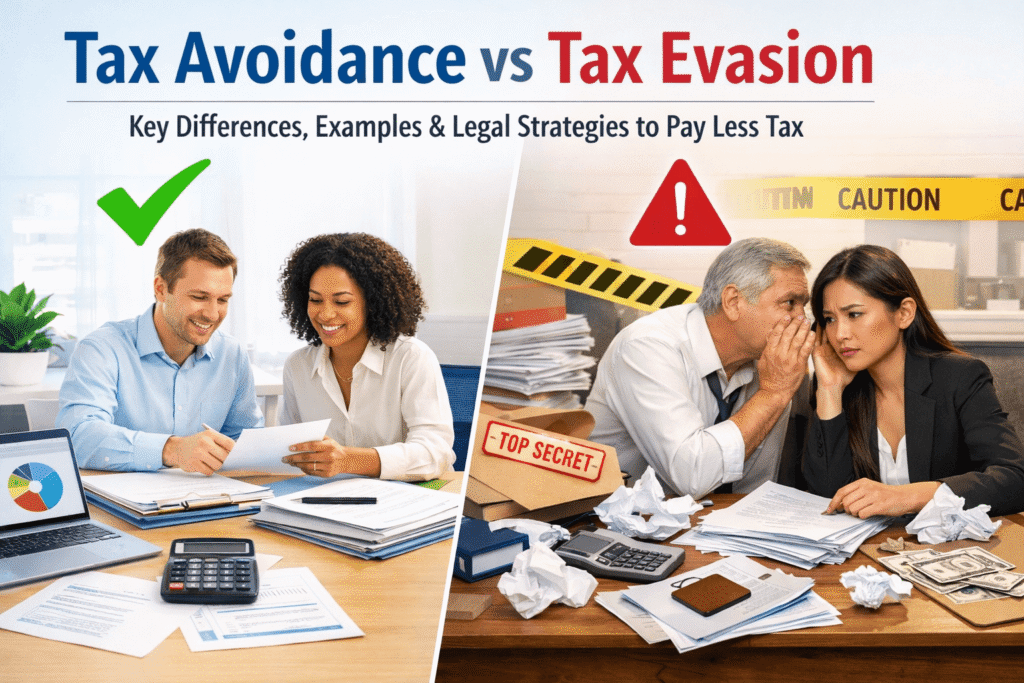
- Tax Avoidance vs Tax Evasion: Key Differences, Examples & Legal Strategies to Pay Less Tax
- Top 10 Legal Tax Avoidance Strategies: Maximize Your Wealth Without Breaking the Law
- Common Tax Mistakes That Turn Avoidance into Evasion
- Is Tax Avoidance Ethical? How Far Can Smart Tax Planning Go Without Becoming Evasion
These articles build the knowledge, this system ensures execution.