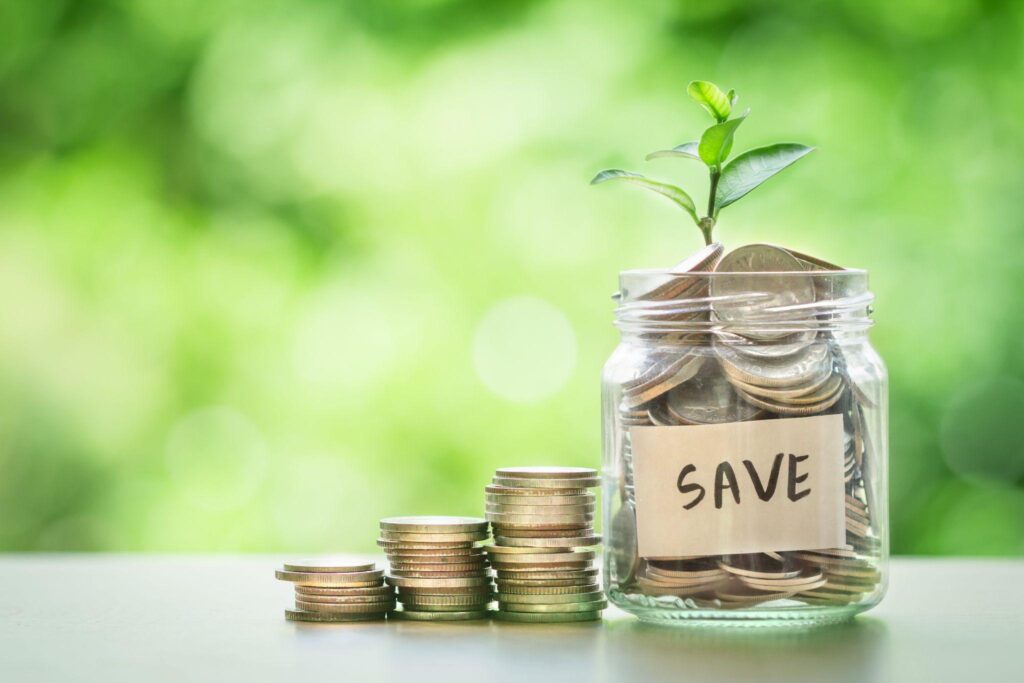
Most people believe investing is something you do later, when you have more money, more stability, or a bigger income.
So they wait. They tell themselves they’ll start when they’re earning more. When their savings feel “serious.” When life is less demanding.
But while they’re waiting, something important is quietly slipping away, time. And in investing, time is far more powerful than money.
The truth is simple, but often overlooked, big investments with small savings are not only possible, they are one of the most reliable ways long-term wealth is built.
Not through sudden breakthroughs, but through small, consistent actions repeated over years.
If you’re trying to build a solid financial foundation, this approach connects closely with Financial Freedom for Beginners: Where to Start, where the focus is on building momentum early.
Best Way to Invest Small Savings
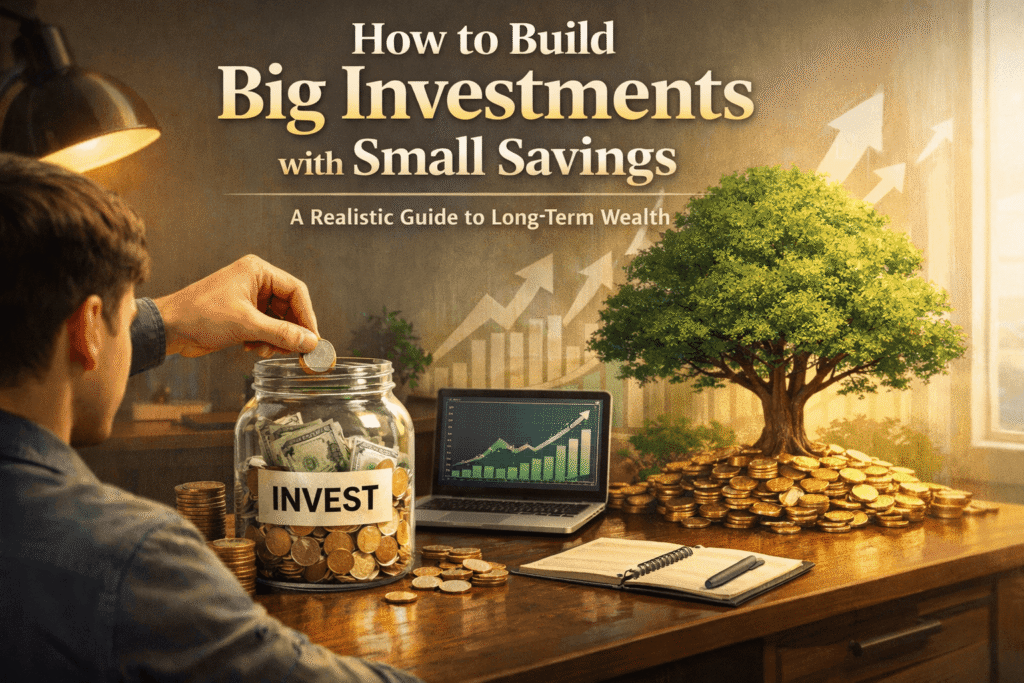
The best way to invest small savings is to build a structured system that works consistently, regardless of market conditions or motivation.
At this stage, the goal isn’t to chase high returns, it’s to create a reliable foundation using smart investment strategies for beginners. This means focusing on investments that offer broad diversification and steady growth over time rather than unpredictable, high-risk opportunities.
When your savings are limited, protecting your progress matters just as much as growing it.
What makes this approach powerful is structure. Instead of investing randomly, you create a repeatable process. Contributions happen regularly, investments are selected with intention, and decisions are guided by long-term thinking rather than short-term noise.
Automation strengthens this system even further. By removing the need to constantly decide when to invest, you eliminate hesitation and inconsistency. Your money starts moving with discipline, even when your attention is elsewhere.
This is the same principle used in How to Build a Financial Freedom System That Actually Works, consistency beats intensity every time.
Ultimately, the best way to invest small savings is not about intensity, it’s about building a system that quietly compounds over time.
How to Invest With Little Money
Learning how to invest with little money begins with removing the belief that you need a lot to get started.
Most people hesitate because their starting point feels too small to matter. But investing isn’t about the size of your first contribution—it’s about starting the process.
Even the smallest investment shifts you from waiting to participating, and that shift changes everything.
When you begin with limited funds, your focus naturally shifts toward building habits instead of chasing results. You learn how to stay consistent, how to ignore short-term distractions, and how to keep going even when growth feels slow.
This mindset is also essential if you want to eventually apply more advanced strategies like those in Tax-Efficient Investing 101: How to Keep More of What You Earn.
There’s also a psychological advantage here. Starting small reduces pressure. You’re not overwhelmed by risk, and you’re free to learn through experience.
Over time, this builds confidence, confidence that allows you to invest more effectively as your income grows.
Understanding how to invest with little money is really about understanding that progress starts small but doesn’t stay small. With time, consistency, and patience, those early contributions begin to build momentum.
Why Waiting Costs More Than Starting Small
At first, waiting feels responsible. It feels like you’re preparing.
But in reality, you’re delaying the most important part of investing, the compounding process.
Every year you wait is a year your money isn’t growing. A year where returns don’t generate more returns. A year where momentum isn’t building.
And this is where the real difference shows.
Someone who starts small today often ends up far ahead of someone who starts bigger later, not because they invested more, but because they gave their money more time to work.
How Small Savings Turn Into Big Investments
On the surface, saving small amounts can feel insignificant.
But investing changes the nature of money.
Once invested, your savings begin to grow. And then that growth begins to grow on its own.
That’s compounding, and it’s the foundation of long-term wealth building with small savings.
At first, the progress is quiet. Almost invisible. But over time, it begins to accelerate.
This is how big investments with small savings are actually built, not quickly, but steadily.
Why Starting Small Gives You an Advantage
There’s a hidden benefit to starting small that many people overlook.
When the stakes are lower, you gain something incredibly valuable, experience.
You learn how markets behave. You see how prices move. You experience both gains and losses without exposing yourself to major risk.
More importantly, you learn how to manage your emotions.
Because investing isn’t just about numbers. It’s about behavior.
This is why many beginners who follow structured systems like Budgeting Methods for Beginners tend to perform better over time, they build discipline early.
The Quiet Role of Consistency
Many people search for the perfect strategy.
But long-term investors rely on something much simpler, consistency.
Investing regularly creates a rhythm. Each contribution builds on the last. Each month adds another layer to your portfolio.
And over time, that rhythm turns into momentum.
This is the foundation of building wealth with small savings, not perfection, but repetition.
Making Investing Feel Effortless
One of the simplest ways to stay consistent is to remove decision-making from the process.
When investing becomes something you have to think about every month, it’s easy to delay or skip. Life gets busy. Priorities shift.
But when it becomes automatic, everything changes.
Your investments happen whether you feel motivated or not. Progress continues quietly in the background.
And over time, what once felt like effort begins to feel like habit.
The Flexibility of Small Investors
There’s another advantage to starting with small savings, flexibility.
When you’re not managing large sums, you have the freedom to learn, adjust, and evolve without pressure.
You can explore different approaches. You can make small mistakes and recover from them. You can refine your strategy as you grow.
This flexibility allows you to become a better investor over time.
And in the long run, better decisions matter more than bigger starting amounts.
Where Most People Go Wrong
The biggest mistakes aren’t complicated.
They come from hesitation and impatience.
Some people wait too long, thinking they need more money before they begin. Others start but expect fast results and lose interest when progress feels slow.
Some chase quick profits, taking unnecessary risks. Others stop investing during market declines, missing the very opportunities that could benefit them most.
But all of these mistakes come from the same place, short-term thinking.
These behaviours prevent people from benefiting from long-term wealth building with small savings.
Wealth, on the other hand, is built through long-term consistency.
The Bigger Picture
When you step back, investing becomes much simpler than it first appears.
You don’t need perfect timing.
You don’t need large amounts of money.
You don’t need complex strategies.
What you need is a starting point.
A small, consistent action repeated over time.
Because when small savings are invested regularly, they begin to grow. And when that growth is given enough time, it begins to compound.
And when compounding is allowed to do its work, something remarkable happens.
Small beginnings turn into meaningful progress.
Meaningful progress turns into real wealth.
Final Thoughts
Building wealth isn’t about making one big move.
It’s about making small, intentional moves, again and again.
That’s how big investments with small savings are actually created.
Not through luck. Not through timing. But through patience, consistency, and time.
- So start with what you have.
- Stay consistent.
- Let time do the heavy lifting.
Because one day, you’ll look back and realize that what once felt small… quietly became something significant.