What to do after you start investing is the question most beginner guides skip, they stop at the first investment and leave you to figure out the rest. But the first investment is the easy part. What comes next determines whether you actually build wealth or quietly drift away from consistent investing behavior.
The mistakes beginners make after starting aren’t dramatic. They check their portfolio daily and react to normal market fluctuations. They switch strategies when progress feels slow. They stop adding contributions while waiting for the right moment. Individually, each of these is small. Combined, they halt growth entirely.
These 8 steps cover what consistently successful investors do after beginning: stay consistent with contributions, avoid over-monitoring, understand what you own, stay patient through market volatility, keep your strategy simple, track progress without obsessing over it, keep learning gradually, and adjust only when your circumstances genuinely change, not when the market makes you anxious.
Why Most Beginners Get Stuck After Starting
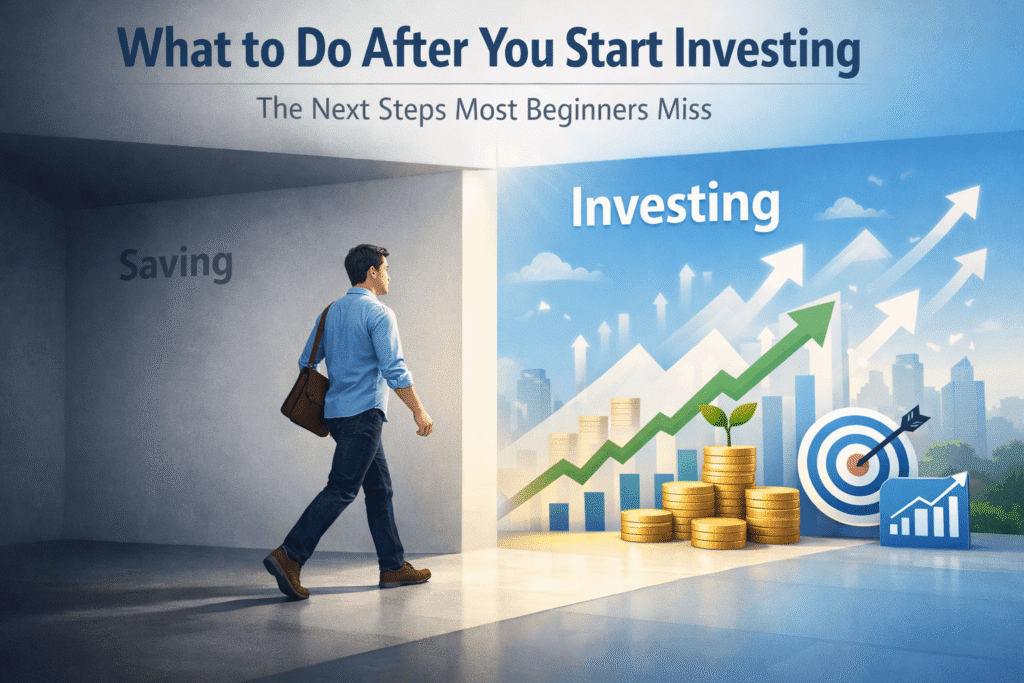
Many beginners struggle because they expect instant clarity after their first investment. But what actually happens after you start investing is often uncertainty, markets fluctuate, progress isn’t visible immediately, and without a clear plan for what comes next, most people either overthink every move or do nothing at all.
Common beginner investing mistakes after starting include not having a follow-up plan, checking investments too often, and overthinking every market movement. This leads to inconsistency, which is the single biggest obstacle to long-term investment growth.
What to Do After You Start Investing: 8 Steps
Knowing what to do after your first investment comes down to a few clear, consistent actions. You don’t need to constantly adjust or chase better opportunities. You need to show up regularly and resist the urge to react emotionally to short-term noise.
1. Focus on Consistency, Not Perfection
One of the most important next steps after investing is building a consistent habit. Many beginners think they need to get every decision right, but that mindset creates pressure and leads to inaction. Investing isn’t about perfect moves, it’s about repeated actions over time.
What matters more than the amount you invest is showing up regularly, weekly or monthly, and sticking to it. A simple, repeatable habit will always outperform occasional perfect decisions. For the mindset behind this, read The Psychology of Staying Consistent With Investing.
2. Keep Adding to Your Investments
After your first investment, don’t stop. A key part of what to do after you start investing is continuing to add money over time. Your first investment starts the process, your regular contributions keep it moving.
Even small amounts added consistently compound over time. That’s how real investment growth happens: not from one large deposit, but from smaller amounts added month after month.
3. Avoid Checking Your Investments Too Often
If you’re figuring out how to manage investments as a beginner, this is critical. Checking your portfolio daily leads to emotional reactions. When prices go up, you feel excited. When they drop, you feel anxious. That emotional cycle drives poor decisions.
Markets move up and down in the short term, that’s normal and expected. What matters is long-term growth. The less you react to short-term changes, the more stable and profitable your investing behavior becomes over time.
4. Understand What You Invested In
Many beginners invest without fully understanding what they bought. You don’t need deep expertise, but you should understand the basics: what type of investment it is, how it grows, and why you chose it. This knowledge prevents panic when the market moves and builds the confidence to stay consistent.
If you want to strengthen your understanding of the most common options, Index Funds vs ETFs for Beginners gives you a clear, practical comparison.
5. Don’t Rush to Change Your Strategy
One of the most common beginner investing mistakes is switching strategies too quickly. After starting, it’s tempting to chase better returns, follow trends, or copy what others are doing. But constantly changing your approach does more harm than good.
Investing rewards patience. A simple strategy followed consistently over time is far more effective than jumping between approaches every few months.
6. Track Progress (Without Overcomplicating It)
You don’t need complex tools to track your investments. A simple monthly check-in is enough to see your progress, stay aware of your contributions, and make small adjustments if genuinely needed.
This keeps you informed without turning into someone who obsesses over daily fluctuations.
7. Keep Learning Gradually
Investing is a long-term journey, not a one-time decision. You don’t need to learn everything at once, trying to do that usually leads to overwhelm.
Instead, pick one concept, understand it, and apply it. This approach builds genuine knowledge without slowing your actual progress.
8. Know When to Adjust
Not every change is a bad decision. As your life evolves, your investments may need to change too, due to income changes, new financial goals, or major life events.
But there’s a clear difference between a strategic, reasoned adjustment and an emotional reaction to short-term market movement. Adjust when circumstances genuinely require it, not when fear or impatience makes it feel urgent.
Simple System to Follow After You Start
If you’re still unsure what to do after your first investment, follow this straightforward system:
- Invest on a regular schedule
- Add to your portfolio consistently
- Review occasionally, not daily
- Stay consistent through market ups and downs
That’s the entire system. Simple investment habits compound into real results over time. Complexity doesn’t, it just creates more opportunities to make emotional decisions.
FAQs
What should I do after my first investment?
Keep investing regularly and stick to a simple plan.
What happens after you start investing?
You focus on consistency, patience, and long-term growth.
How often should I add to my investments?
Invest regularly, monthly or whenever you earn.
How do I manage investments as a beginner?
Keep it simple, avoid frequent checking, and review occasionally.
Should I change my investment strategy often?
No. Stay consistent and avoid frequent changes.
How do I know if I’m on the right track?
If you’re consistent and thinking long term, you’re doing well.
Final Thoughts
Understanding what to do after you start investing is what separates beginners who simply start from those who actually build long-term wealth. Your first investment is a great step, but what you do next is what really matters.
The next steps after investing are simple but not always easy. They require patience when results feel slow, consistency when motivation fades, and discipline when you’re tempted to change your strategy. This is exactly where most people fall off, not because investing is complicated, but because they don’t stick with it long enough for the compounding to become visible.
Stay consistent, keep things simple, and focus on long-term progress. That’s already more than most beginners manage to do.
To see how all of this fits into your bigger financial journey, read The Complete Beginner Money Roadmap: From First Salary to First Investment, it gives the full picture of where investing fits in building lasting wealth.