
If you’re trying to figure out how to go from saving to investing, you’re not alone. Saving feels safe, but investing can feel uncertain and overwhelming.
That’s where most beginners get stuck.
They’ve built the habit of saving, but hesitate when it’s time to grow their money. With so many options and opinions, it’s easy to delay starting.
The truth is, the transition from saving to investing doesn’t have to be complicated. You don’t need to know everything, you just need a simple way to begin.
If you want to see how this fits into your bigger journey, read The Complete Beginner Money Roadmap: From First Salary to First Investment.
Once you take that first step, everything starts to feel easier.
How to Go From Saving to Investing Without Feeling Overwhelmed
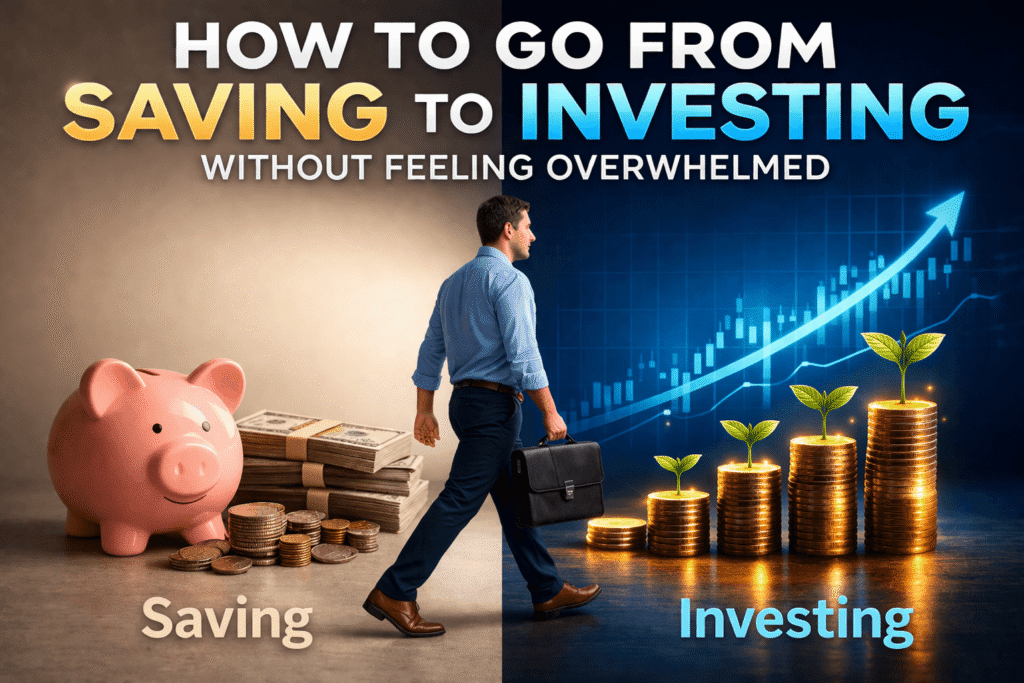
Learning how to go from saving to investing without feeling overwhelmed starts with simplifying the process.
Most beginners get stuck because they think they need to understand everything before they begin. In reality, the transition from saving to investing is about taking small, manageable steps rather than making big, complex decisions.
You don’t need perfect knowledge or perfect timing. You just need a clear starting point.
Begin by moving a small portion of your savings into a simple investment like an index fund or ETF. This reduces pressure and helps you gain confidence without risking too much at once.
The goal is not to make the “perfect” investment, it’s to get comfortable with the process. As you take action, the fear and confusion start to fade, making it easier to stay consistent over time.
Why Moving From Saving to Investing Feels Difficult
The transition from saving to investing is not just financial, it’s psychological.
Saving feels secure. You know your money is there. Investing, on the other hand, introduces uncertainty.
This creates hesitation.
Many beginners struggle because of:
- Fear of losing money
- Lack of clear knowledge
- Overthinking every decision
This is where your beginner investing mindset matters. The goal is not to eliminate fear completely, but to take small steps despite it.
Saving vs Investing: What’s the Real Difference
Understanding saving vs investing for beginners is key to making better financial decisions.
Saving is about protecting your money. It keeps your cash safe and accessible, usually in a bank account, but the growth is minimal over time.
Investing, on the other hand, is about growing your money. Instead of letting it sit, you put it into assets like stocks, ETFs, or index funds where it has the potential to increase in value over the long term.
The difference is simple:
- Saving gives you security.
- Investing gives you growth.
Both play an important role. Saving helps you handle emergencies and short-term needs, while investing helps you build wealth over time.
If you rely only on saving, your money may lose value due to inflation. That’s why transitioning into investing is essential for long-term financial progress.
If you’re unsure what to invest in, read Index Funds vs ETFs for Beginners: Which One Should You Start With? to choose a simple option that fits your goals.
When You’re Actually Ready to Start Investing
Many people delay investing because they think they’re “not ready.”
In reality, you don’t need perfect conditions.
You’re generally ready when:
- You have a basic emergency fund
- You have some consistent income
- You’re willing to start small
Waiting too long can slow your progress. Starting small is better than waiting for the perfect time.
How to Start Without Feeling Overwhelmed
If you want to start investing without feeling overwhelmed, the key is to keep things simple.
Many beginners get stuck because they believe they need to understand everything before they begin. In reality, that mindset creates pressure and delays action. Investing is something you learn by doing, not by waiting until you feel fully ready.
Start small. You don’t need a large amount of money to begin, what matters is building the habit.
Focus on one simple investment option, instead of trying to explore too many choices at once. This reduces confusion and makes the process easier to follow.
Most importantly, adopt a long-term mindset. You’re not trying to get quick results, you’re building something gradually over time.
This simple approach removes pressure, reduces overthinking, and helps you build confidence step by step.
If you want a simple platform to get started, read Best Investment Apps for Beginners: Simple Platforms That Actually Work to choose an app that makes investing easier.
The Easiest First Step Into Investing
One of the easiest ways to start investing is by choosing simple, diversified options like index funds or ETFs.
If you’re wondering how to invest after saving money, this is often the best place to begin because it removes a lot of the guesswork. Instead of trying to pick individual stocks, you’re spreading your money across multiple investments at once.
This approach requires less decision-making and helps you avoid overcomplicating your strategy early on.
More importantly, it allows you to focus on consistency rather than perfection, so you can build confidence as you go.
How to Mentally Shift From Saver to Investor
Moving from saving to investing requires a mindset shift.
As a saver, your focus is on protecting your money. But as an investor, your focus shifts to growing it over time.
Instead of thinking, “How do I avoid losing money?”
You start thinking, “How can I grow this money long term?”
This shift doesn’t happen instantly, it comes through action.
Start small. The more you invest, even in small amounts, the more comfortable and confident you become. Over time, what once felt risky starts to feel normal, and investing becomes part of your routine.
Common Mistakes to Avoid
During the transition from saving to investing, beginners often:
- Wait too long to start
- Try to learn everything before taking action
- Choose overly complex strategies
- Let fear stop them from investing
Avoiding these mistakes makes the process much smoother.
If you’re ready to take the next step, read Beginner Mistakes When Investing Small Amounts (And How to Avoid Them) to avoid costly errors as you start.
Simple Action Plan
If you’re unsure what to do next, keep it simple:
- Save consistently
- Choose a simple investment
- Start small
- Stay consistent
This is the easiest way to go from saving to investing without overthinking the process.
FAQs
How do I go from saving to investing?
Start small, choose simple investments, and focus on consistency rather than perfection.
Why does investing feel overwhelming?
Because of uncertainty, too much information, and fear of losing money.
When should I start investing?
Once you have basic savings and are ready to start small.
Final Thoughts
Learning how to go from saving to investing is one of the most important steps in your financial journey.
The transition from saving to investing may feel uncomfortable at first, but that’s completely normal. You’re moving from something familiar into something new, and that always comes with some level of uncertainty.
The key is to focus on progress, not perfection. You don’t need to get everything right, you just need to start.
As you take action and invest consistently, your confidence grows, and the process becomes easier over time. What once felt overwhelming starts to feel manageable.
If you’re ready to take the next step, read How to Build Your First $1000 Investment Portfolio in 6 Steps to turn this into a simple, actionable plan.
Because in the end, progress doesn’t come from staying in your comfort zone, it comes from taking that first step forward.