
Have you ever told yourself you’ll start investing “when the time is right”?
Maybe after you earn more. Maybe after you learn more. Maybe when things feel less uncertain.
That hesitation usually traces back to the biggest myth about starting to invest, a belief that quietly delays action for years without you even realizing it.
If you’ve already worked on your finances through Budgeting Methods for Beginners: Simple Strategies to Take Control of Your Money, then you’ve built the foundation. Investing is simply the next step. Yet this one myth keeps many people stuck at the starting line.
The truth is simple. You don’t need perfect timing. You don’t need perfect knowledge. You just need to begin.
The Biggest Myth About Starting to Invest
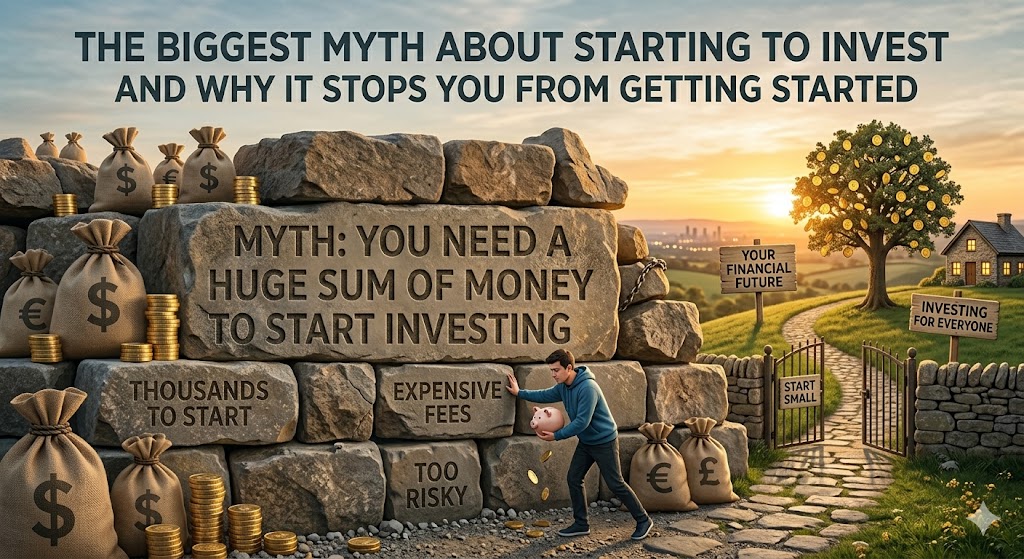
Let’s name it clearly.
The biggest myth about starting to invest is that you need a lot of money, experience, or expertise before you can begin.
It sounds responsible. It even feels logical. But it’s one of the biggest reasons people delay building wealth.
This belief convinces you to wait instead of act. And waiting is where most people lose the most.
Why This Myth Feels So Convincing
Think about how investing is usually presented.
Charts moving fast. Experts speaking in complex terms. Stories of people making huge gains.
It creates the impression that investing is complicated and reserved for people who already “have money.”
So beginners start to believe:
- They need thousands saved first
- They must understand everything before starting
- They have to avoid mistakes completely
None of this is true.
Modern investing has made it easier than ever to start investing with little money, and consistent investing matters far more than starting big.
The Truth Most Beginners Miss
Once you strip away the noise, investing becomes much simpler.
- You can start with small investments
- You can build your investment habit over time
- You can learn while you invest
- You don’t need perfect timing
This is where the biggest myth about starting to invest begins to fall apart.
What actually drives financial growth is not how much you start with, but how consistently you show up.
How This Myth Quietly Holds You Back
This belief does more damage than it seems.
- You delay taking action
- You overthink every decision
- You wait for perfect conditions that never arrive
- You miss out on compound interest
Even small delays can cost years of long term investing growth.
That’s the real cost of believing the wrong thing.
How to Start Investing Even If You Feel Unready
You don’t need to feel confident before you begin. Most people don’t. Clarity and confidence usually come after you take action, not before.
What you need is a simple path you can follow without overthinking every step.
Step 1: Start Small and Stay Consistent
One of the easiest ways to break through hesitation is to lower the pressure. You don’t need a large amount to begin. Start with something that feels almost too easy.
It could be the cost of a meal, a subscription, or even spare change you wouldn’t normally notice. The goal here is not to impress anyone. It’s to build momentum.
Small savings, when turned into small investments and repeated consistently, can grow into real financial growth over time through compound interest.
If you’re unsure what amount makes sense for your situation, How Much Should Beginners Invest Each Month? A Complete Guide can help you choose something realistic and sustainable.
Step 2: Keep Your Investment Strategy Simple
When you’re starting out, complexity is your biggest enemy. The more complicated your approach feels, the more likely you are to delay or second guess yourself.
Instead of trying to pick winning stocks or follow market trends, focus on simple, reliable options like index funds or broadly diversified funds.
These options allow you to participate in long term investing without needing to constantly monitor the market.
A simple investment strategy is easier to stick with, and consistency is what actually drives results.
Step 3: Automate Your Contributions
Relying on motivation is risky. Life gets busy, priorities shift, and it becomes easy to skip a month.
Automation removes that problem completely.
Set up a recurring transfer from your account into your investment platform right after you get paid. This way, investing becomes something that happens automatically, just like paying a bill.
Over time, this builds a strong investment habit without requiring constant effort or decision making.
Step 4: Focus on Progress, Not Perfection
Many beginners get stuck trying to do everything “right.” They worry about timing, choosing the best asset, or avoiding every mistake.
That mindset slows you down.
Some months you might invest less. Some months you might feel unsure. That’s normal. What matters is that you keep going.
Consistent investing is not about being perfect. It’s about showing up regularly, even when things aren’t ideal.
If staying consistent feels difficult, How to Stay Consistent When Investing Small Amounts shares practical ways to keep your momentum going.
Step 5: Build a Simple Plan
Uncertainty often comes from not knowing what to do next. A simple plan removes that stress.
You don’t need anything complicated. Just outline:
- How much you’ll invest each month
- Where you’ll invest it
- When you’ll review your progress
That’s enough to get started.
Having a clear plan turns investing from a vague idea into a repeatable action. It gives you direction and reduces hesitation.
If you need help putting that structure together, How to Create a Simple Investment Plan walks you through a beginner friendly approach you can follow immediately.
The key thing to remember is this: you don’t need to feel ready to start investing. You just need to take the first step and let the process build your confidence over time.
5 Mindset Shifts That Make Everything Easier
Changing how you think about investing can completely transform how you act. Most beginners don’t struggle because of lack of money or knowledge. They struggle because of beginner investing myths and common investing misconceptions that shape their decisions without them realizing it.
Once you start shifting your mindset, investing begins to feel less intimidating and more doable.
1. Start Before You Feel Ready
One of the most common investing misconceptions is that confidence has to come first. In reality, confidence is built through action.
If you wait until you feel fully prepared, you may never start. There will always be something else to learn or another reason to delay.
The truth is simple. You gain clarity by doing, not by waiting. Even a small first step breaks the cycle of hesitation and helps you move past the myth of needing lots of money to invest.
2. Focus on Long Term Investing
Short term thinking is where fear grows. Daily market movements can feel unpredictable and even stressful, especially for beginners.
But long term investing works differently. It smooths out those short term fluctuations and allows compound interest to do its job over time.
Many beginner investing myths come from focusing too much on quick results. Real financial growth happens slowly, steadily, and often quietly in the background.
When you shift your focus to the long term, investing starts to feel less like a gamble and more like a process.
3. Accept Imperfection
Another powerful investing misconception is the idea that you need to get everything right from the start.
You might worry about choosing the wrong investment, starting at the wrong time, or making a mistake that sets you back.
But mistakes are part of the journey. In fact, they are one of the fastest ways to learn.
Beginner investing is not about perfection. It is about progress. The earlier you accept that, the easier it becomes to move forward without overthinking every decision.
4. Value Consistency Over Size
The myth of needing lots of money to invest is one of the biggest reasons people never begin.
It convinces you that small amounts don’t matter, so you delay taking action.
But consistent investing tells a different story.
Small investments made regularly can grow significantly over time. What matters most is not how much you invest once, but how often you invest over months and years.
When you shift your mindset from “I need more money” to “I need to stay consistent,” everything changes. You stop waiting and start building momentum.
5. See Investing as a Habit, Not an Event
Many investing misconceptions come from thinking of investing as something you do once instead of something you do regularly.
It’s not about a single big decision. It’s about building an investment habit that becomes part of your routine.
- When investing becomes a habit, it requires less effort, less emotion, and less decision making. It simply becomes something you do, just like saving or budgeting.
At the core of all these mindset shifts is one idea. The biggest barrier is not money. It is belief.
Once you move past beginner investing myths and let go of limiting investing misconceptions, starting becomes much easier than you expected.
Common Investing Myths That Come From This Belief
The biggest myth about starting to invest shows up in different ways:
- “I need a lot of money to begin”
- “I have to understand everything first”
- “I should wait for the perfect time”
- “I might lose everything if I start now”
Each of these keeps you from building momentum.
How To Break Free From The Myth Today
If you want to move forward, keep it simple.
- Write down what’s been stopping you
- Choose a small monthly amount
- Set up your first contribution
- Track your progress over time
Action replaces doubt faster than anything else.
FAQs
What is the biggest myth about starting to invest?
It’s the belief that you need a lot of money or expertise before you begin. In reality, you can start small and grow over time.
Can I start investing with little money?
Yes. Many beginner investing strategies are built around small investments and consistent contributions.
Is consistent investing better than waiting?
Yes. Consistent investing allows compound interest to work over time, which is key to financial growth.
Do I need an investment strategy as a beginner?
Yes, but it should be simple. A basic plan helps you stay focused and avoid emotional decisions.
How do I stay consistent with investing?
Automate contributions, track progress, and keep your goals clear. Consistency builds results over time.
Final Thoughts
The biggest myth about starting to invest is not about money, risk, or knowledge. It’s the idea that you are not ready yet.
But you don’t need more money to begin. You don’t need to know everything. You don’t need perfect timing.
You just need to take one step.
Start small. Stay consistent. Let time do the heavy lifting.
If you keep showing up, even in small ways, your future self will be glad you didn’t wait.