To stop impulse spending without cutting everything fun is possible, and it starts with understanding how your habits really work.
Impulse spending feels harmless in the moment, but over time, it can quietly drain your money and keep you stuck in the same financial cycle. You tell yourself “it’s just this once,” or “it’s not that much,” but those small, unplanned purchases add up faster than you realize.
The frustrating part is that most people already know they should spend less, they just struggle to follow through. That’s because impulse spending isn’t really about discipline. It’s about habits, emotions, and how easy it is to spend in today’s world.
A lot of advice tells you to cut everything fun, but that approach rarely works long-term. The more restricted you feel, the more likely you are to fall back into old patterns. Real change comes from balance, not extremes.
If you’ve ever wondered why these habits keep repeating, insights from The Hidden Reasons You Keep Overspending can help you understand what’s really driving your behavior.
The goal isn’t to stop spending completely. It’s to learn how to stop impulse spending while still enjoying your money in a way that feels natural and sustainable.
Quick Answer: How to Stop Impulse Spending
To stop impulse spending, you need to identify your triggers, delay purchases, and create small barriers that make spending more intentional. The goal isn’t to stop spending completely, it’s to make better decisions consistently.
What Is Impulse Spending?
Impulse spending is when you buy something without planning or thinking it through. It’s usually driven by emotions, convenience, or temptation rather than actual need.
Common examples include:
- Buying things during sales you didn’t plan for
- Ordering food when you already have groceries
- Making quick online purchases without thinking
These impulse spending habits often feel harmless, but they add up quickly.
Why You Struggle with Impulse Spending
Impulse spending isn’t random, it’s driven by a few key patterns. Once you understand them, it becomes easier to control impulse spending.
One major reason is emotional spending. When you’re stressed, bored, or excited, it’s easy to justify quick purchases.
Another factor is convenience. With cards and one-click payments, spending happens instantly, leaving little time to think.
There’s also lack of awareness. Small purchases don’t feel like much, but they add up quickly. Building simple systems, like those in How to Control Your Spending Without Feeling Restricted (7 Proven Ways That Actually Work), can help you stay in control without stress.
Once you notice these patterns, it becomes much easier to stop them.
7 Ways to Stop Impulse Spending Without Cutting Everything Fun
Making changes to your spending doesn’t mean removing everything you enjoy. The goal is to build simple habits that help you stay in control while still enjoying your money.
1. Identify Your Spending Triggers
Every impulse purchase has a trigger, whether it’s boredom, stress, or even scrolling through social media late at night.
Start paying attention to when and why you spend. Are you buying out of habit, emotion, or convenience? Once you recognize these patterns, you can interrupt them before they turn into automatic behavior.
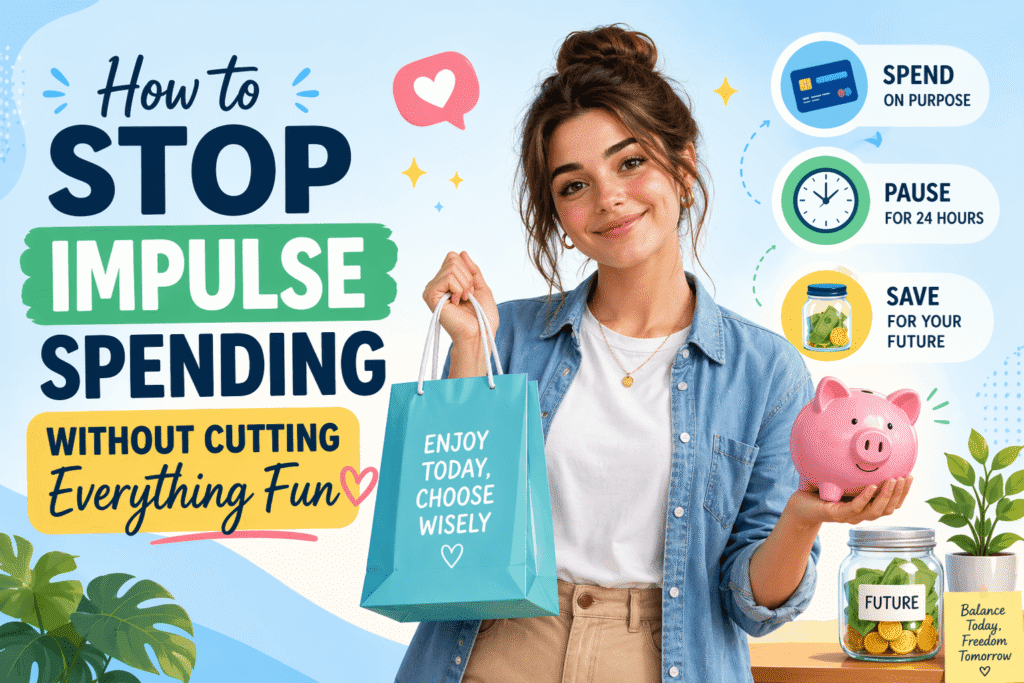
2. Use the 24-Hour Rule
One of the simplest ways to stop impulse spending is to slow things down.
Before buying anything non-essential, wait 24 hours. This creates a gap between the urge and the action. Most of the time, the excitement fades, and you realize you didn’t actually need it.
This small delay can dramatically reduce unnecessary purchases over time.
3. Make Spending Less Convenient
Impulse spending thrives on ease. The faster you can buy something, the less time you have to think about it.
To control impulse spending, add small barriers:
- Remove saved card details
- Log out of shopping apps
- Avoid one-click purchases
These small changes create friction, giving you just enough time to rethink your decision.
4. Set “Fun Money” Limits
Trying to cut out all fun spending usually backfires. It creates pressure, and eventually leads to overspending.
Instead, set aside a small, fixed amount for guilt-free spending. This way, you can enjoy your money without losing control.
If you want a simple system for balancing spending and freedom, How to Manage Money Without Feeling Deprived breaks it down in a practical way.
5. Track Small Expenses
It’s rarely one big purchase that causes problems, it’s the small ones that add up over time.
Tracking your daily spending helps you stay aware of where your money is going. Even a quick check-in can make a big difference.
This habit builds awareness, which is one of the most effective ways to stop impulse spending naturally.
6. Replace the Habit, Don’t Just Remove It
Impulse spending often fills a gap, like boredom, stress, or the need for a quick reward.
Instead of just trying to stop, replace it with something else:
- Go for a walk
- Watch something you enjoy
- Work on a hobby or skill
This helps you break the habit without feeling like you’re missing out.
7. Automate Your Savings First
If money is always available, it’s easier to spend it without thinking.
Automating your savings solves this by moving a portion of your income before you have the chance to spend it. What’s left becomes your spending limit.
To make this even more effective, guides like Simple Ways to Build Savings Consistently can help you create a system that runs in the background.
How to Avoid Impulse Buying Long-Term
Long-term success comes from systems, not motivation.
- Stay aware of your habits
- Keep your environment clean of triggers
- Review your spending regularly
Consistency beats perfection every time.
Common Mistakes to Avoid
- Trying to cut everything at once
- Ignoring small purchases
- Relying only on discipline instead of systems
Avoiding these makes it easier to stay consistent.
FAQs
How do I stop impulse spending quickly?
Use the 24-hour rule, remove spending triggers, and track your expenses to build awareness.
What causes impulse spending habits?
Emotions, convenience, and lack of awareness are the main causes.
How do I avoid impulse buying online?
Remove saved payment methods, avoid shopping apps, and delay purchases.
Can I control impulse spending without a budget?
Yes, by using simple systems like awareness, delays, and spending limits instead of strict budgeting.
Final Thoughts
Learning how to stop impulse spending isn’t about removing fun from your life, it’s about creating a better relationship with your money. When you shift from reacting in the moment to making intentional decisions, everything starts to change.
Instead of feeling guilty after spending, you become more confident in your choices. You spend on what actually matters, cut back on what doesn’t, and build habits that support your long-term goals.
The key is consistency, not perfection. Small changes, like pausing before purchases or tracking your spending, can have a powerful impact over time.
If you want to strengthen this further, Needs vs Wants: Why Most People Get It Wrong (And How to Fix It) will help you make smarter decisions every day.
Start small. Stay consistent. Give yourself room to improve.
That’s how you take control of your money without sacrificing enjoyment.