
Psychology of spending plays a bigger role in your financial life than you might realise. Most people don’t spend money based purely on logic, they react to emotions, habits, and subtle triggers that influence their decisions without them even noticing.
That’s why you can plan to save money, yet still find yourself making purchases you didn’t intend to. It’s not because you lack discipline, it’s because your behaviour is being shaped by patterns you haven’t fully recognised yet. Understanding why you spend money the way you do is what separates random spending from intentional financial control.
In today’s world, where buying something takes just a few clicks, these patterns become even stronger. Convenience, social influence, and emotional triggers all work together to make spending feel easy, and often justified in the moment.
If you’ve ever struggled with repeated spending habits, insights from How to Stop Impulse Spending Without Cutting Everything Fun can help you understand how these behaviours form and how to manage them without feeling restricted.
Once you begin to understand the psychology of spending, you stop reacting automatically and start making decisions that actually align with your goals. And that’s where real financial progress begins.
Quick Answer: The Psychology of Spending
The psychology of spending explains how emotions, habits, and external influences shape your money decisions. Most unnecessary purchases happen because of impulse, emotional triggers, or the desire for quick rewards.
What Is the Psychology of Spending?
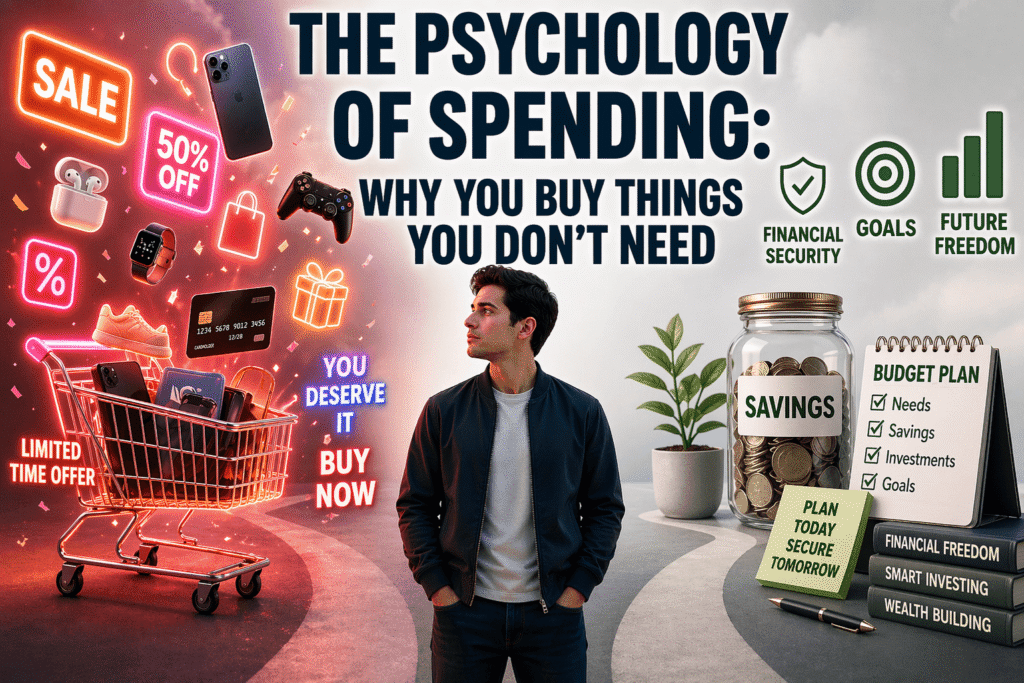
The psychology of spending refers to how your thoughts, emotions, and environment influence your financial decisions.
It goes beyond what you can afford, it’s about how you behave with money. Two people can earn the same income but make completely different financial choices because of their mindset and habits.
This is why your spending psychology often leads you to decisions that don’t align with your long-term goals. In the moment, a purchase feels right, justified, or even necessary, but later, it may not make sense. Understanding this gap between emotion and logic is the first step to gaining control.
Why You Spend Money the Way You Do
Your habits don’t come from nowhere, they’re built over time through experiences, environment, and repetition. Everything from how you were raised to the people around you today shapes why you spend money the way you do.
Over time, these patterns become automatic. You don’t stop to analyse every purchase, you rely on привычка (habit). That’s why spending can feel effortless, even when it’s working against you.
The more you repeat certain behaviors, the more they become your default. Breaking them isn’t about willpower, it’s about recognising the pattern and consciously interrupting it.
Why You Buy Things You Don’t Need
Most unnecessary purchases come from instant gratification. In the moment, buying something gives you a quick emotional reward, a sense of excitement, relief, or satisfaction.
The problem is that this feeling is temporary, but the spending habit remains. Over time, your brain starts associating buying with feeling better, making it easier to repeat the behavior.
There’s also justification. You convince yourself the purchase is necessary, “I deserve it,” “It’s on sale,” or “I’ll use it later.” This is a core part of spending psychology and one of the biggest reasons people overspend without realising it.
Once you become aware of these patterns, it becomes much easier to pause, question your decisions, and take back control
The Role of Emotions in Spending
Emotions play a powerful role in shaping your financial decisions, often more than logic does. Most of the time, you’re not just spending money; you’re responding to how you feel in the moment.
When you’re stressed, spending can feel like relief, leading to comfort purchases. When you’re bored, buying something new creates excitement, even if it’s temporary. And when you’re already feeling good, it’s easy to overspend because your guard is down.
- Stress → comfort spending
- Boredom → random purchases
- Excitement → overspending
This is where impulse buying psychology becomes so influential. Your brain is wired to seek quick rewards, and spending money provides that instant gratification. In the moment, it feels justified, but those decisions don’t always align with your long-term goals.
If you want to manage this better, How to Control Your Spending Without Feeling Restricted (7 Proven Ways That Actually Work) shows how to stay in control without feeling deprived.
Common Spending Triggers You Should Know
Certain triggers make you more likely to spend:
- Discounts and sales
- Social media influence
- Easy payment systems
- Lifestyle comparison
These triggers make it harder to control impulse spending because they push you toward emotional decisions.
Impulse Buying Psychology Explained
Impulse buying psychology is driven by your brain’s natural reward system. It’s not just about wanting something, it’s about how your brain reacts in the moment.
When you see something appealing, your brain releases dopamine, the chemical linked to pleasure and reward. This creates a sense of excitement and urgency, making the purchase feel like a good decision right away.
The problem is, this reaction happens faster than logic. Before you’ve had time to think it through, your brain is already pushing you to act. That’s why impulse purchases often feel automatic rather than intentional.
In the moment, it feels satisfying. But once the excitement fades, reality sets in, and that’s where regret usually follows.
That’s the cycle: quick reward, quick decision, and often, long-term consequences.
How to Take Control of Your Spending Psychology
Understanding the psychology of spending is powerful, but real change comes from action. The goal isn’t to rely on willpower; it’s to build simple habits that make better decisions easier and more automatic.
1. Build Awareness
The first step is simply knowing where your money goes.
Track your spending, whether daily or weekly, and look for patterns. You’ll start to notice triggers, habits, and areas where money slips away without intention.
Awareness reduces automatic decisions because you’re no longer spending blindly, you’re paying attention.
2. Pause Before Buying
Impulse decisions happen fast, but you can slow them down.
Create a habit of pausing before making non-essential purchases, even if it’s just for a few hours. This gives your emotions time to settle and allows logic to step in.
Most of the time, the urge fades once you give yourself space.
3. Remove Triggers
Your environment has a strong influence on your spending behavior.
Ads, shopping apps, and constant exposure to products can make spending feel normal, even necessary. Limiting these triggers reduces temptation and makes it easier to stay in control.
Small changes here can have a big impact.
4. Spend Intentionally
Instead of reacting to every urge, shift your focus to what truly matters to you.
Ask yourself: Do I actually need this, or am I just responding to a feeling?
Intentional spending helps you enjoy your money more because you’re choosing where it goes, not reacting impulsively.
5. Use Systems, Not Willpower
Willpower is unreliable, it fades, especially when emotions are high.
Instead, create simple systems that guide your behavior automatically. This could be setting spending limits, automating savings, or removing easy access to money.
When your system is strong, you don’t have to constantly fight your impulses, it becomes easier to stay consistent.
If you want to build this the right way, How to Build a Financial Freedom System That Actually Works: A Beginner’s Guide shows how to set up simple structures that keep your money habits on track
Common Mistakes to Avoid
- Ignoring small purchases
- Depending only on discipline
- Trying to change everything at once
FAQs
What is the psychology of spending?
The psychology of spending explains how emotions, habits, and environment influence your financial decisions.
Why do I buy things I don’t need?
Because of emotional triggers, instant gratification, and impulse buying psychology.
Why do I spend money the way I do?
Your spending habits are shaped by past experiences, environment, and repeated behaviors over time.
How can I control impulse buying psychology?
By building awareness, pausing before purchases, and removing spending triggers.
Do emotions really affect spending?
Yes, emotions like stress, boredom, and excitement can strongly influence your spending decisions.
Final Thoughts
Understanding the psychology of spending gives you a major advantage. Instead of reacting emotionally, you begin to make intentional, smarter decisions.
Once you truly understand why you buy things you don’t need, it becomes much easier to change your habits and take control of your money.
If you want to go deeper into fixing your decision-making patterns, Needs vs Wants: Why Most People Get It Wrong (And How to Fix It) will help you sharpen your financial awareness.
Start small. Stay consistent.
That’s how real change happens.