The things parents should teach their kids about money aren’t complicated, but they are specific. Value, needs versus wants, saving, delayed gratification, basic budgeting. Leave any one of those out and you’ll see the gap show up later: in debt, in impulse spending, in the feeling that money is always slipping away no matter how much comes in.
Children learn money from what they observe before they learn it from what they’re told. If the adults around them never talk about saving, never explain a purchase, never let them experience the consequence of a spending decision, the habits that form are the ones they’ll carry into adulthood.
These 7 lessons give you a clear map: what to teach, when to teach it, and how to make it stick through real practice instead of abstract explanation. Start with one. Consistency matters more than completeness.
Why It’s Important to Teach Kids About Money Early
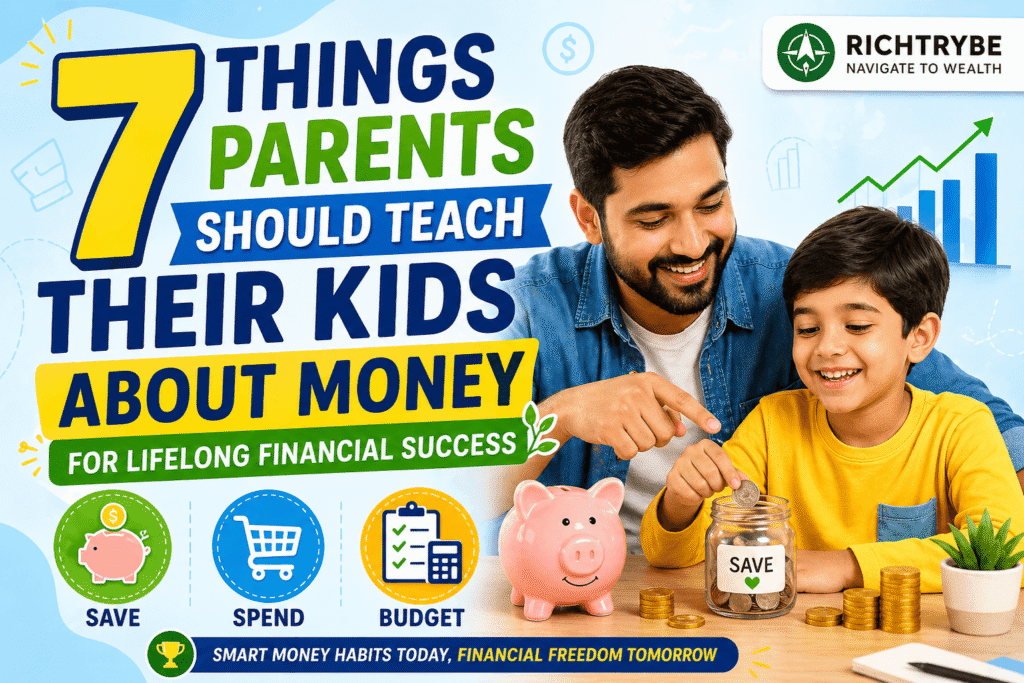
Providing money lessons for kids from parents plays a huge role in shaping how children think about and handle money as they grow.
When kids are introduced to financial concepts early, they develop confidence and a sense of responsibility that stays with them into adulthood. Instead of feeling confused or overwhelmed by money later in life, they learn how to approach it with clarity and control.
Without early guidance, many people learn about money through mistakes, overspending, poor saving habits, or lack of planning. But when parents take the time to teach these lessons early, children gain a head start. They begin to understand not just how money works, but how to use it wisely in everyday situations.
Early financial education helps kids:
- Build discipline and responsibility
Kids learn that money should be managed carefully, not spent impulsively. This builds self-control and accountability over time. - Understand the value of money
They begin to see that money is earned and limited, which helps them appreciate what they have and make more thoughtful choices. - Develop healthy financial habits
Habits like saving regularly, thinking before spending, and planning ahead become natural when learned early.
These early lessons create a strong foundation for long-term financial success. Over time, small habits turn into smart decision-making skills, helping children grow into financially responsible and independent adults.
What to Teach Kids About Money (Core Foundations)
Before diving into advanced concepts, it’s important to focus on the basics of what to teach kids about money:
- What money is and how it works
- The difference between needs and wants
- The importance of saving and spending wisely
These foundational ideas make it easier for children to understand more complex financial concepts as they grow. If you want to reinforce these basics further, Needs vs Wants: Why Most People Get It Wrong is a great resource to help kids clearly understand this important concept.
Things Parents Should Teach Their Kids About Money (Step-by-Step)
Teaching kids about money is most effective when it’s broken down into simple, practical lessons they can understand and apply.
These steps focus on building strong habits early, helping children develop confidence and responsibility with money over time.
1. The Value of Money
One of the first and most important lessons is helping kids understand that money is earned through effort. When children see the connection between work and money, they begin to appreciate its value instead of taking it for granted.
Parents can make this lesson practical by linking money to simple tasks or responsibilities. For example, giving small rewards for completing chores helps children understand that money doesn’t come easily, it requires effort and consistency.
This awareness reduces wasteful spending and encourages thoughtful decisions. Instead of asking for things impulsively, kids begin to consider whether something is truly worth it.
2. Needs vs Wants
A key part of teaching kids about money basics is helping them clearly distinguish between needs and wants.
- Needs are essentials like food, clothing, and school supplies
- Wants are extras like toys, games, and treats
Understanding this difference teaches prioritization. Kids learn that not everything they want is necessary, which helps them make smarter choices when spending money.
Over time, this lesson reduces impulsive behavior and builds a mindset focused on making intentional decisions rather than emotional ones.
3. Saving Money Regularly
Encouraging kids to save consistently is one of the most powerful habits they can develop. Even small amounts can teach important lessons about patience, discipline, and planning for the future.
Parents can make saving simple by using methods like:
- A piggy bank
- Separate jars for saving and spending
- Setting small, achievable savings goals
As kids watch their savings grow, they begin to understand the benefits of consistency. This habit lays the foundation for long-term financial stability and goal-setting.
4. Smart Spending Habits
Teaching kids how to spend wisely is just as important as teaching them how to save. Children should learn to pause and think before making purchases.
Encourage them to ask simple questions like:
- Do I really need this?
- Is this the best use of my money?
This builds awareness and reduces impulsive buying. Over time, kids become more intentional with their choices, which is a key part of developing strong money habits parents should teach kids early in life.
5. Basic Budgeting Skills
Introducing budgeting at a simple level helps kids understand that money should be planned, not just spent randomly.
A practical way to teach this is by dividing money into categories such as:
- Saving
- Spending
- Giving
This structure helps children see that money has multiple purposes and must be managed carefully. It also introduces the idea of balance, ensuring they don’t spend everything at once.
If you want a simple system to guide this, The Best Way to Split Your Income (Simple Money Formula) is a helpful reference.
6. Delayed Gratification
Delayed gratification is the ability to wait before making a purchase, and it’s one of the most important habits for long-term financial success.
Kids naturally want instant rewards, but learning to wait helps them develop patience and self-control. For example, saving up for something they really want instead of buying smaller items immediately teaches them the value of discipline.
This habit has a lasting impact, helping them make better financial decisions as they grow older.
7. Giving and Sharing
Teaching kids to give and share helps them develop a healthy and balanced perspective on money. It shows them that money isn’t just for personal use, it can also be used to help others.
Encouraging small acts of generosity, like donating or helping someone in need, builds empathy and responsibility. It also teaches kids that money can create positive impact beyond themselves.
By focusing on these steps, parents can ensure they are covering the most important things parents should teach their kids about money. Each lesson builds on the other, creating a strong foundation that helps children grow into financially responsible and confident adults.
Practical Money Lessons for Kids from Parents
To make financial education truly effective, parents need to go beyond theory and focus on real-life application. The best money lessons for kids from parents happen in everyday situations where children can see, practice, and understand how money works.
This approach makes learning natural and easier to remember.
Here are simple but powerful ways to reinforce teaching kids about money basics:
- Use everyday situations as teaching moments
Daily activities like grocery shopping, paying bills, or budgeting for outings can become practical lessons. Explain your decisions in simple terms so kids understand how money is used in real life. This helps answer what to teach kids about money in a way that feels real and relatable. - Give small amounts of money for practice
Allowing kids to manage small amounts of money helps them learn through experience. Whether it’s allowance or reward-based earnings, this builds confidence and introduces responsibility gradually. - Let kids make decisions (and small mistakes)
One of the most effective ways of teaching kids about money basics is letting them make choices. If they spend all their money too quickly, they learn consequences in a safe environment. These small mistakes often lead to the biggest lessons. - Talk openly about money
Open conversations help remove confusion and build understanding. Discuss saving, spending, and planning in simple terms. This strengthens money habits parents should teach kids and encourages kids to ask questions.
Consistency is what makes these lessons stick. The more kids practice, the more confident and responsible they become with money.
If you want more engaging and hands-on ideas, 15 Fun Financial Literacy Activities for Kids That Teach Real Money Skills is a great resource.
Common Mistakes Parents Should Avoid
While teaching kids about money is important, avoiding common mistakes is just as critical. Many parents unintentionally make learning harder by overlooking simple but key principles.
- Avoiding money conversations
Not talking about money leaves kids confused and unprepared. Open discussions are essential for building understanding and confidence. - Giving money without guidance
Simply giving money without explaining how to use it doesn’t teach responsibility. Guidance is what turns money into a learning tool. - Teaching inconsistently
Irregular lessons make it harder for kids to build strong habits. Consistency is key when developing money habits parents should teach kids. - Making lessons too complex
Overcomplicating financial concepts can overwhelm children. Keep lessons simple, practical, and age-appropriate.
Avoiding these mistakes makes it much easier for kids to understand and apply what to teach kids about money effectively. Over time, this leads to better habits, smarter decisions, and stronger financial confidence.
How These Money Lessons Shape a Child’s Future
When parents focus on things parents should teach their kids about money, they help children:
- Build confidence with financial decisions
- Develop strong saving and spending habits
- Avoid common money mistakes
- Grow into financially responsible adults
These lessons don’t just impact childhood, they shape a lifetime of financial behavior.
FAQs
What are the most important things parents should teach their kids about money?
Parents should teach saving, spending wisely, needs vs wants, budgeting, and the value of money.
At what age should kids start learning about money?
Kids can start learning basic concepts as early as age 4-5, with lessons becoming more advanced as they grow.
How can parents teach kids about money effectively?
By using real-life examples, giving small amounts of money to manage, and having regular conversations about finances.
Why is teaching kids about money important?
It helps them build strong habits early, avoid financial mistakes, and become confident with money as adults.
What are simple money lessons for kids?
Saving regularly, understanding needs vs wants, and thinking before spending are some of the simplest and most effective lessons.
Final Thoughts
Teaching kids about money doesn’t require complex systems, it requires consistency, patience, and practical lessons. By focusing on what to teach kids about money, parents can give their children a powerful advantage in life and help them build strong financial awareness early.
The earlier these lessons are introduced, the more natural they become. As children grow, simple habits like saving, spending wisely, and planning ahead gradually turn into lifelong skills. This is how teaching kids about money basics evolves into real financial confidence and independence.
Over time, these small, consistent actions develop into strong money habits that shape how children think, decide, and behave with money as adults.
If you want to go deeper, How to Teach Kids to Save Money: 6 Simple Strategies for Parents is a great next step.