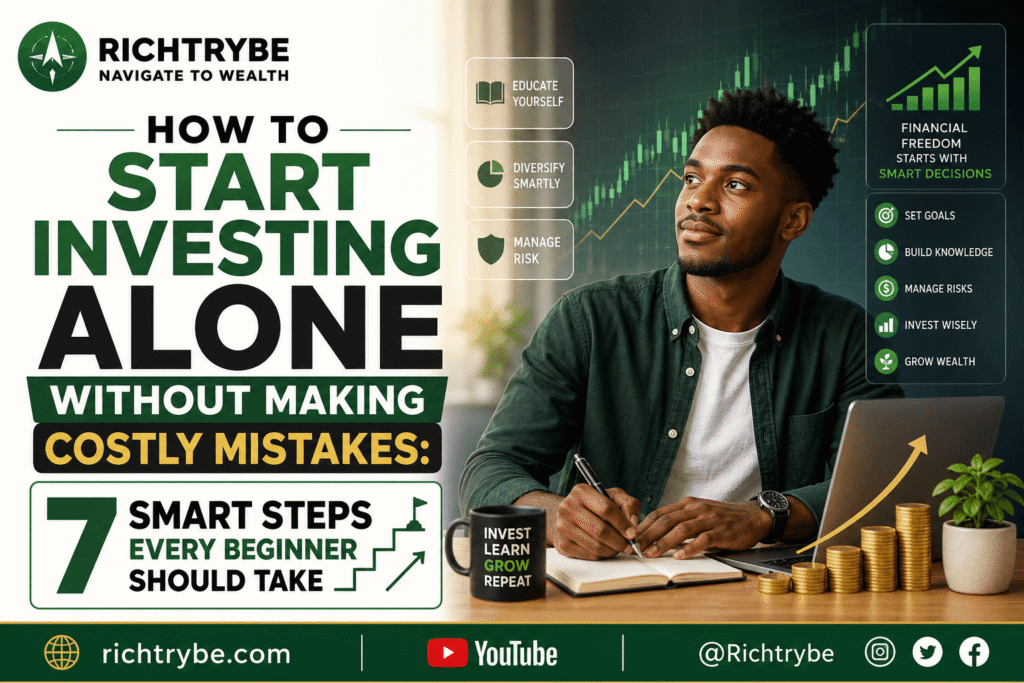
If you want to start investing alone without making costly mistakes, the problem usually isn’t the market, it’s what no one tells you before you put money in. Most beginners skip the financial foundation entirely and go straight to stock picking, which is where things go wrong fast.
The costly errors in solo investing rarely come from choosing the wrong stock. They come from emotional decisions, skipping basic risk management, and following social media hype before you’ve built the habits that protect you when markets turn uncomfortable.
These 7 steps give you the complete framework, from stabilizing your finances and learning what to look for in an investment, to building a strategy you can stick with through volatility without second-guessing every move.
Why Investing Alone Feels Difficult for Beginners
Many people want to invest, but when it’s time to do it alone, fear shows up.
That fear usually comes from:
- Fear of losing money
- Fear of making beginner mistakes
- Fear of choosing the wrong stock
- Information overload
- Social media investment hype
- Seeing others make money while you feel behind
This is why many people delay their first investment for months, or even years.
If you’re trying to start investing alone as a beginner, understand this:
Confidence doesn’t come before action.
Confidence comes through preparation and experience.
And learning to invest for the first time alone often becomes one of the most powerful financial skills you’ll ever develop.
7 Smart Steps Every Beginner Should Take
If you truly want to understand how to start investing alone without making costly mistakes, these practical steps will help you avoid beginner traps and build a strong investing foundation.
Step #1: Build Your Financial Foundation First
Before you invest a single dollar, make sure your finances are stable.
This is one of the most overlooked steps beginners skip.
Before investing, ask yourself:
Do I have:
- Emergency savings?
- A monthly budget?
- Stable income?
- High-interest debt under control?
- Enough money for essential expenses?
Many beginners lose confidence because they invest money they actually need for daily life.
That creates emotional pressure.
If you want to start investing without losing money, your first goal isn’t picking stocks.
Your first goal is financial stability.
Practical Action:
Build at least 3–6 months of emergency savings before aggressively investing.
When your survival doesn’t depend on your portfolio, you make better investment decisions.
Step #2: Learn the Basics Before Risking Real Money
One of the biggest mistakes beginners make is investing before understanding what they’re buying.
If you want to invest by yourself safely, education comes first.
At minimum, understand:
- Stocks: Owning shares in a business.
- ETFs: A collection of investments that can reduce individual stock risk.
- Index Funds: Funds designed to track entire markets over time.
- Diversification: Not putting all your money into one investment.
- Risk vs Reward: Higher returns often come with higher volatility.
- Market Volatility: Prices moving up and down over time.
Knowledge reduces emotional decision-making.
The more you understand, the less likely you are to panic.
If you’re still learning the basics, What to Do Before You Buy Your First Stock: 6 Smart Steps for Beginners can help you build a stronger foundation before risking real money.
Practical Action:
Before buying anything, explain the investment in your own words.
If you can’t explain it, don’t invest in it yet.
Step #3: Start Small Instead of Trying to Get Rich Fast
One of the fastest ways to make costly mistakes is starting too big.
Many beginners think:
“If I invest more, I’ll grow faster.”
That mindset often creates unnecessary pressure.
If you’re trying to start investing alone as a beginner, start small.
Starting small helps you:
- Learn without emotional pressure
- Understand market behavior
- Build investing discipline
- Observe your emotional reactions
- Make mistakes without major financial damage
Practical Action:
Start with an amount small enough that market drops won’t destroy your confidence.
Your goal isn’t immediate profit.
Your goal is experience.
Step #4: Only Invest In What You Understand
One of the biggest reasons beginners lose money is blind investing.
They buy because:
- Influencers recommend it
- Social media says it’s “hot”
- Friends are buying
- Everyone seems excited
That’s dangerous.
If you invest for the first time alone, ask:
- What does this company do?
- How does it make money?
- Is demand for its products growing?
- Is this business financially healthy?
- Do I understand the risks?
If you don’t understand what you’re buying, you’re not investing.
You’re guessing.
Practical Action:
Never buy an investment you can’t explain to someone else in simple language.
Step #5: Ignore Social Media Hype
One of the fastest ways to make costly investing mistakes is emotional investing.
Social media creates pressure.
You see:
- Profit screenshots
- “This stock will explode” posts
- Viral investing trends
- Fear of missing out
This leads many beginners into bad investments.
If you want to start investing without losing money, avoid hype.
Smart investors follow:
- Research
- Fundamentals
- Risk management
- Long-term strategy
Not viral excitement.
Practical Action:
Unfollow accounts that trigger FOMO or emotional investing.
Focus on learning, not chasing trends.
Step #6: Create a Simple Investment Strategy
Confidence grows when you have a plan.
If you want to invest by yourself safely, create a simple strategy before you invest.
Your strategy should answer:
- How much will I invest monthly?
- What is my risk tolerance?
- Am I investing for 5 years, 10 years, or longer?
- What type of investments fit my goals?
- How will I respond during market drops?
Without a plan, emotions control decisions.
With a plan, logic controls decisions.
If you want to avoid costly beginner mistakes, How to Avoid Losing Money as a Beginner Investor: 7 Smart Rules to Protect Your Money can help you protect your capital and think more strategically.
Practical Action:
Write your investment plan on one page and review it monthly.
Step #7: Focus on Learning, Not Immediate Profits
One of the biggest beginner mistakes is expecting instant results.
Investing is not a get-rich-quick strategy.
Real investing is about:
- Patience
- Discipline
- Consistency
- Long-term thinking
- Compounding
When you start investing alone as a beginner, your first goal shouldn’t be massive profits.
Your first goal should be becoming a smarter investor.
Practical Action:
Track what you learn, not just what you earn.
Over time, better decisions often create better returns.
Beginner Investor Self-Check List
Before you invest for the first time alone, ask yourself:
✅ I have emergency savings
✅ I understand what I’m investing in
✅ I’m not investing money I may need soon
✅ I’m starting with manageable amounts
✅ I’m not following hype
✅ I have a clear investing strategy
✅ I’m focused on long-term growth
If you checked most of these, you’re already building a stronger investing foundation.
Common Mistakes Beginners Make When Investing Alone
When learning how to start investing alone without making costly mistakes, avoiding common errors can save you both money and confidence. Many people who start investing alone as a beginner make emotional decisions that hurt long-term growth.
- Investing Based on Hype Instead of Research: Buying investments because social media, friends, or influencers are talking about them can lead to poor decisions. Always understand what you’re buying before putting your money in.
- Starting With Too Much Money: Many beginners invest more than they’re emotionally prepared to handle. When prices drop, fear often leads to rushed decisions.
- Checking Your Portfolio Too Often: Watching your investments every hour can create unnecessary stress and emotional reactions to normal market movements.
- Panic Selling During Market Drops: When markets fall, beginners often sell out of fear. This can lock in losses instead of giving investments time to recover.
- Trying to Invest by Yourself Safely Without Learning First: If you want to invest by yourself safely, education must come first. Investing without understanding the basics increases your risk of mistakes.
- Chasing “Hot” Stocks or Quick Profits: Following trending stocks or get-rich-quick opportunities often leads to emotional investing instead of smart investing.
- Expecting Instant Results: If you invest for the first time alone, remember wealth takes time. Real investing rewards patience, consistency, and long-term thinking.
These mistakes often lead to losses, not because investing doesn’t work, but because discipline, patience, and education were missing. If you want to start investing without losing money, focus on learning first, managing risk, and staying consistent.
FAQ
Can I start investing alone as a beginner?
Yes. Many successful investors started alone. The key is learning the basics, starting small, and building confidence through experience.
How do I invest by yourself safely without experience?
To invest by yourself safely, start with investments you understand, research before buying, and avoid putting in money you may need soon.
How much money do I need to invest for the first time alone?
You don’t need a large amount. Many beginners invest for the first time alone with small amounts while focusing on learning and consistency.
How can I start investing without losing money?
While no investment is risk-free, you can start investing without losing money unnecessarily by diversifying, researching, and avoiding emotional decisions.
What are the biggest mistakes beginners make when investing alone?
Common mistakes include panic selling, chasing hype, investing without research, checking portfolios too often, and expecting quick profits.
Is investing alone better than following other people’s advice?
Learning to invest alone helps build discipline, confidence, and independent decision-making – skills that are valuable for long-term wealth building.
What should I learn before I start investing alone?
Before you begin, understand basic investing concepts like stocks, ETFs, diversification, risk management, and long-term investing principles.
Final Thoughts
Learning how to start investing alone without making costly mistakes isn’t about avoiding every mistake.
It’s about avoiding preventable mistakes.
If you build your financial foundation, learn the basics, start small, and stay disciplined, you’ll already be ahead of most beginners who invest emotionally.
And once your portfolio starts moving, What to Do If Your Investment Goes Down: 7 Smart Moves Every Beginner Should Know will help you stay calm, protect your confidence, and make smarter long-term decisions.