
What to do before you buy your first stock matters more than which stock you pick, because most beginner losses trace back to skipped steps, not bad companies. The market won’t cause your first mistake. The absence of a process will.
Most beginners treat preparation as optional. They find a stock they like, feel a rush of excitement, and hit buy before they’ve answered the three questions that actually matter: Do I understand this business? Am I investing money I don’t need? Have I set a clear goal this investment serves?
These 6 steps build the foundation that makes your first stock purchase intentional instead of emotional, covering goals, risk tolerance, platform selection, and the research habit that separates investors from speculators.
Why Preparation Matters Before Buying Your First Stock
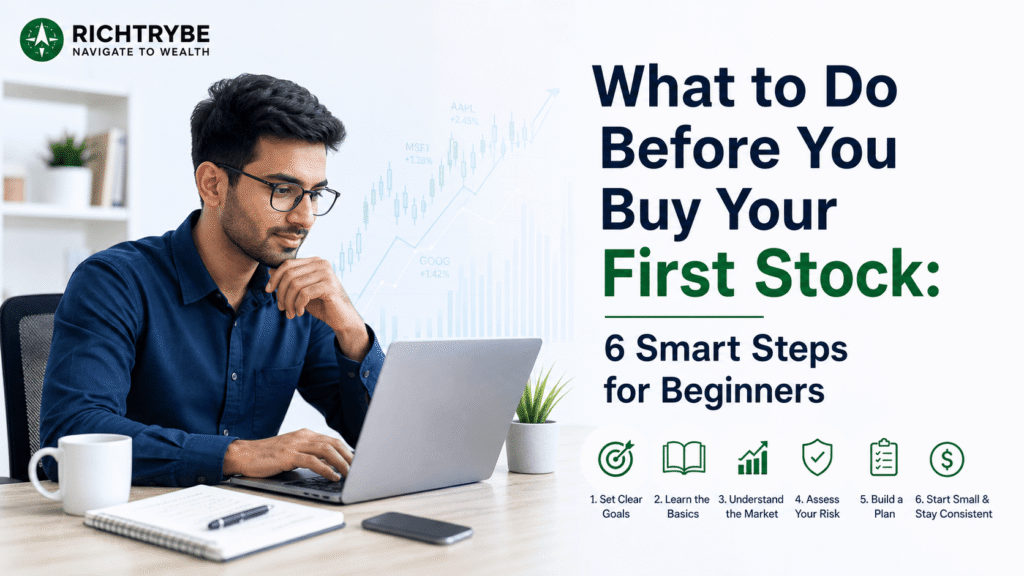
Before buying your first stock, it’s important to understand that investing is not gambling, it’s a long-term strategy built on planning, patience, and informed decisions. Successful investors don’t rely on luck; they rely on preparation and discipline.
Many beginners lose money not because investing doesn’t work, but because they ignore the key things to know before buying stocks. They follow trends, act on emotions, or invest in companies they don’t fully understand. This often leads to poor decisions, unnecessary losses, and frustration early in their journey.
Proper preparation changes everything. When you take the time to learn the basics, define your goals, and understand what you’re investing in, you move from guessing to making intentional decisions. In simple terms, preparation is what separates random investing from smart investing.
Beginner Stock Investing Checklist (Before You Start)
Before you invest, it’s important to follow a simple and structured approach. Run through this checklist before buying your first stock:
- Define your investment goal
Be clear about why you’re investing. Are you trying to build long-term wealth, generate passive income, or simply learn how the market works? - Understand basic stock market concepts
You don’t need to be an expert, but you should understand what stocks represent, how prices move, and how investors make money. - Know your risk tolerance
Ask yourself how comfortable you are with market ups and downs. If you’re a beginner, it’s better to start with lower-risk options and avoid highly volatile stocks. - Choose a reliable investment platform
Pick a beginner-friendly platform with low fees, simple navigation, and the ability to invest small amounts. - Research the stock before buying
Never invest blindly. Take a few minutes to understand what the company does, how it makes money, and whether it fits your goals.
This checklist gives you a clear path to follow. Instead of feeling overwhelmed, you’ll know exactly what to do before you buy your first stock. If you want a deeper understanding of how to structure your decisions after this checklist, How to Create a Simple Investment Plan: A Beginner Friendly Guide to Growing Wealth shows you how to turn these basics into a clear, long-term strategy.
Step-by-Step: What to Do Before You Buy Your First Stock
Step 1 – Set Your Investment Goal
Start by asking yourself one simple question: Why am I investing?
Your answer will shape every decision you make. Without a clear goal, it’s easy to invest randomly and lose direction.
Your goal could be:
- Building long-term wealth (most common and recommended)
- Generating passive income over time
- Learning how investing works as a beginner
Having a clear goal keeps you focused and prevents emotional or impulsive decisions.
Step 2 – Understand the Basics of the Stock Market
Before buying your first stock, you need a simple understanding of how investing works, nothing complicated.
A stock represents ownership in a company. When you invest, you’re essentially buying a small piece of that business.
You make money in two main ways:
- When the stock price increases over time
- When the company pays dividends (regular payouts to investors)
You don’t need to master everything. Just focus on understanding enough to make smart, confident decisions.
Step 3 – Know Your Risk Tolerance
Every investment involves risk, but the key is knowing how much risk you are comfortable with.
Ask yourself:
- Would I panic if my investment drops in value?
- Am I okay with slow, steady growth?
If you’re a beginner, it’s best to start with lower-risk, stable options and avoid highly volatile stocks. Taking too much risk early can discourage you from continuing.
Step 4 – Choose the Right Brokerage Account
To actually buy stocks, you’ll need a brokerage account (an investment platform).
Look for a platform that:
- Has low or no fees
- Is easy to use for beginners
- Allows you to start investing with little money
The right platform removes friction. It makes investing simple, accessible, and something you can stick with long-term.
Step 5 – Research Before Buying
This is where most beginners go wrong, they invest without understanding what they’re buying.
Before buying your first stock, take a few minutes to:
- Understand what the company does
- Look at basic performance trends
- Avoid hype, trends, or “hot tips”
This step shifts you from emotional decisions to logical ones. If you’re not sure how to properly evaluate an investment, How to Choose Your First Investment (Without Confusion or Fear) breaks the process down in a simple, beginner-friendly way.
Step 6 – Start Small and Simple
Now it’s time to take action, but keep it simple. You don’t need a lot of money to begin. Starting small is one of the smartest ways to learn what to do before you buy your first stock without taking big risks.
These first time stock buying tips will help you stay on track:
- Don’t invest all your money at once
Start with a small portion. This reduces pressure and gives you room to learn and adjust. - Keep your strategy simple
Avoid jumping between different stocks or strategies. Stick to one clear approach so you don’t confuse yourself. - Focus on consistency over quick profits
Investing is not about winning fast, it’s about showing up regularly. Small, consistent investments matter more than trying to time the market.
Common Mistakes to Avoid Before Buying Your First Stock
- Investing without research – leads to poor decisions
- Following hype – trends don’t equal value
- Trying to get rich quickly – often leads to losses
- Overcomplicating your strategy – simplicity wins
- Ignoring consistency – growth comes over time
FAQ Section
What should I do before buying my first stock?
Set clear goals, learn the basics, understand your risk tolerance, and research before investing.
Is it risky to buy stocks as a beginner?
Yes, with proper preparation and consistency, beginners can build wealth over time.
How much money do I need to start?
You can start with small amounts using beginner-friendly platforms.
What is the safest way to start investing in stocks?
Start small, choose simple investments, and focus on long-term growth.
What are the most important things to know before buying stocks?
Understand how stocks work, avoid hype, and focus on long-term investing.
Should I research a stock before buying it?
Yes, always research the company and avoid investing blindly.
Final Thoughts
Understanding what to do before you buy your first stock gives you a strong foundation for long-term success. You don’t need to be perfect, you just need to be prepared and willing to start.
The key is to focus on simple, smart decisions and stay consistent. As you gain experience, you’ll naturally move from small, simple investments to more confident and strategic ones.
If you’re ready to build on that foundation and grow your investments over time, How to Build Big Investments with Small Savings (A Realistic Guide to Long-Term Wealth) shows you how to scale from small beginnings into long-term wealth.