Managing money becomes easier when every dollar has a clear purpose, but most people earn money without controlling where it goes.
That’s where problems begin.
If you’ve been looking for a smarter way to manage your money, learning how to split your income automatically can completely change your financial life. Instead of guessing what to save or spend each month, you create a system that distributes your money for you, covering your expenses, funding your goals, and controlling your spending without constant effort.
If you want to understand the bigger picture behind this, How to Automate Your Finances Step by Step will show you how this fits into a complete system.
When done right, an income splitting system removes stress, builds consistency, and helps you grow your money over time.
What Does It Mean to Split Your Income Automatically?

Splitting your income automatically is the process of dividing your income into categories like bills, savings, and investments using automated transfers. This ensures your money is allocated before you spend it.
Instead of keeping all your money in one place and deciding later, an automatic income allocation system organizes your finances upfront, so your priorities are handled first.
In simple terms, your money is structured before you can spend it, helping you stay consistent, avoid overspending, and manage your finances with less effort.
Simple Income Splitting Example
Here’s a basic flow:
Income → Split Automatically → Essentials → Savings → Investments → Spending
This ensures:
- Your priorities are handled first
- Your future is funded consistently
- Your spending stays controlled
Why Splitting Your Income Matters
Managing money without a system often leads to confusion and inconsistency. When everything sits in one place, it becomes difficult to tell what your money is actually meant for.
Without a system:
- Money feels available, so you naturally spend more
- Saving becomes inconsistent and often gets postponed
- Financial progress feels slow and unpredictable
With a structured income splitting system, everything changes:
- Your money has clear direction and purpose
- Saving happens automatically, not occasionally
- Spending stays controlled within defined limits
- Your financial growth becomes more stable and predictable
If you want to strengthen this further, Expense Tracking Methods That Actually Work will help you see exactly how your money flows within your system.
This is why learning how to automate income distribution is such a powerful step, it removes guesswork, reduces impulsive decisions, and replaces inconsistency with a system you can rely on.
How to Split Your Income Automatically
Splitting your income automatically isn’t about creating a complicated system, it’s about building a simple, repeatable structure that works every time you get paid.
Most people handle money reactively. They receive income, spend what feels necessary, and hope there’s something left to save. An effective income splitting system flips that approach completely.
Instead of reacting, you decide in advance where your money should go, and automate it.
The goal is simple: Give every part of your income a job before you spend a single dollar.
Here’s how to split your income automatically:
- Know your total income
- Create income categories
- Assign percentages
- Automate transfers
- Separate accounts
- Spend what’s left
- Review monthly
This approach is widely used in personal finance systems to build consistent saving and investing habits.
Step 1: Know Your Total Income
Before you can organize your money, you need a clear starting point. This step is about removing guesswork and working with real numbers instead of assumptions.
Don’t guess, calculate.
Identify:
- Your main income (salary or business income)
- Side income (freelance, gigs, extra work)
- Any additional inflows (bonuses, support, irregular cash)
If your income fluctuates, calculate an average over the last 3–6 months.
Example:
If you earned:
- $100,000 (salary)
- $20,000 (side income)
- $10,000 (extra work)
Your working monthly income becomes: $130,000
This gives you a stable base for your automatic income allocation system.
Why this matters:
If your numbers are unclear, your system will be inaccurate, and that leads to overspending or under-saving.
Step 2: Create Your Income Categories
Now it’s time to give your money structure.
Without categories, everything competes for the same money. Bills, savings, and lifestyle spending all pull from one pool, which leads to poor decisions.
Instead, divide your income into clear categories:
- Essentials → rent, food, transport, bills
- Savings → emergency fund, short-term goals
- Investments → long-term wealth building
- Lifestyle → personal spending, enjoyment
Example:
From $130,000:
- Essentials
- Savings
- Investments
- Lifestyle
Each category now has a purpose.
This is the foundation of your income splitting system.
Why this matters:
Categories turn your money from “available cash” into “assigned responsibility.”
Step 3: Assign Percentages to Each Category
Now that your categories are clear, you need to decide how much each one gets. This step turns your system into something structured and repeatable.
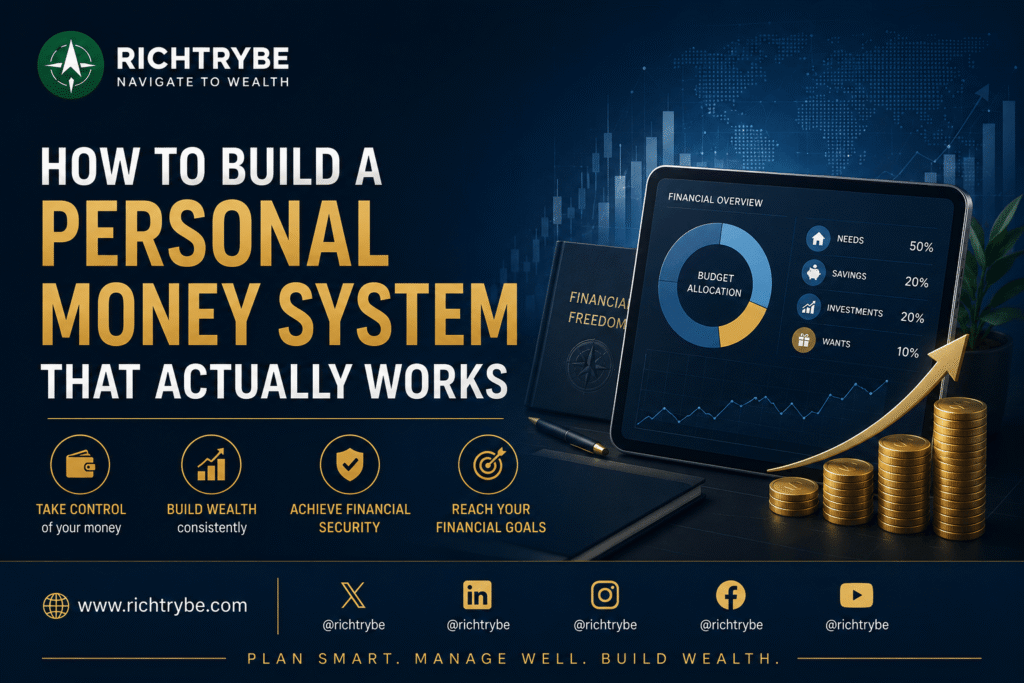
A common starting point:
- 50% Essentials
- 20% Savings
- 20% Investments
- 10% Lifestyle
Example using $130,000:
- Essentials → $65,000
- Savings → $26,000
- Investments → $26,000
- Lifestyle → $13,000
If your situation is different (e.g., higher rent or lower income), adjust the percentages, but keep the structure.
Why this matters:
Percentages allow your system to grow with your income. Whether you earn $100k or $1M, the structure still works.
Step 4: Set Up Automatic Transfers
This is where your system becomes powerful.
Instead of manually moving money, you automate income distribution.
Use:
- Bank standing orders
- Multiple accounts
- Financial or budgeting apps
Set transfers to happen:
- Immediately when income arrives
- Or within 24 hours
Example flow:
- Salary hits your account
- $26,000 → Savings (auto-transfer)
- $26,000 → Investments (auto-transfer)
- Remaining stays for bills + spending
This is the core of automate income distribution, your priorities are handled before spending begins.
Why this works:
Automation removes temptation and eliminates decision fatigue.
Step 5: Separate Your Accounts (Optional but Powerful)
If you want more control and clarity, separating your money can make a big difference. It helps you see exactly what each portion is meant for.
Example setup:
- Account 1 → Bills (Essentials)
- Account 2 → Savings
- Account 3 → Investments
- Account 4 → Daily Spending
This doesn’t mean opening many bank accounts if you don’t want to, you can also track categories using apps or spreadsheets.
But separation creates clarity.
Why this matters:
When money is separated, you always know what’s safe to spend, and what isn’t.
Step 6: Spend What’s Left (Without Guilt)
This is where your system starts working for you.
Once your essentials, savings, and investments are handled, the remaining money becomes your spending allocation.
Once:
- Bills are covered
- Savings are done
- Investments are funded
The remaining money is yours to spend, freely.
Example:
If your lifestyle allocation is $3,000, you can spend it without stress because everything else is already handled.
No guilt. No second-guessing.
Why this matters:
It balances discipline with enjoyment, making your system sustainable long-term.
Step 7: Review and Adjust Monthly
Even the best system needs maintenance.
Your automatic income allocation should evolve as your income, expenses, and goals change.
Every month, review:
- Are your expenses realistic?
- Are you saving enough?
- Is your investment contribution growing?
- Do your percentages still make sense?
For example:
- If your income increases, you may increase savings or investments
- If expenses rise, you may adjust your essentials category
If you want to improve this process further, How to Set Up Your First Money System will help you build a stronger foundation behind how your income is structured and managed.
Why this matters:
A system that isn’t reviewed becomes outdated, and eventually stops working.
When you properly split your income automatically, you remove guesswork, reduce bad decisions, and create a system that builds financial stability over time.
You don’t need a perfect setup.
You need a system you can follow consistently.
Because ultimately, it’s not just how much you earn, it’s how well your system manages it.
How Income Splitting Builds Better Money Habits
When you split your income automatically, your behavior starts to change in subtle but powerful ways. Instead of constantly deciding what to do with your money, your system guides your actions for you.
Over time, this leads to better financial habits:
- You spend more intentionally: Because your money is already allocated, you become more aware of what’s actually available to spend
- You save without thinking: Saving becomes automatic, not something you have to remember or force
- You avoid impulse decisions: With clear limits in place, it’s harder to spend money meant for other priorities
- You build financial discipline naturally: The system reinforces consistency without relying on motivation
The real benefit is that these changes don’t feel forced, they happen as a result of your structure.
Over time, automatic income allocation creates stronger money habits, reduces financial stress, and builds long-term stability without requiring constant effort.
Common Mistakes to Avoid
Even with a solid system in place, a few common mistakes can quietly reduce its effectiveness. The goal of an income splitting system is to simplify your finances, not create new problems.
Watch out for these:
- Setting unrealistic percentages: If your allocations don’t match your real expenses, your system will constantly break. It’s better to start with numbers you can sustain and adjust over time.
- Not automating immediately after income arrives: Delaying transfers gives you room to spend money that was meant for savings or investments. The sooner your system runs, the better it works.
- Mixing all money in one account: When everything sits in one place, it becomes harder to track what’s meant for what. This often leads to overspending or using money meant for other priorities.
- Ignoring irregular income: If your income fluctuates, your system needs flexibility. Using averages or percentage-based allocations helps keep things consistent even when your income changes.
- Never adjusting your system: Your income, expenses, and goals will evolve. If your system doesn’t evolve with them, it eventually becomes ineffective.
A simple income splitting system you follow consistently will always outperform a perfect system you can’t maintain.
FAQs
How do you split your income automatically?
To split your income automatically, set up a system that allocates your money into categories like bills, savings, investments, and spending using bank transfers or financial apps as soon as you get paid.
What is the best way to split your income for saving and investing?
The best way to split your income is to use percentage-based allocation, such as 50% for essentials, 20% for savings, and 20% for investments, ensuring consistent financial growth.
Can you automate income distribution without multiple bank accounts?
Yes, you can automate income distribution using one account by setting rules or tracking categories manually, though multiple accounts can improve clarity and control.
How does an income splitting system help with money management?
An income splitting system improves money management by giving every dollar a purpose, reducing overspending, and ensuring savings and investments happen automatically.
What is automatic income allocation in personal finance?
Automatic income allocation is a system where your income is divided into predefined categories immediately after you receive it, helping you stay consistent with saving, spending, and investing.
Is splitting your income automatically good for beginners?
Yes, learning how to split your income automatically is one of the best ways for beginners to build structure, avoid financial mistakes, and develop strong money habits.
How do you split your income automatically?
Split your income automatically by setting percentages for expenses, savings, and investments, then using automatic transfers to distribute your money when you get paid.
Final Thoughts
Learning how to split your income automatically is one of the simplest and most effective ways to take control of your finances. It removes the stress of constant decision-making and replaces it with a system that works in the background.
You don’t need a complicated setup, and you don’t need perfect discipline. What you need is a structure that consistently guides how your money is used, no matter how busy or distracted you are.
The best way to start is by keeping things simple:
- Create clear income categories
- Assign realistic percentages
- Automate the entire process
From there, you can refine and improve your system as your income, goals, and responsibilities evolve. If you want to take this further, How to Build a Personal Money System That Actually Works will help you turn this into a complete, long-term framework.
Over time, this approach does more than just organize your money, it builds consistency, strengthens your financial habits, and makes progress feel predictable.
Because in the end, learning how to split your income automatically isn’t just about how much you earn, it’s about how well your system manages what you earn.