Most people don’t struggle with money because they don’t earn enough, they struggle because they don’t know where their money is actually going. Income isn’t usually the problem. The real issue is a lack of visibility and control over spending.
Think about it: money comes in, expenses go out, and by the end of the month, you’re left wondering where everything went. Without a clear system in place, your financial decisions become reactive instead of intentional. You spend based on habit, emotion, or convenience, not strategy.
That’s why learning expense tracking methods that actually work is one of the most important steps toward taking control of your finances. When you understand how to track expenses, you move from guessing to knowing. You start seeing patterns, identifying leaks, and making smarter decisions with your money.
And this is where everything begins to change. Because once you can see where your money is going, you can start directing it where it should go.
If you’ve already started thinking about building better systems around your finances, Budgeting Systems That Actually Work will help you structure your income and spending more effectively alongside your tracking.
The goal isn’t just to track numbers, it’s to build awareness, strengthen your personal expense tracking, and develop financial habits that support long-term growth and stability.
What Is Expense Tracking?
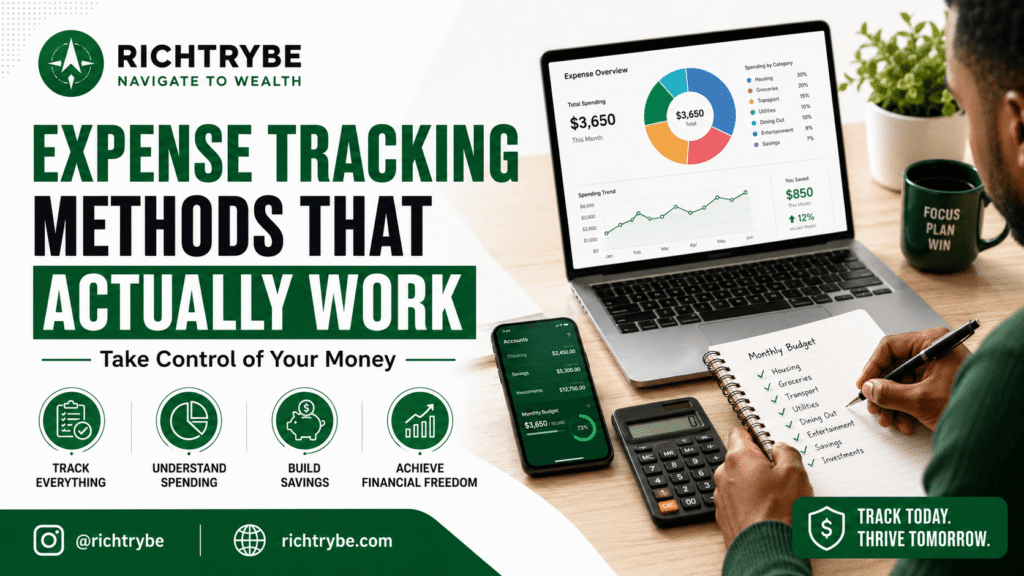
Expense tracking is the process of consistently recording, organizing, and monitoring how you spend your money over time. It gives you a clear picture of your financial behavior by showing exactly where your income is going on a daily, weekly, or monthly basis.
At its core, expense tracking is about turning your spending into something visible and measurable instead of something you guess or estimate.
When you apply effective expense tracking methods, you’re able to:
- See exactly where your money goes
- Identify unnecessary or impulsive spending
- Understand your spending patterns
- Make more informed and intentional financial decisions
For example, instead of wondering why you can’t save, personal expense tracking reveals the small, repeated expenses that quietly drain your income over time.
This is why learning how to track expenses is such a powerful financial skill. It shifts your mindset from reactive spending to proactive money management.
When done correctly, expense tracking transforms your finances from guesswork into a structured system. You move from asking “Where did my money go?” to confidently saying “I know exactly how my money is being used.”
Why Expense Tracking Matters More Than You Think
Most people underestimate how powerful expense tracking methods can be. It may seem simple, but it’s one of the fastest ways to gain control over your finances.
Without proper personal expense tracking:
- You overspend without realizing
- Saving becomes inconsistent
- Your money feels out of control
But once you learn how to track expenses, things start to change.
With consistent tracking:
- You become aware of your spending habits
- You make more intentional decisions
- You gain clarity and control over your money
This is what turns random spending into structured financial behavior.
And once you have that awareness, combining it with How to Automate Your Savings System helps you turn that control into consistent financial progress.
At its core, expense tracking isn’t just about numbers, it’s about understanding your money so you can manage it better.
The Expense Awareness Loop (Simple Framework)
A simple way to understand effective expense tracking methods is through this loop:
Spend → Track → Review → Adjust → Repeat
For example:
- You spend on food delivery
- You record it
- You review at the end of the week
- You adjust your behavior
Over time, this loop helps you build stronger expense tracking habits and better financial discipline.
Top 5 Expense Tracking Methods That Actually Work
Not every method works for everyone, and that’s the key thing to understand. The goal isn’t to find the “perfect” system, but to choose an approach you can follow consistently.
The best expense tracking methods are the ones that fit your lifestyle and make it easier to stay aware of your spending.
1. Manual Tracking (Write It Down Daily)
This is one of the simplest and most effective ways to start learning how to track expenses.
With manual tracking, you record every expense as it happens using:
- A notebook
- A notes app
- A simple spreadsheet
At first, it may feel repetitive, but that’s exactly why it works.
Why it works:
Manual tracking forces awareness. Every time you write something down, you become more conscious of your spending decisions. You start questioning purchases instead of making them automatically.
Best for:
Beginners who want to build strong personal expense tracking habits and understand their money flow from scratch.
2. App-Based Expense Tracking
If you prefer convenience, app-based tracking is one of the most efficient expense tracking methods available.
You can use:
- Budgeting apps
- Mobile banking apps with tracking features
These tools automatically categorize and record your expenses, reducing the need for manual input.
Why it works:
It removes friction. Instead of relying on memory or discipline, the system tracks your spending for you, making personal expense tracking faster and easier to maintain.
Best for:
People who want a low-effort, automated way to stay consistent.
3. Category-Based Tracking
This method focuses on organizing your expenses into clear groups such as:
- Food
- Transport
- Bills
- Entertainment
Instead of just tracking what you spend, you track where your money goes.
Why it works:
It gives you instant clarity. You can quickly identify which areas are consuming most of your income and where adjustments are needed.
This is one of the most practical expense tracking tips because it highlights spending patterns you might otherwise ignore.
Best for:
Anyone who wants better insight into their spending habits and clearer financial direction.
4. Weekly Expense Review Method
Tracking alone isn’t enough, you need to review your data.
With this method, you set aside time each week to go through your expenses and ask:
- Where did my money go?
- What was unnecessary?
- What can I improve next week?
Why it works:
It connects tracking with decision-making. Without review, tracking becomes passive. With review, it becomes a tool for improving your financial behavior.
Best for:
People who want to actively improve their spending habits, not just record them.
5. Percentage-Based Tracking
This method focuses on allocating your income into percentages rather than tracking every small expense.
For example:
- 50% → Needs
- 30% → Wants
- 20% → Savings
Instead of focusing on individual transactions, you focus on maintaining balance.
Why it works:
It creates structure and simplifies financial decisions. You always know whether your spending is aligned with your goals.
This approach works especially well when combined with systems like How to Build Wealth From Your First Salary, where structured allocation plays a key role in long-term financial growth.
Best for:
People who prefer a big-picture approach to managing money rather than tracking every detail.
You don’t need to use all five methods. Start with one, stay consistent, and refine your system over time. The real power of expense tracking comes from consistency, not complexity.
How to Choose the Right Method
The best method is the one you’ll actually use consistently.
Ask yourself:
- Do I prefer simple or automated?
- Do I want daily tracking or weekly reviews?
- Do I need structure or flexibility?
Start simple. You can always upgrade your system later.
How Expense Tracking Builds Better Money Habits
Expense tracking doesn’t just show numbers, it changes behavior over time. When you consistently use expense tracking methods, you become more aware of how your daily decisions affect your financial situation.
Instead of spending automatically, you start thinking more intentionally about where your money goes.
It helps you:
- Spend more intentionally rather than impulsively
- Reduce unnecessary or emotional purchases
- Build awareness of your spending patterns
- Improve financial discipline through consistency
As you continue tracking, these small changes begin to compound. You start noticing patterns, adjusting your behavior, and making better decisions without overthinking every purchase.
Over time, consistent personal expense tracking strengthens your money habits and creates a more stable, controlled financial life.
Pause and Reflect
Before you move on, ask yourself:
- Do I really know where my money goes?
- Am I tracking consistently or guessing?
- Which method fits my lifestyle best?
Awareness is the first step toward control.
Common Mistakes to Avoid
Even with the best expense tracking methods, certain mistakes can slow your progress or make your system ineffective over time. The goal of personal expense tracking is consistency and clarity, but these common errors often get in the way:
- Tracking inconsistently
Skipping days or only tracking occasionally breaks the system. When you’re not consistent, your data becomes unreliable, and it’s harder to understand your real spending habits. - Ignoring small expenses
Small daily purchases may seem insignificant, but they add up quickly. Over time, these unnoticed expenses can quietly drain your income. - Not reviewing your data
Tracking alone isn’t enough. If you don’t review your spending, you miss the opportunity to improve. Effective expense tracking methods always include reflection and adjustment. - Overcomplicating the system
Using too many tools or detailed categories can make tracking feel overwhelming. The simpler your system, the more likely you are to stick with it. - Giving up too early
Many people quit before they see results. Like any habit, tracking takes time to become natural.
Consistency matters more than perfection. A simple system you follow regularly will always outperform a perfect system you abandon.
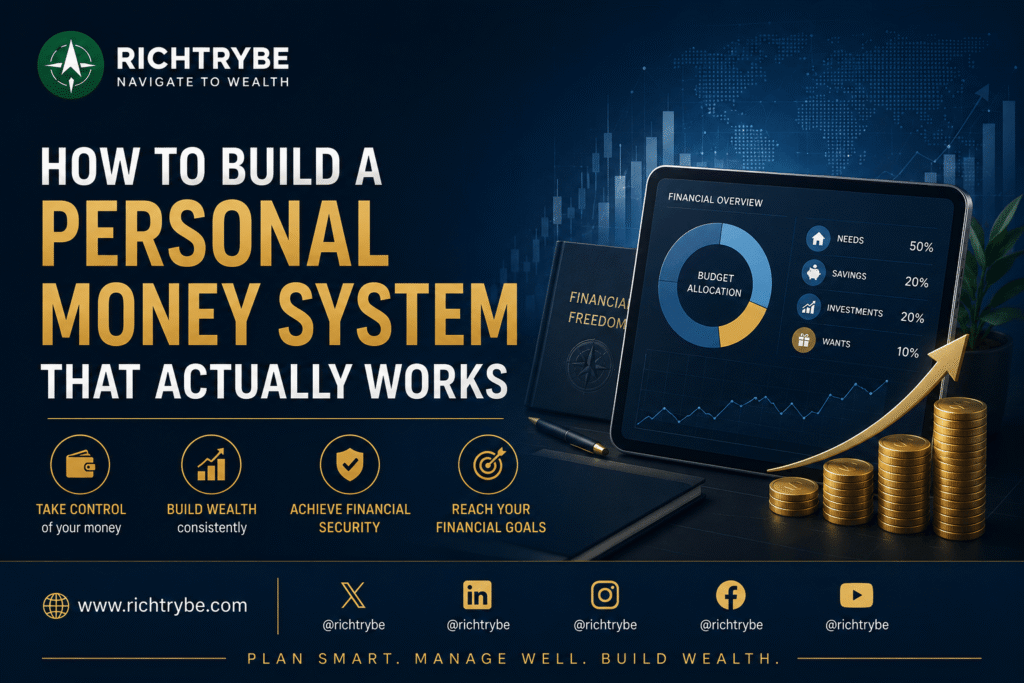
And if you want to take things further, combining your tracking with How to Build a Personal Money System That Actually Works helps you turn awareness into a complete financial structure that supports long-term growth.
Frequently Asked Questions
What is the best expense tracking method?
The best method is the one you can use consistently, manual, app-based, or category tracking all work.
How do I start tracking my expenses?
Start simple. Record every expense daily or review your spending weekly.
Why is expense tracking important?
It helps you understand your spending, reduce waste, and make better financial decisions.
Can I track expenses with a low income?
Yes. Tracking is even more important with limited income because every decision matters.
Final Thoughts
Most financial problems don’t come from a lack of income, they come from a lack of awareness. When you don’t know where your money is going, it becomes difficult to control it or improve it.
That’s why using expense tracking methods that actually work is so powerful. It shifts you from guessing to understanding, and from reacting to making intentional financial decisions.
The goal isn’t to build a perfect system, it’s to build a consistent one. A simple approach you follow regularly will always outperform a complex system you abandon.
Start small. Track your expenses daily or weekly. Review your spending patterns and make small adjustments over time.
Those small, consistent actions may not feel significant at first, but they compound. And over time, they give you something most people never truly achieve, full control over your money.