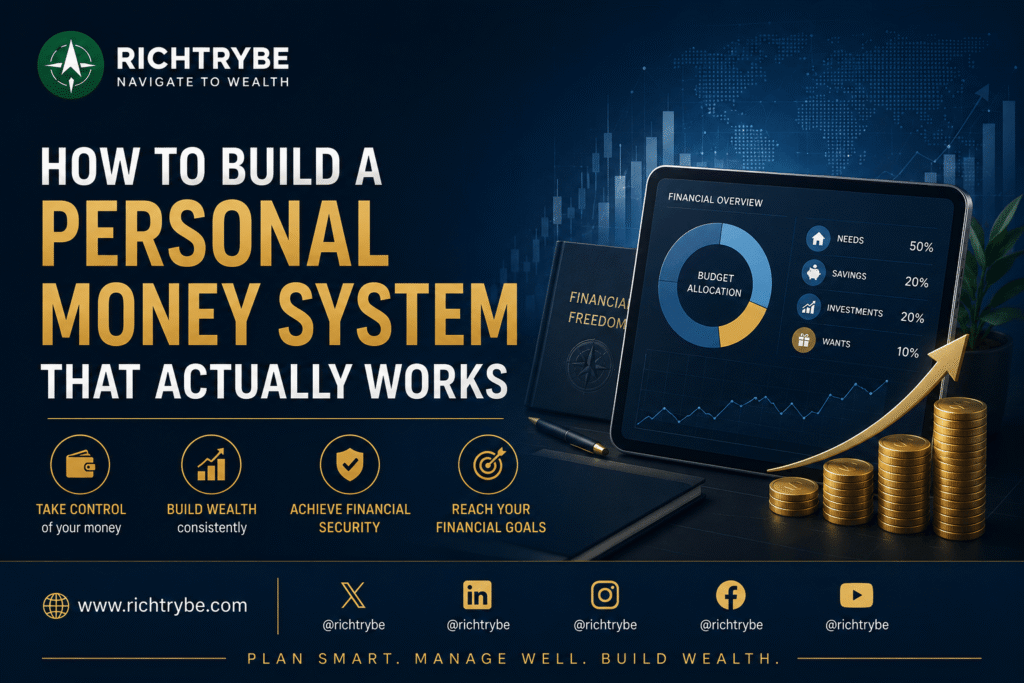
Managing your finances becomes easier when everything is clear, organized, and accessible in one place. But for most people, money is scattered across different apps, accounts, and decisions, making it hard to truly understand what’s going on.
That’s where you can create a simple financial dashboard. Instead of guessing where your money is going, you build a system that gives you a clear, real-time view of your income, expenses, and savings, all in one place.
A well-structured personal finance dashboard doesn’t just organize your money, it helps you make better decisions, stay consistent with your goals, and reduce financial stress without adding complexity.
If you’re just getting started, How to Track Your Money Without Stress will help you build a simple foundation before setting up your dashboard.
What Is a Simple Financial Dashboard?

A simple financial dashboard is a single system, usually a spreadsheet or app, that brings all your financial information into one place, giving you a clear view of your income, expenses, savings, and investments at a glance.
Instead of switching between multiple tools or guessing where your money is going, everything is organized in a way that’s easy to understand and act on. You can quickly see your financial position, track progress, and make better decisions without overthinking it.
At its core, a simple financial dashboard turns scattered financial data into a clear, structured system, so you stay in control, consistent, and confident with your money.
Why You Need a Financial Dashboard
Without a clear system, managing your money can quickly become confusing and reactive. Income comes in, expenses go out, and before you know it, you’re left wondering where everything went. This lack of visibility often leads to overspending, inconsistent saving, and slow financial progress.
That’s where a financial dashboard for beginners becomes powerful. Instead of guessing, you gain a clear, structured view of your finances in one place. You can instantly see where your money is going, identify unnecessary expenses, and make smarter decisions without overthinking every transaction.
With a simple dashboard in place:
- You gain full visibility over your income and expenses
- You make faster, more confident financial decisions
- You reduce waste and unnecessary spending
- You stay consistent with saving and long-term goals
Over time, this clarity turns into control, and that’s what drives real financial progress.
If you want to strengthen how you track and understand your spending within your dashboard, Expense Tracking Methods That Actually Work will help you build a more effective system behind it.
How to Create a Simple Financial Dashboard
Creating a simple financial dashboard isn’t about using advanced tools or building something complex, it’s about designing a clear, reliable system that gives you full visibility over your money at any time.
Most people struggle with finances not because they lack income, but because they lack structure. A proper money dashboard setup fixes that by turning scattered financial activity into a single, organized view you can understand and act on instantly.
The goal is simple: build a system that shows you exactly where you stand financially, without requiring constant effort.
Step 1: Choose a Tool You’ll Actually Use
Before anything else, you need a place to build your dashboard. This could be a spreadsheet (Google Sheets or Excel), a note-based tool like Notion, or a budgeting app.
The mistake most people make here is choosing tools based on features instead of usability. A tool can be powerful, but if it feels complicated, you won’t use it consistently, and consistency is what makes this system work.
Start simple. A basic spreadsheet is more than enough to create a highly effective personal finance dashboard. You can always upgrade later, but what matters now is building the habit of tracking and reviewing your finances in one place.
What this means:
Your tool determines how often you interact with your system. The easier it is to use, the more consistent you’ll be, and consistency is what creates results.
Step 2: Define the Core Sections of Your Dashboard
Once you’ve chosen your tool, the next step is to structure your dashboard properly. This is where most people overcomplicate things by trying to track everything.
Instead, focus only on the core financial areas that actually drive your progress:
- Income
- Expenses
- Savings
- Investments
- Net balance
These sections represent the full picture of your financial life. Anything outside of this is just extra detail that can overwhelm your system.
Think of your dashboard like a control panel, you don’t need every detail, you need the right signals that tell you what’s working and what isn’t.
Why this matters:
A focused structure makes your dashboard easier to maintain and easier to understand. The simpler it is, the more likely you are to keep using it long-term.
Step 3: Track Your Income Clearly and Completely
Your income is the foundation of your entire dashboard. If this number is unclear, everything else becomes unreliable.
List every source of income you receive, including:
- Salary or primary earnings
- Side income or freelance work
- Bonuses or irregular cash inflows
If your income varies, use a monthly average based on the last few months. This gives you a stable number to work with and prevents overestimating what you can spend or save.
This step isn’t just about recording numbers, it’s about creating awareness. Many people underestimate or miscalculate their income, which leads to poor financial decisions later on.
What this means:
You can’t manage or optimize your finances if you don’t have a clear and accurate picture of what’s coming in.
Step 4: Track Expenses Without Overcomplicating It
Expense tracking is where your dashboard starts to reveal the truth about your financial behavior. But it’s also where people tend to overdo things.
You don’t need to track every minor purchase. Instead, focus on major categories that influence your financial health:
- Housing
- Food
- Transportation
- Bills and utilities
- Lifestyle spending
This approach gives you clarity without creating unnecessary stress. The goal isn’t perfection, it’s visibility.
Over time, patterns will start to emerge. You’ll see where your money is going, what’s essential, and what can be reduced.
Why this matters:
Tracking key expenses helps you identify waste, control spending, and make better financial decisions without feeling overwhelmed.
Step 5: Add Savings and Investments to Track Growth
A financial dashboard isn’t just about monitoring spending, it’s about tracking progress. That’s why your savings and investments must be clearly included.
Your dashboard should reflect:
- Emergency savings
- Short-term savings goals
- Long-term investments
This shifts your focus from “how much am I spending?” to “how much am I building?”
If you want to make this process easier and more consistent, How to Split Your Income Automatically shows you how to fund these categories without relying on willpower.
Key Takeaway:
Tracking savings and investments keeps your attention on growth, ensuring your system builds wealth, not just controls spending.
Step 6: Calculate Your Net Financial Position
This is where everything comes together. Your dashboard should clearly show your financial position using a simple formula:
Income – Expenses = Remaining Balance
This number tells you whether you’re moving forward, staying stagnant, or falling behind. It’s one of the most important insights your dashboard provides.
Over time, you can expand this by tracking your net worth (assets minus liabilities), but your immediate focus should be understanding your monthly position.
Why this matters:
Without this calculation, you’re just tracking numbers. With it, you’re measuring progress.
Step 7: Review and Use Your Dashboard Weekly
A dashboard is only useful if you actually use it. The biggest difference between people who gain control of their finances and those who don’t is simple: regular review.
You don’t need to check your finances daily, that creates stress. Instead, set aside time once a week to review:
- Your total spending
- Your remaining balance
- Your progress toward savings goals
- Any unusual or unnecessary expenses
This weekly habit keeps you informed without overwhelming you. It also allows you to make small adjustments before problems grow.
If you want to turn this into a complete system, How to Build a Personal Money System That Actually Works will help you connect your dashboard to a bigger financial strategy.
Why this matters:
Regular reviews turn your dashboard from a passive tool into an active system that guides your financial decisions.
Key Takeaway
When you properly create a simple financial dashboard, you move from guessing about your money to understanding it clearly.
You don’t need complexity. You need a system that:
- Shows you the right numbers
- Stays easy to maintain
- Helps you make better decisions consistently
Because ultimately, financial control doesn’t come from tracking everything, it comes from tracking what matters and using it wisely.
How a Financial Dashboard Improves Your Money Habits
When you use a simple financial dashboard consistently, your behavior begins to shift in meaningful ways. Instead of reacting to your money, you start managing it with intention and clarity.
- You become more aware of your spending: Seeing your numbers regularly helps you understand exactly where your money goes, making it easier to adjust.
- You make more intentional decisions: With clear data in front of you, every financial choice becomes more deliberate, not impulsive.
- You reduce financial stress: Clarity removes uncertainty. When you know your numbers, you feel more in control.
- You build strong money habits: Consistently tracking your finances reinforces discipline without requiring constant effort.
Over time, this creates a powerful shift. Your personal finance dashboard becomes more than a tracking tool, it becomes a system that supports better decisions, strengthens your habits, and drives long-term financial stability.
Common Mistakes to Avoid
Even with a well-designed system, your simple financial dashboard can lose effectiveness if you fall into a few common traps. The goal isn’t perfection, it’s consistency and clarity.
- Overcomplicating your dashboard: Adding too many sections, metrics, or visuals can make your dashboard harder to use. A personal finance dashboard should simplify your finances, not overwhelm you.
- Tracking too many details: Trying to record every small expense leads to burnout. Focus on key categories that actually impact your financial decisions, this is what makes a money dashboard setup sustainable.
- Using tools you don’t enjoy: If your tool feels stressful or confusing, you’ll avoid it. The best system is one you can stick with consistently.
- Updating inconsistently: A dashboard only works when it reflects your current financial reality. Irregular updates make your data unreliable and reduce its value.
- Ignoring your dashboard: Building a system and not using it defeats the purpose. Your dashboard should guide your decisions, not sit unused.
A simple, consistent financial dashboard for beginners will always outperform a complex system you abandon.
FAQs
How do you create a simple financial dashboard?
To create a simple financial dashboard, choose a tool like a spreadsheet or app, track your income, expenses, savings, and investments, and review it weekly to monitor your financial progress.
What should a personal finance dashboard include?
A personal finance dashboard should include income, expenses, savings, investments, and your net balance to give you a complete view of your finances.
What is the best tool for a simple financial dashboard?
The best tool is one you can use consistently, such as Google Sheets, Excel, Notion, or a budgeting app designed for beginners.
How often should you update your financial dashboard?
You should update your financial dashboard at least once a week to keep your data accurate and make better financial decisions.
Is a financial dashboard good for beginners?
Yes, a financial dashboard for beginners simplifies money management by organizing everything in one place and improving financial awareness.
Can a financial dashboard help you save money?
Yes, a simple financial dashboard helps you identify unnecessary expenses, track savings, and stay consistent with your financial goals.
Final Thoughts
Learning how to create a simple financial dashboard is one of the most practical and effective ways to take control of your finances long-term. It shifts you from guessing about your money to clearly understanding and managing it with confidence.
You don’t need a complex setup or advanced tools, you need a system built on clarity and consistency. When your finances are organized in one place, every decision becomes easier, faster, and more intentional.
The best way to get started is to keep things simple:
- Choose one tool you can stick with
- Focus on tracking the numbers that truly matter
- Review your dashboard consistently each week
From there, you can refine and improve your system as your financial situation evolves.
Because in the end, building a simple financial dashboard isn’t about tracking every detail, it’s about creating a reliable system that keeps you aware, in control, and consistently moving forward.