Most people know they should be investing, but paychecks keep arriving and leaving without anything being put to work. The problem isn’t income, it’s the absence of a system that directs money toward assets before it gets spent.
Making your money work for you means building income streams that don’t require your direct time. That happens through investing, owning assets, and letting compound growth do the heavy lifting over time.
These 7 strategies cover the practical moves, from spending less than you earn to reinvesting returns, that shift your finances from earning-dependent to asset-driven.
Before you continue, read How to Build Wealth Step by Step to understand how strategic financial decisions can accelerate wealth creation without increasing unnecessary risk.
What Does It Mean to Make Your Money Work for You?
Making your money work for you means using your income to buy assets, investments, and income-producing opportunities that generate additional money over time without requiring constant active work.
Instead of relying solely on your time and effort to earn money, you create opportunities for your money to produce returns on your behalf.

Why Making Your Money Work for You Matters
Most people spend their entire lives exchanging time for money.
Without a system:
- Income stops when work stops
- Financial progress feels slow
- Saving becomes difficult
- Retirement requires constant sacrifice
- Wealth remains out of reach
When you learn how to make your money work for you, the relationship with money changes completely.
You begin to:
- Build wealth more efficiently
- Reduce dependence on earned income
- Create additional sources of cash flow
- Accelerate financial goals
- Increase long-term financial security
This is why successful wealth builders focus on acquiring assets instead of simply increasing spending as their income grows.
One of the easiest ways to ensure money is available for investing is to implement How to Split Your Income Automatically, a system that directs money toward savings and investments before you can spend it.
How to Make Your Money Work for You
According to research from the Federal Reserve, household wealth is strongly associated with asset ownership and long-term investing, highlighting why investing remains one of the most effective ways to grow wealth over time.
Many people assume wealth requires complicated investing strategies or a large amount of money.
The truth is much simpler.
Making your money work for you is built on a series of consistent financial decisions that compound over time.
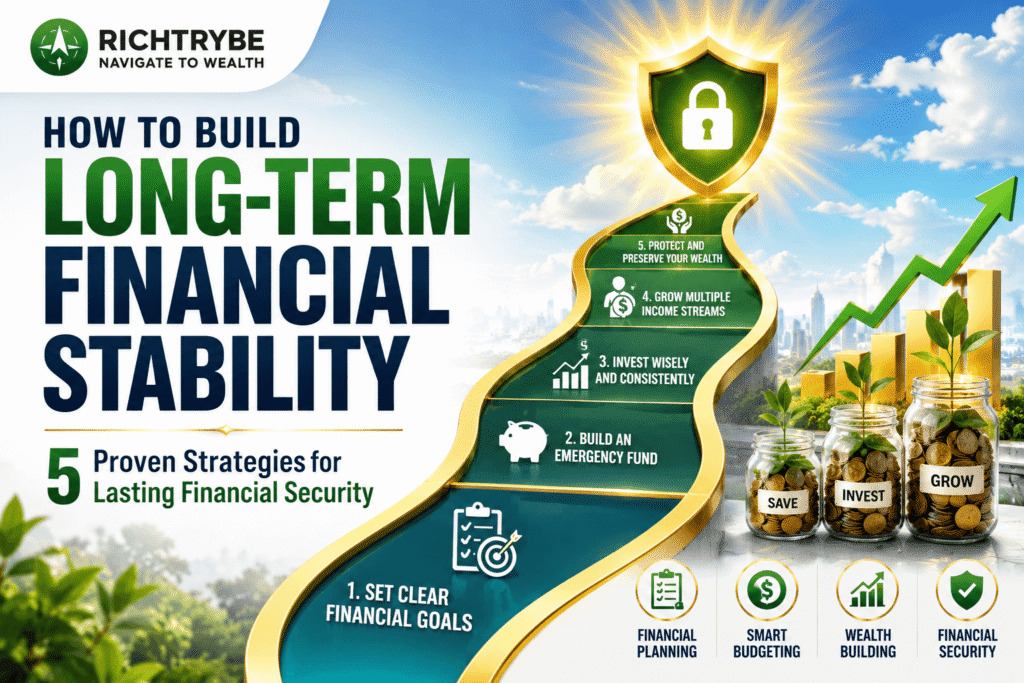
Here are seven proven strategies to make your money work for you:
- Spend less than you earn
- Build an emergency fund
- Invest consistently
- Use compound growth
- Create passive income streams
- Buy assets instead of liabilities
- Reinvest your earnings
Step 1: Spend Less Than You Earn
Many people assume they need a higher income before they can start building wealth. In reality, better money management often creates faster results than a pay raise.
If you’re struggling to make progress with your current income, read How to Fix Your Finances Without Earning More Money to learn how to improve your financial position before focusing on earning more.
This is the foundation of every successful wealth-building plan.
Before your money can work for you, you need money available to invest and grow.
Many people focus exclusively on increasing income while ignoring spending habits. However, wealth is often determined by the gap between what you earn and what you spend.
Start by:
- Tracking expenses
- Reducing unnecessary spending
- Avoiding lifestyle inflation
- Creating a simple spending plan
Even small monthly surpluses can become significant investments over time.
You cannot invest money that is already spent. Every wealth-building strategy begins with creating positive cash flow.
Step 2: Build an Emergency Fund
Before investing aggressively, create financial stability.
Unexpected expenses are unavoidable. Without savings, emergencies often force people into debt or require them to sell investments prematurely.
Aim for:
- Three to six months of expenses
- A separate savings account
- Easy access during emergencies
Your emergency fund acts as protection for the wealth-building system you’re creating.
Financial growth becomes easier when temporary setbacks don’t destroy long-term progress.
Step 3: Start Investing Early
If you’re looking for how to grow your money over time, investing is where the real growth happens.
Saving preserves money.
Investing multiplies it.
The earlier you start, the more time compound growth has to work.
Consider:
- Index funds
- Retirement accounts
- Diversified investments
- Long-term portfolios
You don’t need a large amount to begin.
Consistency matters far more than perfection.
Time is one of the most powerful wealth-building tools available. Starting early allows compound returns to do most of the heavy lifting.
Step 4: Let Compound Growth Work for You
Compound growth occurs when your earnings begin generating their own earnings.
Imagine investing money that earns returns every year. Those returns are then reinvested and begin earning returns themselves.
Over time, growth accelerates.
This is one of the main reasons wealthy investors prioritize long-term investing instead of chasing quick profits.
The longer your money remains invested, the harder it works on your behalf.
Compound growth turns consistency into substantial wealth over decades.
Step 5: Create Passive Income Streams
One of the best ways to earn money while you sleep is by developing income sources that require little ongoing effort.
Examples include:
- Dividend investments
- Rental properties
- Digital products
- Royalties
- Online businesses
- Automated income sources
The goal isn’t to stop working immediately.
The goal is to gradually reduce your dependence on a single income source.
Passive income creates additional cash flow that can be reinvested to accelerate wealth building.
Step 6: Buy Assets Instead of Liabilities
One major difference between wealth builders and average consumers is where they direct their money.
Wealth builders purchase assets.
Consumers often purchase liabilities.
Assets may include:
- Stocks
- Index funds
- Businesses
- Real estate
- Income-producing investments
Liabilities often include purchases that continually require money without generating returns.
The more assets you own, the more opportunities you create for your money to work independently.
Assets generate wealth. Liabilities consume wealth.
Step 7: Reinvest Your Earnings
Many people interrupt wealth creation by spending investment gains too early.
Instead, reinvest:
- Dividends
- Interest earnings
- Rental income
- Business profits
Reinvestment accelerates compound growth and allows wealth to expand faster over time.
The most successful investors understand that patience often produces better results than constant spending.
Reinvesting keeps your money working continuously rather than resetting your progress.
Best Assets That Make Your Money Work for You
One of the most effective ways to make your money work for you is by owning assets that either generate income, appreciate in value, or ideally do both.
Unlike liabilities that continuously take money out of your pocket, assets help grow your wealth over time with little ongoing effort once they’re established.
The goal isn’t to own every asset available. It’s to gradually acquire the right assets that align with your financial goals and risk tolerance.
1. Index Funds
Index funds are often considered one of the best wealth-building tools for beginners because they provide broad market exposure without requiring extensive investing knowledge.
An index fund tracks a collection of companies rather than relying on the performance of a single stock. This diversification helps reduce risk while still allowing you to benefit from long-term market growth.
Benefits of index funds include:
- Low management fees
- Built-in diversification
- Passive investing approach
- Long-term growth potential
- Minimal time commitment
For people learning how to make your money work for you, index funds are often an ideal starting point because they allow your investments to grow while requiring very little ongoing management.
Why it works: Your money grows through market appreciation and compound returns, allowing wealth to build steadily over time.
2. Dividend Stocks
Dividend stocks are shares of companies that regularly distribute a portion of their profits to shareholders.
Instead of relying solely on stock price growth, you receive periodic cash payments simply for owning the shares.
These dividends can be:
- Spent as income
- Saved
- Reinvested to purchase additional shares
Many investors use dividend-paying companies as part of a strategy to earn money while you sleep because income continues to arrive without requiring active work.
Why it works: Dividend stocks provide both potential growth and passive income, creating two paths for wealth accumulation.
3. Real Estate
Real estate has helped create wealth for generations because it offers multiple ways to generate returns.
Property owners may benefit from:
- Rental income
- Property appreciation
- Tax advantages
- Increased equity over time
A well-managed property can generate monthly cash flow while increasing in value over the long term.
Real estate also provides an additional layer of diversification because it is a different asset class from stocks and bonds.
Why it works: Real estate can simultaneously generate income, build equity, and increase in value, making it a powerful wealth-building asset.
4. Businesses
Owning a business is one of the most powerful ways to make your money work for you.
Unlike a traditional job where income is tied directly to your time, a business can continue generating revenue through systems, employees, automation, or recurring customers.
Examples include:
- Service businesses
- E-commerce stores
- Subscription-based businesses
- Agencies
- Online brands
Many wealthy individuals have built significant fortunes through business ownership because successful businesses can scale beyond the limits of personal labor.
Why it works: Businesses have virtually unlimited growth potential and can generate substantial cash flow that can be reinvested into other wealth-building assets.
5. High-Yield Savings Accounts
While they won’t create wealth as quickly as investments, high-yield savings accounts play an important role in a strong financial system.
These accounts typically offer higher interest rates than traditional savings accounts, helping your cash earn money while remaining accessible.
They’re ideal for:
- Emergency funds
- Short-term savings goals
- Cash reserves
- Financial stability
Many beginners overlook this asset because the returns are modest, but protecting and growing cash efficiently is an important part of a complete wealth-building strategy.
Why it works: Your money earns interest with minimal risk while remaining available when needed.
6. Digital Products
Digital products are among the most scalable ways to create passive income streams in today’s economy.
Unlike physical products, digital assets can often be created once and sold repeatedly.
Examples include:
- Online courses
- E-books
- Templates
- Printables
- Membership programs
- Software tools
Although creating a digital product requires effort upfront, successful products can continue generating income long after the initial work is completed.
This is one of the clearest examples of how people can earn money while they sleep by leveraging technology and automation.
Why it works: Digital products have low ongoing costs, high scalability, and the potential to generate recurring income for years.
Which Asset Should You Start With?
If you’re a beginner wondering how to grow your money over time, focus on building assets gradually rather than trying to own everything at once.
A simple progression might look like this:
- Build an emergency fund in a high-yield savings account.
- Start investing in index funds consistently.
- Explore dividend investing as your portfolio grows.
- Create additional income through a side business or digital product.
- Consider real estate when your finances are stronger.
The key is not choosing the perfect asset, it’s starting early and remaining consistent. Over time, a collection of income-producing assets can create a system where your money works harder than you do, accelerating your journey toward financial freedom.
Also, tracking your progress becomes easier when you use How to Create a Simple Financial Dashboard to monitor income, expenses, savings, and investments in one place.
How Long Does It Take for Your Money to Start Working for You?
If you’re learning how to make your money work for you, it’s important to understand that wealth building is a long-term process. The good news is that the earlier you start, the more time your money has to grow and compound.
Year 1: Focus on building savings, reducing debt, and creating strong money habits. This lays the foundation for long-term wealth creation.
Years 2–5: Start investing consistently and building assets. If your goal is how to grow your money over time, this is where momentum begins to build.
Years 5–10: Compound growth becomes more noticeable. Your investments start generating returns, helping your money work harder on your behalf.
10+ Years: Assets can begin producing meaningful income through dividends, business profits, real estate, and other ways to create passive income streams and earn money while you sleep.
Making your money work for you isn’t about getting rich quickly, it’s about consistently investing, building assets, and giving compound growth enough time to do its job.
How Making Your Money Work for You Changes Your Financial Life
When your money begins generating income, your financial habits naturally improve.
You become more focused on:
- Long-term goals
- Asset ownership
- Wealth creation
- Financial independence
- Sustainable growth
Over time, you start viewing money as a tool for producing more value rather than something that exists solely to be spent.
This mindset shift is often the turning point between simply earning money and building lasting wealth.
Common Mistakes to Avoid
Even with the right strategy, some mistakes can slow your progress.
Avoid:
- Waiting until you earn more money to start investing
- Chasing get-rich-quick schemes
- Spending investment profits too early
- Ignoring compound growth
- Taking on excessive debt
- Investing without understanding risk
- Constantly changing strategies
The biggest mistake is believing you need a perfect plan before taking action.
A simple system implemented consistently will outperform a perfect strategy that never gets started.
FAQs
How do I make my money work for me?
You make your money work for you by investing, earning passive income, acquiring assets, and allowing compound growth to increase your wealth over time.
What is the best way to grow money over time?
Long-term investing in diversified assets such as index funds is one of the most effective ways to grow money over time.
Can beginners create passive income streams?
Yes. Beginners can create passive income streams through dividend investing, digital products, savings interest, and other income-producing assets.
How can I earn money while I sleep?
You can earn money while you sleep by owning assets that generate income automatically, such as investments, businesses, royalties, or rental properties.
Do I need a lot of money to start investing?
No. Many investment platforms allow beginners to start with relatively small amounts while benefiting from long-term compound growth.
Final Thoughts
Learning how to make your money work for you isn’t about earning more, it’s about using what you already earn more effectively.
Start small. Save consistently. Invest regularly. Focus on acquiring assets that grow in value or generate income. Over time, these small actions can create powerful results through compound growth.
Because in the end, wealth isn’t built by how much money you make, it’s built by how much of your money is working for you.
For even better results, combine these strategies with Daily Money Habits That Build Wealth Over Time to turn smart financial decisions into lasting wealth.