
Biggest mistakes new investors make often happen early, not because people lack intelligence, but because they lack experience and a clear plan. Many beginners start investing expecting quick results, but without structure, it can quickly feel confusing and unpredictable.
Understanding these mistakes new investors make in their first year gives you a real advantage. Instead of learning through costly errors, you can avoid common traps and build a strong foundation from the start.
The key is to focus less on making fast money and more on building the right habits, consistency, patience, and discipline. If you’re just starting, How to Choose Your First Investment (Without Confusion or Fear) can help you begin with clarity and confidence
Why the First Year of Investing Is So Important
Your first year shapes your habits. It’s where you learn how markets move, how you react emotionally, and whether you can stay consistent.
Most first year investing mistakes come from acting too quickly or without enough understanding. If you focus on learning instead of rushing results, you set yourself up for better outcomes over time.
The 5 Biggest Mistakes New Investors Make
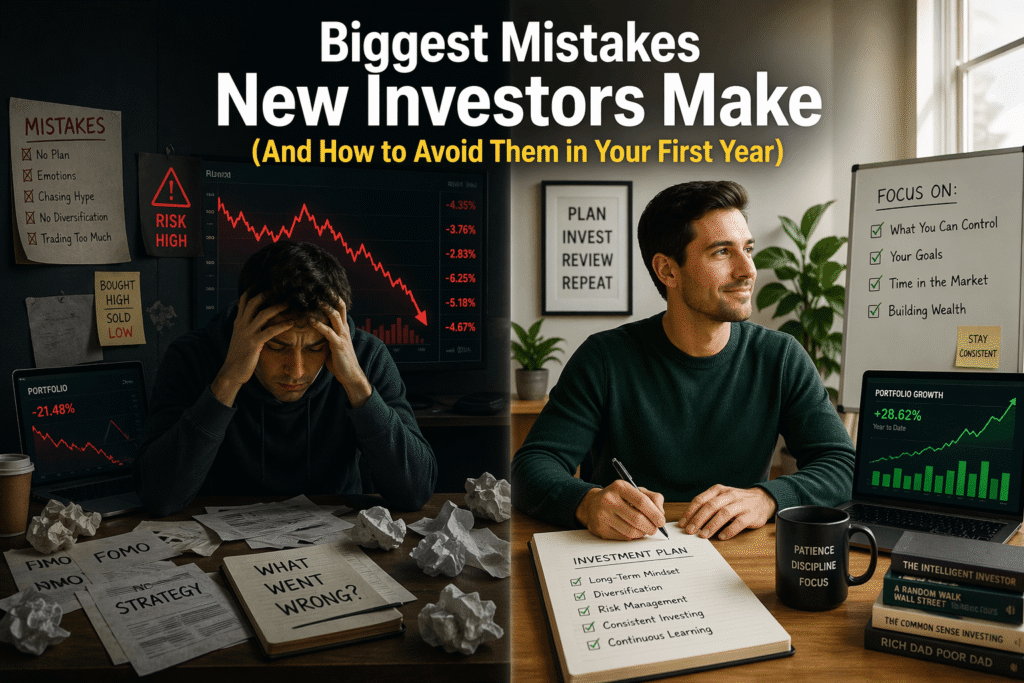
Before you can improve as an investor, you need to understand where most beginners go wrong. The biggest mistakes new investors make are usually simple, but they have a big impact over time.
These mistakes often come from rushing, lack of knowledge, or unrealistic expectations. The good news is that once you’re aware of them, they’re much easier to avoid, and that alone puts you ahead of most people starting out.
1. Investing Without Understanding the Basics
One of the most common new investor mistakes to avoid is jumping in without learning how investing works. Many beginners buy stocks, crypto, or other assets simply because they’ve heard about them, not because they understand them.
Buying assets without understanding risk, returns, or strategy is a clear example of what not to do when investing. Without this knowledge, every market movement feels confusing, and decisions become guesswork.
Taking time to learn the basics, how markets work, what risk means, and how different investments behave, gives you confidence. It also helps you stay calm during market ups and downs instead of reacting emotionally.
If you’re just starting, How to Choose Your First Investment (Without Confusion or Fear) can guide you step by step.
2. Trying to Get Rich Quick
Many beginners chase trends, hype, or quick profits, thinking investing is a fast way to make money. Social media and success stories often make it look easy, but they rarely show the risks involved.
In reality, this mindset leads to poor decisions, buying at the wrong time, selling too early, or jumping from one investment to another. These actions usually result in losses rather than gains.
Investing works best when you think long-term and stay patient. Real growth comes from consistency and time, not quick wins. The sooner you shift your mindset from “fast money” to “steady growth,” the better your results will be.
3. Investing Money You Can’t Afford to Lose
Putting essential money into investments creates pressure and leads to emotional decisions. When your rent, bills, or daily needs are tied to your investments, every small loss feels stressful.
This is one of the most damaging mistakes new investors make in their first year because it forces you to react instead of staying focused on long-term growth. You’re more likely to panic sell or make rushed decisions.
A better approach is to only invest money you can leave untouched for a while. This allows your investments to grow without constant stress or interference.
4. Being Inconsistent
Starting and stopping repeatedly slows your progress and makes it harder to see results. Many beginners invest for a short time, then stop when they don’t see quick gains or when life gets in the way.
Consistency matters more than how much you invest. Even small, regular contributions build momentum over time and take advantage of long-term growth.
When you stay consistent, you remove the pressure of timing the market and focus on steady progress instead.
5. Ignoring Long-Term Strategy
Focusing too much on short-term gains is another common mistake. Many new investors check their portfolios daily, react to every price change, and constantly buy and sell.
These actions are classic examples of what not to do when investing. Overtrading and emotional decisions often reduce returns instead of improving them.
A long-term mindset keeps you steady. When you have a clear strategy and give your investments time to grow, you avoid unnecessary risks and make better decisions overall
Most first year investing mistakes come down to impatience, emotions, and lack of structure.
The good news is that these mistakes are common, and once you recognize them, you can fix them quickly and improve your strategy.
What Not to Do When Investing
Avoid rushing into decisions, copying others blindly, or chasing trends.
Understanding what not to do when investing protects you from unnecessary losses and helps you stay focused on your goals.
If you struggle with consistency, How to Build an Investment Habit: Small Steps That Lead to Big Investments can help you stay on track.
Simple Strategy to Avoid These New Investor Mistakes
Avoiding the biggest mistakes new investors make doesn’t require a complex system, it requires a simple approach you can follow consistently.
- Start small and focus on learning
Don’t worry about investing large amounts in the beginning. Your first goal is to understand how investing works. Small amounts reduce pressure and give you room to learn without costly mistakes.
- Invest consistently, no matter how little
Consistency builds momentum. Instead of waiting until you have more money, invest what you can regularly. This helps you develop discipline and removes the habit of starting and stopping.
- Ignore short-term noise
Markets go up and down daily, but reacting to every change leads to poor decisions. Avoid checking your investments too often or making emotional moves based on short-term performance.
- Stick to a simple plan
Complicated strategies are hard to maintain. A simple plan, like investing a fixed amount regularly, keeps you focused and makes it easier to stay consistent long-term.
- Review and adjust over time
As you gain experience and your income grows, you can improve your strategy. Start simple, then refine as you learn more.
If you want a structured step-by-step approach, The Complete Beginner Money Roadmap: From First Salary to First Investment shows how to build everything from the ground up.
FAQs
What are the biggest mistakes new investors make?
The biggest mistakes new investors make include investing without understanding the basics, chasing quick profits, being inconsistent, and focusing too much on short-term results instead of long-term growth.
What mistakes do new investors make in their first year?
Common mistakes new investors make in their first year include emotional investing, following trends, investing money they can’t afford to lose, and not having a clear strategy.
What are the most common first year investing mistakes?
Most first year investing mistakes come from impatience, lack of knowledge, and reacting to market movements instead of sticking to a plan.
What not to do when investing as a beginner?
When learning what not to do when investing, avoid chasing hype, overtrading, investing without research, and making decisions based on emotions.
How can beginners avoid investing mistakes?
To avoid new investor mistakes to avoid, start small, learn the basics, invest consistently, and focus on long-term growth instead of quick wins.
Final Thoughts
The biggest mistakes new investors make are not a sign of failure, they’re part of the learning process. What separates successful investors from the rest is not avoiding mistakes completely, but recognizing them early and adjusting quickly.
Most first year investing mistakes come from rushing, reacting emotionally, or trying to do too much too soon. When you shift your focus to consistency and long-term thinking, investing becomes much simpler and less stressful.
You don’t need perfect timing or large amounts of money to succeed. What matters is building a system you can stick to, investing regularly, staying patient, and avoiding unnecessary risks. Over time, these small actions compound into meaningful results.
If you want to stay consistent long-term, How to Build an Investment Habit: Small Steps That Lead to Big Investments breaks it down in a simple way.
Keep it simple, stay consistent, and let time do the heavy lifting