Most people do not fail at budgeting because they are bad with money. They fail because the budgeting systems they try are either too restrictive, too complicated, or impossible to maintain consistently.
A lot of budgeting advice sounds good in theory but falls apart in real life. People create detailed spreadsheets, set unrealistic spending limits, track every tiny purchase for a week, then eventually give up because the system becomes exhausting.
Finding budgeting systems that actually work is important because most people need a budgeting method they can realistically maintain long-term.A good budget should help you feel more in control of your money, not more stressed about it.
The best money budgeting system is not the most advanced one. It is the one you can realistically follow month after month without feeling overwhelmed.
If you want to build a comprehensive system to escape the paycheck cycle, read How to Build a Personal Money System That Actually Works.
In this guide, you will learn how budgeting really works, why most systems fail, and how to choose a budgeting structure that fits your lifestyle and financial goals.
Why Most Budgeting Systems Fail
Most budgets fail because they are built around perfection instead of sustainability.
People often create financial plans that leave no room for real life. Every expense is tightly controlled, every category has unrealistic limits, and there is pressure to follow the system perfectly. The moment an unexpected expense appears, their entire personal budgeting system collapses.
Another major reason budgeting fails is inconsistency. Many people start motivated at the beginning of the month, but slowly stop tracking expenses and checking their spending after a few weeks. Without consistency, even the best money budgeting system becomes ineffective.
Emotional spending also plays a huge role. Budgeting becomes difficult when purchases are driven by stress, boredom, social pressure, or impulse instead of intention. A budget cannot work properly if spending decisions constantly change based on mood.
A lot of overspending habits are deeply connected to the psychology of money habits and emotional decision-making.
A big part of financial improvement is understanding the psychology behind spending behavior. That is why learning about the psychology of money habits can help you understand why maintaining financial discipline feels difficult for many people.
Complexity is another problem. Some budgeting systems require too much manual work, too many categories, or constant adjustments. When a system becomes mentally exhausting, people naturally avoid it.
A budgeting system should simplify your financial life, not make it more stressful.
What Makes a Budgeting System Actually Work
A budgeting system works when it is simple, flexible, and realistic enough to maintain consistently.
The goal is not to create a perfect spreadsheet. The goal is to build a structure that helps you manage your money with more awareness and control.
A good personal budgeting system should help you:
- Understand where your money goes
- Reduce unnecessary spending
- Save consistently
- Avoid financial chaos
- Build long-term stability
According to the Consumer Financial Protection Bureau, budgeting helps individuals gain more control over spending and long-term financial planning.
The best systems also create clarity. Instead of wondering whether you can afford something, you already know because your money has been assigned specific purposes.
Flexibility matters too. Your income, expenses, and priorities will change over time. A budgeting system should adjust with your life instead of forcing you into rigid rules that no longer make sense.
Most importantly, a budgeting system should reduce decision fatigue. You should not have to rethink every financial choice from scratch every month. The system should guide your behavior automatically.
5 Budgeting Systems That Actually Work for Beginners
The reason many budgeting systems that actually work succeed is because they prioritize simplicity and consistency over perfection.
Different budgeting methods work for different people. Some people prefer detailed tracking while others need something simple and low maintenance.
The key is choosing a budgeting system for beginners that matches your personality, income level, and lifestyle.
The 50/30/20 Budgeting Rule
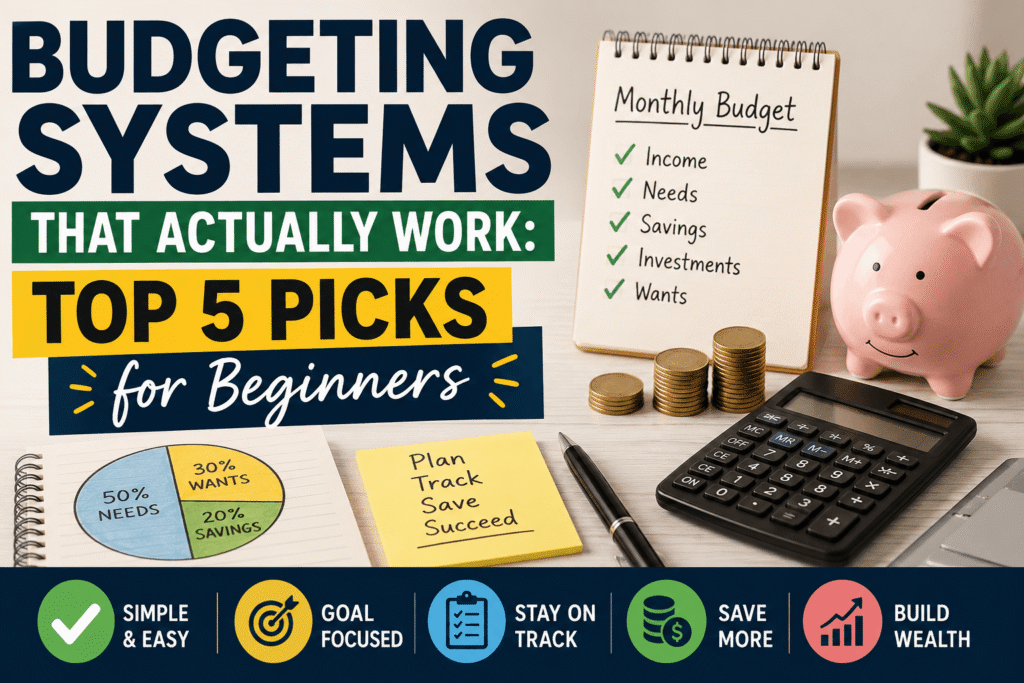
The 50/30/20 rule is one of the most popular budgeting systems because of how simple it is.
The structure looks like this:
- 50% for needs
- 30% for wants
- 20% for savings and investments
Needs include expenses like rent, transportation, groceries, and utilities. Wants include entertainment, eating out, shopping, and lifestyle spending. The final 20% goes toward savings, debt repayment, or investing.
This system works well for people who want flexibility without tracking every single expense. Instead of monitoring tiny details, you focus on maintaining healthy spending proportions overall.
The biggest advantage of this system is simplicity. It creates structure without becoming overwhelming.
Zero-Based Budgeting
Zero-based budgeting is a more intentional budgeting method where every unit of income is assigned a purpose before the month begins.
With this system, your income minus your planned expenses equals zero. That does not mean you spend everything. It means every amount is allocated intentionally, including savings and investments.
For example:
- Rent
- Food
- Transportation
- Savings
- Investments
- Emergency fund
- Entertainment
Everything gets assigned before spending starts.
This budgeting method works well for people who want more control and awareness over their finances. It is especially useful for reducing wasteful spending because every expense must be planned in advance.
The downside is that it requires more active tracking and monthly planning than simpler systems.
The Cash Envelope System
The cash envelope system is designed to help people control overspending.
With this method, you place physical cash into different spending categories such as:
- Groceries
- Transportation
- Entertainment
- Shopping
Once the cash in a category is gone, you stop spending in that area until the next budget cycle.
This system works because it creates immediate awareness around spending. Swiping a card often feels emotionally disconnected, but physically handing over cash makes spending feel more real.
The envelope system is particularly effective for people who struggle with impulse spending or constantly overspend on discretionary categories.
Pay Yourself First Budgeting
This method focuses on prioritizing savings before anything else.
Instead of spending first and saving whatever is left, you automatically move money into savings or investments immediately after receiving income.
The process is simple:
- Income arrives
- Savings are transferred automatically
- Remaining money is used for expenses and lifestyle spending
This budgeting strategy works because it removes the temptation to spend money that should have been saved.
One of the best ways to stay consistent with this method is learning how to automate your savings system so the process happens automatically every month.
The 3-Bucket Budgeting System
If you want something extremely simple, the 3-bucket system is one of the easiest budgeting methods to follow.
Your income is divided into three categories:
- Expenses
- Savings
- Enjoyment
A common structure looks like this:
- 70% for expenses
- 20% for savings
- 10% for enjoyment
This simple budgeting system works well because it removes complexity while still creating financial structure.
You do not need dozens of categories or constant calculations. You simply ensure that your spending stays within the correct bucket.
For many beginners, this approach is easier to maintain long-term than highly detailed budgeting systems.
How to Choose the Right Budgeting System
There is no single budgeting method that works for everyone.
The right personal budgeting system depends on your lifestyle, personality, income structure, and financial goals.
If you dislike detailed tracking, simpler systems like the 50/30/20 rule or the 3-bucket method may work better for you.
If you prefer complete control and intentional planning, zero-based budgeting may be a better fit.
If overspending is your biggest challenge, the cash envelope method can help create stronger spending awareness.
Your budgeting system should fit naturally into your life. A system that feels impossible to maintain will eventually be abandoned, regardless of how effective it looks on paper.
Ultimately, the best budgeting systems that actually work are the ones that fit naturally into your daily life and financial habits.
The best approach is to adopt a simple budgeting system, stay consistent, and improve gradually over time.
Common Budgeting Mistakes to Avoid
One of the biggest budgeting mistakes is trying to change everything at once.
People often go from uncontrolled spending to extremely restrictive budgets overnight. This usually creates frustration and burnout.
Another common mistake is setting unrealistic spending limits. If your budget does not reflect your actual lifestyle, it becomes difficult to follow consistently.
Ignoring small expenses is another issue. Tiny purchases may not seem important individually, but they accumulate quickly over time. This is why using money budgeting system can help improve financial awareness.
Budgeting becomes much easier when you use expense tracking methods that actually work to understand where your money is going.
Many people also quit too early. Budgeting is a skill, and like any skill, it improves with practice. Your first budget will probably not be perfect, and that is completely normal.
Some people also make the mistake of viewing budgeting as punishment instead of structure. A budget is not designed to stop you from enjoying money. It is designed to help you enjoy money without creating financial chaos afterward.
How Budgeting Fits Into a Personal Money System
Budgeting is important, but it is only one part of a larger financial structure.
A complete financial system includes:
- Budgeting
- Saving
- Automation
- Expense tracking
- Investing
- Financial planning
Budgeting helps you organize your spending, but long-term financial stability comes from combining your personal budgeting system with a full personal money system that manages how your income flows overall.
If you want to build a stronger financial foundation, learning how to build a personal money system will help you connect budgeting with long-term financial control and wealth building.
When budgeting becomes part of a larger system, managing money becomes far less stressful and far more predictable.
FAQs
What is the best budgeting system for beginners?
The best budgeting system for beginners is usually a simple structure like the 50/30/20 rule or the 3-bucket budgeting system because they are easy to follow and maintain consistently.
Why do most budgeting systems fail?
Most budgeting systems fail because they are too complicated, unrealistic, or inconsistent. Emotional spending and lack of tracking also make budgeting difficult.
What are budgeting systems that actually work?
Budgeting systems that actually work are systems that are simple, flexible, and sustainable enough to follow long-term without becoming overwhelming.
How do I choose a personal budgeting system?
Choose a personal budgeting system based on your income, spending habits, financial goals, and personality. The best system is one you can consistently maintain.
What is a simple budgeting system?
A simple budgeting system divides your income into basic categories like expenses, savings, and personal spending without requiring complex tracking.
Is budgeting necessary for financial stability?
Yes. Budgeting helps you control spending, save consistently, avoid debt, and build long-term financial stability.
How can I stick to a budgeting system consistently?
You can stay consistent by choosing a realistic budgeting method, automating savings, tracking expenses regularly, and avoiding overly restrictive spending limits.
Final Thoughts
The best budgeting systems that actually work are not the ones that look the most impressive. They are the ones you can realistically maintain over time.
A good personal budgeting system should help you feel more aware, more organized, and more in control of your finances without making your life unnecessarily complicated.
If you are just getting started, focus on simplicity first. You do not need a perfect money budgeting system to improve your finances. You need a system that you can follow consistently.
Many people use budgeting as a way to finally stop living paycheck to paycheck and regain financial control.
Over time, those small consistent actions become the foundation of financial stability and long-term wealth.