You finally start earning your own money, and for a moment it feels like everything has changed. No more waiting. No more asking. Just you, your income, and the freedom to decide what happens next. It feels exciting at first. You imagine saving more, investing smartly, maybe even building a future that looks completely different from what you grew up seeing. It feels like control is finally in your hands.
But then something unexpected happens. The money comes in… and quietly disappears. Bills show up. Food, transport, subscriptions, random spending you barely notice. At the end of the month, you pause and ask yourself one simple question. Where did it all go? You tried to be careful. You didn’t waste money intentionally. Still, progress feels slow, almost invisible.
If that sounds familiar, you’re not alone. Most people are never taught how to manage money in a structured way. They guess. They react. They try different things without knowing if they’re doing it right. That’s exactly why a Complete Beginner Money Roadmap matters. It gives you clarity when everything feels scattered and helps you move from confusion to control without overthinking every step.
What This Complete Beginner Money Roadmap Does

This is not just another list of tips.
This is a step by step money plan that shows you:
- What to do first
- What to ignore for now
- How to move from earning to investing without stress
Most people struggle not because money is complicated, but because there is no clear order.
This roadmap fixes that.
What This Roadmap Covers
This is not just another money guide filled with random tips.
This is a step by step system that takes you through:
- Understanding your money
- Taking control of your spending
- Building savings and stability
- Preparing for investing
- Finally starting your investment journey with confidence
If you follow this structure, you avoid the most common beginner mistakes. You stop guessing and start building.
Who This Roadmap Is For
This Complete Beginner Money Roadmap is for you if:
- You just started earning and feel unsure what to do next
- Your money disappears faster than expected
- You want to start investing for beginners but feel overwhelmed
- You’ve tried saving but struggle with consistency
- You want a simple system that actually works
Why Most People Struggle Without a Roadmap
Here is the truth most people do not talk about.
Managing money is not hard because it is complex. It is hard because there is no clear order.
People:
- Start investing without savings
- Save without a plan
- Budget without understanding spending
- Or delay everything waiting for the “right time”
This leads to frustration and slow progress.
A roadmap fixes that.
The Complete Beginner Money Roadmap
Earn → Track → Budget → Save → Emergency Fund → Clear Debt → Learn → Invest
Simple. Clear. Repeatable.
Step 1: Understand Where Your Money Is Going
Before anything else, you need clarity.
Not guesses. Not rough ideas. Real clarity.
Most people believe they understand their spending until they actually track it. Then reality shows up. Small daily expenses add up faster than expected. Subscriptions go unnoticed. Random spending becomes patterns. Suddenly, the reason progress feels slow becomes obvious.
How to do it
- Track every expense for one month
- Write it down or use a simple app
- Group into categories like food, transport, bills, extras
This step is not about guilt. It is about awareness.
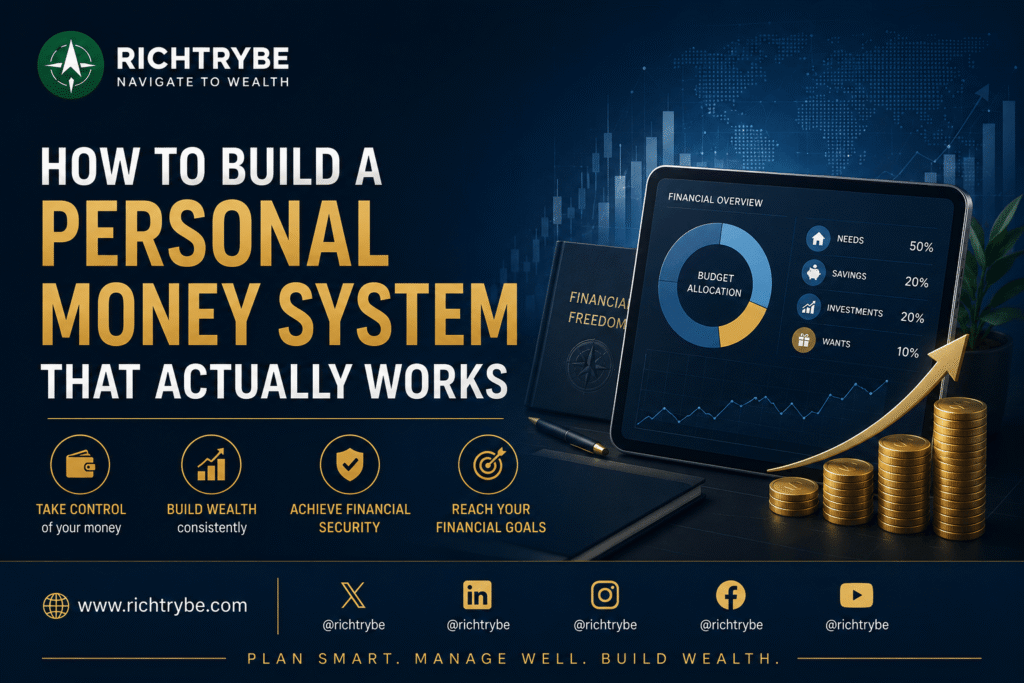
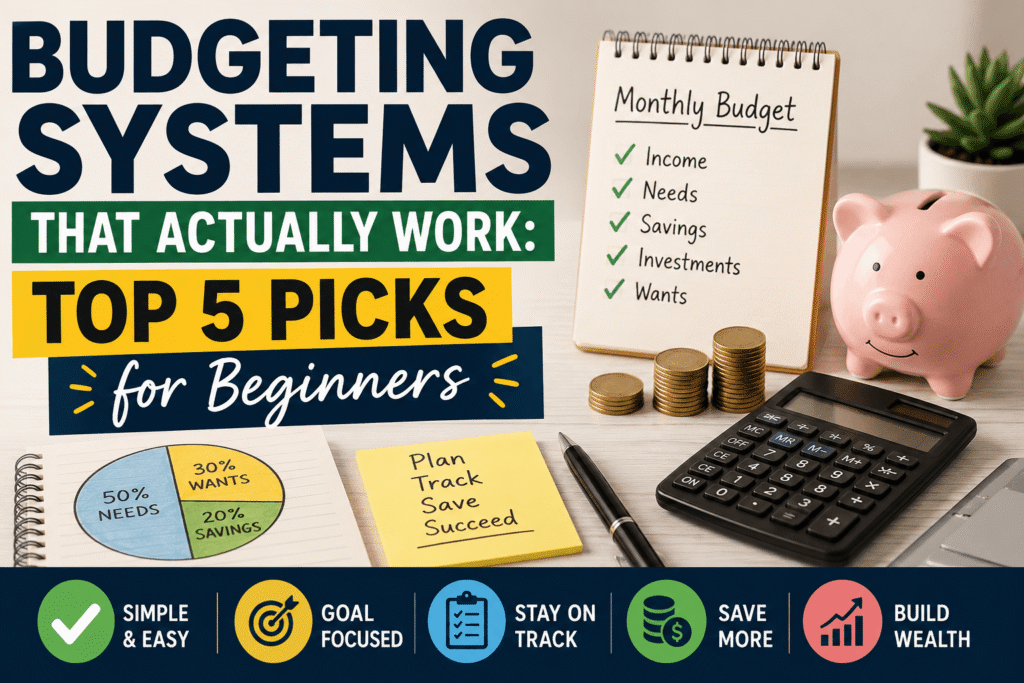
Step 2: Build a Simple Budget That Works
Now that you can see your money clearly, it is time to control it.
A budget is not restriction. It is direction.
Instead of wondering where your money went, you decide where it goes.
How to do it
Use a simple structure:
- Needs
- Wants
- Savings and investing
Keep it flexible. Life changes. Your budget should adapt with it.
For a practical breakdown, 50/30/20 Budget Rule: A Simple Guide to Managing Your Money makes this easy to apply.
Step 3: Start Saving Consistently
Saving is where your progress becomes visible.
You do not need large amounts. You need consistency.
Many beginners wait until they can save big. That moment rarely comes. The better approach is to start small and build the habit early.
Simple approach
- Choose a fixed percentage or amount
- Save immediately after income
- Treat it like a bill
Over time, this becomes automatic.
If saving feels difficult, Save Money Fast on a Low Income: Practical Tips and Strategies can help you build momentum.
Step 4: Build Your Emergency Fund
Life happens. Unexpected expenses show up.
Without an emergency fund, one problem can undo months of progress.
This is your financial safety net.
How much should you save?
- Start with one month of expenses
- Gradually build to three to six months
This money is not for investing. It is for stability.
To build it properly, How to Build an Emergency Fund: A Beginner Friendly Guide walks you through it.
Step 5: Clear High Interest Debt
Debt works against you the same way investing works for you.
High interest debt quietly slows your progress.
Before serious investing, you need to reduce this pressure.
What to do
- List all debts
- Focus on highest interest first
- Stay consistent
This step is not just financial. It gives you breathing space.
If you feel stuck here, How to Stop Living Paycheck to Paycheck (Complete Guide) helps you reset.
Step 6: Learn the Basics of Investing
Now things begin to shift.
You are no longer just managing money. You are preparing to grow it.
You do not need deep knowledge. You need simple understanding.
Focus on
- What investing actually means
- Risk and return
- Diversification
- Why consistency matters
Keep it simple.
To understand growth clearly, The Power of Compound Interest: How Money Grows Over Time is essential.
Step 7: Start Investing Small
This is where many people hesitate.
They think:
- “I need more money”
- “I need more knowledge”
- “I need more confidence”
None of that is true.
The best way to learn investing is to start.
How to begin
- Choose beginner friendly investments
- Start with a small monthly amount
- Focus on consistency
For a clear starting point, How to Create a Simple Investment Plan: A Beginner Friendly Guide to Growing Wealth will help you take action.
Your First 90 Days Using This Roadmap
If everything feels overwhelming, break it down.
- Month 1
Track spending and build a simple budget - Month 2
Start saving and begin your emergency fund - Month 3
Learn basics and start investing small
That is it, no pressure just progress.
A Simple Real Life Scenario
You earn your first salary.
At first, you spend freely. It feels deserved. Then the month ends and nothing is left.
Next month, you try something different.
You track your spending. You save a small amount immediately. It feels small, almost pointless.
Three months later, you have your first savings buffer.
Six months later, you start investing.
Nothing dramatic happens overnight. But something important changes.
You feel in control.
That’s how a complete beginner money roadmap works. Quiet progress that builds confidence over time.
6 Ways to Stay Consistent Without Burning Out
Consistency is where most people struggle, especially when following a complete beginner money roadmap.
Not because they are lazy, but because life gets busy. When your system relies too much on motivation, it eventually breaks. That’s why a good money roadmap for beginners focuses on simplicity and repeatability, not pressure.
1. Make Your System Easy to Follow
If your plan feels complicated, you won’t stick with it.
A strong step by step money plan removes unnecessary decisions. You already know how much to save or invest, and when to do it. No second guessing. No overthinking.
Simplicity is what turns effort into habit.
2. Automate What You Can
Automation removes friction.
Set your savings and investments to run automatically. This allows your complete beginner money roadmap to keep working even when you are busy or distracted.
Consistency becomes something that happens, not something you force.
3. Lower the Pressure
Burnout often comes from trying to do too much too quickly.
A solid beginner financial roadmap is not about doing everything perfectly. It is about doing something consistently.
Small, steady progress will always beat short bursts of intensity.
4. Focus on Direction, Not Perfection
Missing a month does not mean you failed.
What matters is continuing. A step by step money plan is designed to keep you moving forward, even if progress feels slow.
Consistency is built over time, not in perfect streaks.
5. Avoid Constant Checking
Checking too often creates stress.
Instead of reacting to every small change, give your plan time to work. Reviewing monthly is enough to stay aware without feeling overwhelmed.
This helps your money roadmap for beginners stay stable and focused.
6. Keep Your “Why” Visible
When things feel slow, your reason matters.
Whether it’s stability, freedom, or growth, keep it in mind. A complete money guide for beginners only works when your actions are connected to something meaningful.
Consistency is not about pushing harder. It is about making your system easier to follow.
When that happens, your complete beginner money roadmap becomes something you can stick with long term.
Common Beginner Mistakes to Avoid
Even with a roadmap, mistakes happen.
Watch out for:
- Investing too early without a base
- Overcomplicating decisions
- Waiting for perfect timing
- Ignoring small expenses
For deeper insight, 10 Money Mistakes That Destroy Wealth breaks this down clearly.
Quick Start Checklist
If you want something simple to follow, start here:
- Track your spending
- Build a basic budget
- Start saving consistently
- Build an emergency fund
- Learn investing basics
- Start investing small
That’s your roadmap.
Where to Go Next (Your Growth Path)
Once you start this roadmap, your next steps become clearer.
- Build control → Budgeting Methods for Beginners
- Strengthen savings → How to Build an Emergency Fund
- Start investing → How to Create a Simple Investment Plan
- Stay consistent → How to Stay Consistent When Investing Small Amounts
This is how your content ecosystem works together.
FAQs
What is a Complete Beginner Money Roadmap?
It is a structured path that takes you from earning your first income to starting your first investment in a clear and simple way.
Do I need a lot of money to start?
No. Small amounts are enough. Consistency matters more than size.
When should I start investing?
After you build basic savings and stability. Not perfect conditions.
What is the biggest mistake beginners make?
Skipping steps and trying to do everything at once.
How long before I see results?
Financial progress builds slowly at first, then becomes noticeable over time.
Final Thoughts
You don’t need perfect timing. You don’t need perfect knowledge. You don’t need a large amount of money.
What you need is a clear path.
That’s exactly what a complete beginner money roadmap gives you. Direction when things feel confusing. Confidence when you feel unsure. Progress when everything feels slow.
Start small. Stay consistent. Keep it simple.
Years from now, you won’t be thinking about how perfect your first step was.
You’ll be glad you started.
So now the question becomes simple. What is the first step you are ready to take today?