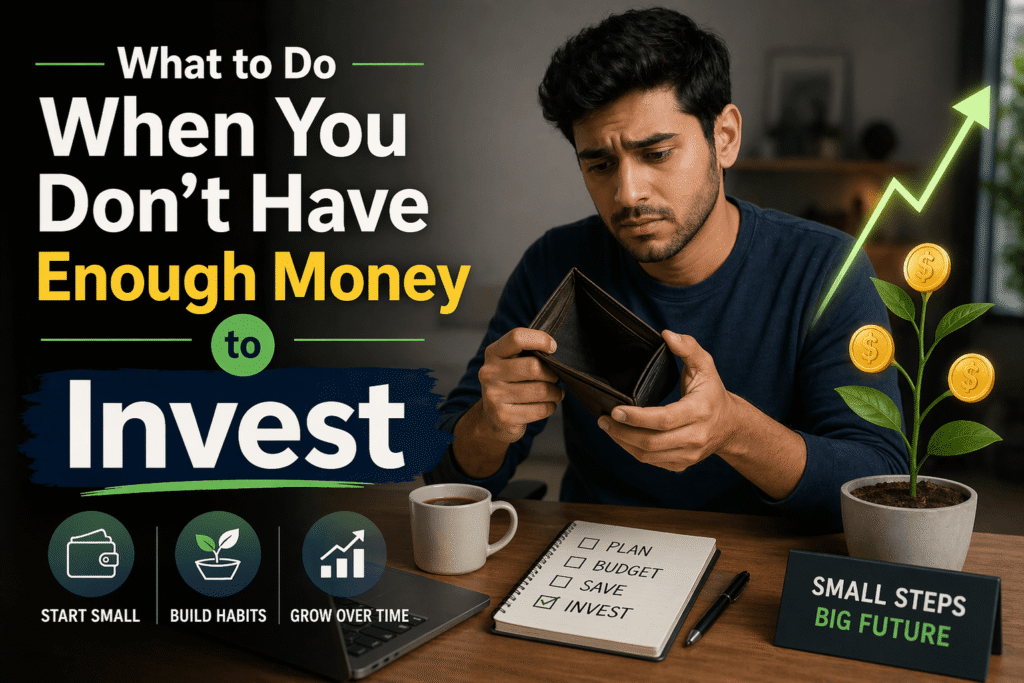
What to do when you don’t have enough money to invest is a question many people face, especially when they’re trying to improve their finances but feel stuck at the starting point. It’s easy to believe that investing is only for people with extra income, but that mindset can hold you back from making real progress.
The truth is, investing doesn’t start with money, it starts with structure. Before you can grow your wealth, you need to understand how to manage what you already have. Without that foundation, even if you start investing, it can feel overwhelming and difficult to sustain.
That’s why understanding what to do if you can’t afford to invest is so important. It shifts your focus from frustration to preparation. Instead of worrying about what you don’t have, you begin to take control of what you can improve, your habits, your spending, and your consistency.
If you’re starting from scratch and need a clear path forward, The Complete Beginner Money Roadmap: From First Salary to First Investment can help you organise your finances step by step and prepare for investing the right way.
Why You Might Not Have Enough Money to Invest
Not having money to invest usually comes down to a few key reasons: low income, high expenses, or lack of financial structure.
Sometimes it’s not just about how much you earn, it’s about how your money is managed. Without clear control over your finances, even a decent income can feel insufficient.
This is why solving the problem starts with understanding your financial habits, not just your income level.
Can You Invest Without Money?
A common question is can you invest without money. The honest answer is no, you need some money to invest.
However, what you can do is prepare yourself to invest. That means building habits, freeing up cash, and creating systems that make investing possible later.
Think of this stage as laying the groundwork for future growth.
What to Do When You Don’t Have Enough Money to Invest
If you’re trying to figure out what to do when you don’t have enough money to invest, the key is to focus on building a strong financial base first.
Investing comes after you create stability, not before. By improving how you manage, save, and grow your money, you gradually create the ability to invest without pressure.
1. Build Control Over Your Money
Before anything else, you need to understand where your money is going. Track your income and expenses so you can clearly see your spending patterns.
When you gain control over your money, you stop guessing and start making intentional decisions. This clarity helps you identify waste, manage your finances better, and create small opportunities to save, no matter your income level.
2. Create a Financial Cushion
If you’re struggling financially, your first priority should be stability. Even a small emergency fund can protect you from unexpected expenses and prevent you from falling back into financial stress.
This step is important because it makes investing sustainable. Without a cushion, any emergency could force you to stop or withdraw your investments, which slows your progress.
3. Cut Back on Unnecessary Spending
Look for small, recurring expenses that don’t add real value to your life. These are often the easiest places to free up money without making drastic changes.
Most of these spending habits happen automatically, which is why understanding them matters. The Psychology of Spending: Why You Buy Things You Don’t Need can help you see why these expenses happen and how to take back control.
4. Increase Your Income
If your income is too tight, cutting expenses alone may not be enough. At some point, you need to focus on earning more.
Look for ways to increase your income through side hustles, skill development, or better opportunities. This directly supports how to invest when you are broke, because the more you earn, the more flexibility you have to save and invest consistently.
How to Start Investing With No Money (Realistic Approach)
When people ask how to start investing with no money, what they really mean is starting with very little.
Begin with extremely small amounts. Even a tiny, consistent investment is better than waiting for the “perfect time.”
The goal here is not growth, it’s building the habit. Over time, as your income improves, your investments can grow with it.
If you want to make this easier, How to Build an Investment Habit: Small Steps That Lead to Big Investments shows how to stay consistent even with small amounts.
How to Invest When You Are Broke
If you feel like you’re broke, the first step in learning how to invest when you are broke is shifting your mindset. Instead of focusing on what you don’t have, focus on what you can control.
Start with simple habits, tracking your spending, saving small amounts, and staying consistent. These actions may seem small, but they build momentum and create a foundation for future investing.
Over time, as your habits improve and your financial situation becomes more stable, this approach naturally turns into real, measurable progress.
Simple Plan to Move From No Money to Investing
You don’t need a complex strategy, just a simple path you can follow consistently when figuring out what to do when you don’t have enough money to invest.
Start by tracking your spending so you know where your money goes. this gives you clarity and helps you find small areas to free up money.
Save a small, consistent amount no matter how little, even tiny amounts matter. The goal here is consistency, not size.
Begin investing once you have a small cushion, having a basic safety net makes investing more stable and less stressful.
Increase your contributions as your income grows, as you earn more, invest more. This helps you build momentum over time.
This simple progression helps you move from having nothing to building something meaningful.
Common Mistakes to Avoid
One of the biggest reasons people stay stuck financially is not because they lack money, but because of repeated mistakes that slow their progress. Understanding these mistakes helps you stay consistent and build momentum over time.
- Waiting until you earn more before taking action
This mindset delays progress. You don’t need a higher income to start building good financial habits. Starting small now puts you in a better position than waiting for a future that isn’t guaranteed.
- Trying to invest too much too soon
Going in too aggressively can create pressure on your finances. If investing starts affecting your ability to meet basic needs, it becomes unsustainable. A steady, manageable approach works better long-term.
- Ignoring small amounts because they seem insignificant
Small amounts may feel unimportant, but they are the foundation of consistency. Over time, these small contributions add up and help you build discipline and momentum.
- Being inconsistent with saving or investing
Inconsistency breaks progress. Starting and stopping makes it harder to see results. Even if the amount is small, staying consistent is what creates real financial growth.
Avoiding these mistakes keeps you on track and helps you build steady progress.
Final Thoughts
Understanding what to do when you don’t have enough money to invest is really about changing your approach to money. Instead of seeing investing as something you can’t do yet, you begin to see it as something you’re actively preparing for.
The biggest mistake people make is waiting for the “perfect moment” when they finally have enough money. In reality, progress comes from small, consistent actions, tracking your spending, saving little amounts, and gradually building the capacity to invest.
You don’t need a lot to get started. What you need is consistency, patience, and a simple plan that you can stick to over time. As your income improves and your habits get stronger, investing becomes easier and more natural.
If you want to see how small beginnings can turn into meaningful financial growth, How to Build Big Investments with Small Savings (A Realistic Guide to Long-Term Wealth) breaks it down in a practical, easy-to-follow way.
Start where you are, stay consistent, and let your progress build over time.