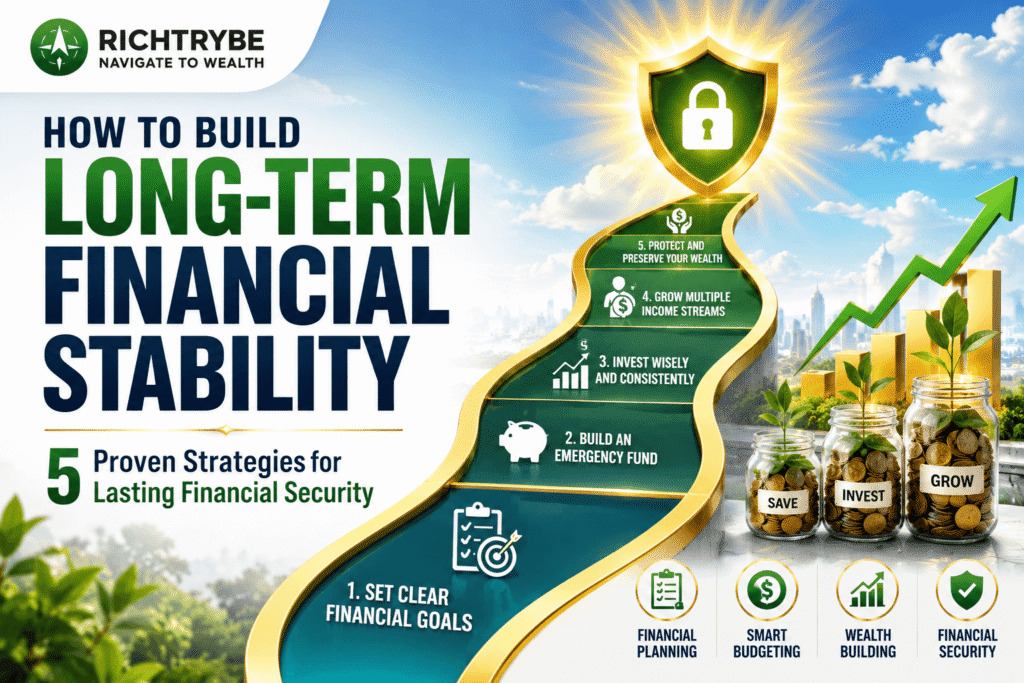
Most people understand they should be building wealth, but few know where to start. The gap between knowing and doing usually comes down to not having a clear, sequential plan to follow.
Building wealth step by step as a beginner is not about earning more or finding the perfect investment. It is about making the right moves in the right order, consistently, over time.
These 10 strategies cover the core decisions that drive long-term wealth creation, from the basics of budgeting and saving to asset ownership and compounding investment returns.
If you’re still working on your financial foundation, How to Build a Personal Money System That Actually Works is a great place to start.
What Does It Mean to Build Wealth?

Building wealth means increasing your net worth over time by consistently saving, investing, and acquiring assets that grow in value.
It’s not simply about earning more money.
Someone earning $50,000 who saves and invests consistently can build more wealth than someone earning $150,000 who spends everything they make.
In simple terms, wealth building is the process of turning income into long-term financial assets that create security, opportunities, and financial freedom.
Why Wealth Building Matters
Many people work hard for their money but never build lasting wealth because they don’t have a clear plan for what happens after they get paid. Without a wealth-building strategy, income often disappears into day-to-day expenses, saving becomes inconsistent, and long-term financial goals remain out of reach.
When there’s no system in place:
- Income gets spent as quickly as it arrives
- Financial progress feels slow and unpredictable
- Unexpected expenses create major setbacks
- Retirement and future goals become uncertain
- Financial stress becomes a constant part of life
A structured beginner wealth building guide changes that completely. Instead of wondering where your money went each month, you begin directing it with purpose. Every dollar starts working toward a bigger goal.
With a clear wealth-building plan:
- You gain greater control over your financial future
- Your money starts working for you through saving and investing
- Long-term goals become more achievable
- Wealth continues to grow even when you’re not actively working
- Financial security becomes more realistic and sustainable
The real benefit isn’t becoming wealthy overnight. It’s creating a system that steadily improves your financial position year after year.
If you’re looking for practical ways to support this process, Daily Money Habits That Build Wealth Over Time can help you develop the small financial behaviors that create lasting results.
Ultimately, wealth building is about more than money. It’s about creating choices, reducing financial stress, and building the freedom to live life on your own terms.
How to Build Wealth Step by Step as a Beginner
Many people assume wealth is built through high salaries, lucky investments, or complicated financial strategies. In reality, most wealth is built much more quietly. It’s the result of small financial decisions repeated consistently over a long period of time.
The good news is that you don’t need to be rich to start building wealth. You don’t need a perfect investment portfolio, a six-figure income, or years of financial experience. What you need is a system that teaches you how to grow your wealth over time by helping you save more, invest consistently, and make smarter decisions with your money.
If you’re wondering how to build wealth as a beginner, the process can be broken down into a series of practical steps that almost anyone can follow. Each step builds on the one before it, creating a foundation that becomes stronger over time.
Here are the 10 steps to build wealth from scratch.
Step 1: Define What Wealth Means to You
Before you start building wealth from scratch, you need to know what you’re actually working toward.
One of the biggest mistakes people make when learning how to build wealth as a beginner is focusing on money without defining the life they want that money to support.
Wealth means different things to different people. For some, it means financial freedom. For others, it means home ownership, early retirement, a growing investment portfolio, or simply never having to worry about money again.
Ask yourself:
- What financial goals matter most?
- Do you want financial independence?
- Do you want to retire comfortably?
- Do you want passive income?
- Do you want long-term financial security?
When your goals are clear, your decisions become clearer. Saving, investing, and budgeting become easier because every action is connected to a purpose.
Why this matters: Every successful wealth building strategy for beginners starts with a clear destination. Wealth grows faster when you know exactly what you’re building toward.
Step 2: Understand Your Current Financial Position
Every effective beginner wealth building guide starts with understanding your current financial reality.
You cannot improve what you don’t measure. Before creating a wealth-building plan, you need a complete picture of your finances.
Calculate:
- Monthly income
- Monthly expenses
- Savings
- Debts
- Investments
- Net worth
This exercise helps you identify financial strengths, weaknesses, and opportunities for improvement.
Many people skip this step and wonder why progress feels slow. The truth is that wealth building becomes much easier when you know exactly where you stand.
Why this matters: Knowing your numbers helps you create a realistic wealth building plan and gives you a measurable starting point for long-term wealth creation.
Step 3: Create a Simple Budget
A budget isn’t about restriction, it’s about direction.
One of the most important wealth building habits is telling your money where to go before you spend it. Without a budget, income often disappears into everyday spending, leaving little room for saving and investing.
Focus on:
- Essentials
- Savings
- Investments
- Lifestyle spending
A simple budget creates the cash flow needed to grow your wealth over time. It ensures that wealth-building activities happen consistently rather than occasionally.
If you’re struggling to free up money for saving and investing, How to Fix Your Finances Without Earning More Money can help you identify opportunities within your existing income.
Why this matters: Wealth creation becomes difficult when every dollar is already committed to spending.
Step 4: Build an Emergency Fund
Financial stability is the foundation of every successful long-term wealth strategy.
Unexpected expenses are inevitable. Medical bills, job changes, home repairs, and emergencies can quickly derail your finances if you’re unprepared.
Aim for:
- 3–6 months of essential expenses
- A separate savings account
- Easy access when needed
An emergency fund protects the progress you’ve worked hard to build and prevents temporary setbacks from becoming long-term financial problems.
Why this matters: Wealth grows faster when emergencies don’t force you into debt or require you to liquidate investments.
Step 5: Eliminate High-Interest Debt
One of the smartest wealth building tips for beginners is eliminating financial obstacles before trying to accelerate growth.
High-interest debt works against everything you’re trying to accomplish. The longer it remains, the harder it becomes to build net worth and achieve financial independence.
Prioritize paying off:
- Credit card debt
- Payday loans
- High-interest personal loans
Every dollar no longer going toward interest can be redirected toward savings, investments, and asset ownership.
Why this matters: Building wealth while carrying expensive debt is like trying to fill a bucket with holes.
Step 6: Increase Your Savings Rate
Learning how to accumulate wealth over time often comes down to one simple principle: keep more of what you earn.
Your savings rate plays a major role in determining how quickly you can build wealth.
Look for opportunities to:
- Reduce unnecessary spending
- Increase income
- Automate savings
- Avoid lifestyle inflation
Even small improvements can have a significant impact when maintained consistently over many years.
Why this matters: Wealth is built from the gap between what you earn and what you spend.
Step 7: Start Investing Early
One of the most important principles of wealth building for beginners is starting before you feel ready.
Investing is where wealth creation for beginners truly begins. While saving provides stability, investing allows compound growth to multiply your money over time.
Focus on:
- Broad-market index funds
- Retirement accounts
- Diversified investments
- Long-term investing
The goal isn’t to get rich quickly. The goal is to stay invested long enough for compound growth to work in your favor.
Why this matters: Long-term investing remains one of the most effective wealth building strategies for beginners because time is one of the most powerful wealth-building tools available.
Step 8: Build Multiple Income Streams
Most people pursuing financial freedom eventually realize that relying on a single income source can limit wealth creation.
Consider building additional income through:
- Freelancing
- Side businesses
- Dividend investments
- Rental income
- Digital products
Extra income provides more opportunities to save, invest, and acquire assets while reducing financial risk.
Why this matters: Multiple income streams accelerate wealth accumulation and strengthen your overall wealth building system.
Step 9: Focus on Acquiring Assets
Asset ownership is one of the defining characteristics of people who successfully build lasting wealth.
Assets are things that generate income or increase in value over time, such as:
- Stocks
- Businesses
- Real estate
- Index funds
- Income-producing investments
The more productive assets you own, the less dependent you become on earned income.
Why this matters: Long-term wealth is built through asset ownership, not consumption.
Step 10: Stay Consistent for Years
If there’s one secret behind every successful beginner wealth building guide, it’s consistency.
Building wealth rarely happens quickly. Most wealth accumulation occurs through years of disciplined saving, investing, learning, and improving your financial habits.
Continue to:
- Save regularly
- Invest consistently
- Increase income
- Improve financial discipline
- Strengthen your wealth mindset
Small actions repeated over years often outperform dramatic short-term efforts.
Why this matters: Consistency is the engine behind long-term wealth creation, financial independence, and lasting financial security.
How Wealth Building Changes Your Financial Habits
When you follow a structured beginner wealth building guide, your behavior starts to change.
You:
- Spend more intentionally
- Save automatically
- Think long-term
- Make better financial decisions
- Focus on growth instead of consumption
Over time, these habits create momentum that makes building wealth easier and more predictable.
Common Mistakes to Avoid
Building wealth is simple in theory, but it’s often the small mistakes, not the big ones, that prevent people from making meaningful progress.
Even with a solid beginner wealth building guide, certain habits can quietly slow down your results and keep you from reaching your financial goals.
Some of the most common mistakes include:
- Waiting for the perfect time to start: Many people delay saving or investing until they earn more money, have fewer expenses, or feel more confident. The truth is that wealth is usually built by starting with what you have today, not by waiting for ideal conditions.
- Focusing only on income growth: Earning more money helps, but income alone doesn’t create wealth. Without strong saving, investing, and money management habits, higher income often leads to higher spending rather than greater wealth accumulation.
- Ignoring investing for too long: Saving money is important, but investing is what allows your money to grow through compound returns. One of the biggest mistakes in wealth building for beginners is postponing investing until “later.”
- Taking on unnecessary debt: High-interest debt reduces the amount of money available for saving, investing, and acquiring assets. The more interest you pay, the harder it becomes to grow your net worth.
- Chasing get-rich-quick schemes: Wealth building is a long-term process. Strategies that promise fast riches often carry high risks and can destroy years of financial progress. Sustainable wealth is usually built through patience, consistency, and proven financial principles.
- Constantly changing strategies: Jumping from one investment, budget, or financial plan to another often leads to poor results. Successful wealth builders follow a long-term wealth strategy and give it time to work.
- Giving up too early: Building wealth rarely produces dramatic results in the beginning. Progress often feels slow until compound growth starts to accelerate. Many people quit just before their efforts begin to pay off.
The key lesson is simple: a straightforward wealth-building system that you follow consistently will almost always outperform a perfect plan that never gets implemented. Long-term wealth creation isn’t about making flawless decisions, it’s about making good decisions consistently over time.
FAQs
How do beginners start building wealth?
Beginners start building wealth by creating a budget, building an emergency fund, paying off high-interest debt, increasing their savings rate, and investing consistently over time.
What is the fastest way to build wealth as a beginner?
The fastest way to build wealth as a beginner is to increase your income, maintain a high savings rate, avoid unnecessary debt, and invest regularly in diversified assets.
Can you build wealth on a low income?
Yes. Wealth building is possible on a low income by controlling expenses, saving consistently, investing regularly, and gradually increasing income over time.
How long does it take to build wealth?
Building wealth is a long-term process that often takes years or decades. The timeline depends on income, savings rate, investment returns, and financial habits.
What are the best wealth-building strategies for beginners?
The best wealth-building strategies include budgeting, building an emergency fund, eliminating debt, investing early, increasing income, and acquiring assets that grow in value.
What investments help build wealth over time?
Common investments that help build wealth include index funds, retirement accounts, stocks, real estate, and other diversified long-term investment vehicles.
Why is investing important for wealth building?
Investing helps your money grow through compound returns, making it one of the most effective ways to build long-term wealth and achieve financial independence.
What is the difference between saving and building wealth?
Saving focuses on preserving money, while building wealth involves growing your money through investing, asset ownership, and strategic financial planning.
Can multiple income streams help build wealth?
Yes. Multiple income streams can increase cash flow, reduce financial risk, and provide additional money to save, invest, and acquire wealth-building assets.
What is the biggest mistake people make when building wealth?
One of the biggest mistakes is delaying action. Waiting for the perfect time to start often results in missed opportunities for saving, investing, and compound growth.
Final Thoughts
Learning how to build wealth as a beginner doesn’t require a financial degree, a six-figure income, or complicated investment strategies.
What it requires is a system.
Start by understanding your finances, creating a budget, building an emergency fund, eliminating expensive debt, and investing consistently. Then focus on acquiring assets and staying committed to the process. If you’re ready to connect these principles into a long-term strategy, 10 Powerful Routines That Build Long-Term Wealth will help you turn individual financial actions into a sustainable framework for long-term wealth creation.
The most important lesson is that wealth isn’t built overnight. It’s built through thousands of small decisions made consistently over time.
Because in the end, building wealth isn’t about how much money you make, it’s about how effectively you manage, save, and grow the money you already have.