
Building wealth is an important goal, but before wealth can grow, financial stability must be established. Many people focus on increasing their income or investing aggressively while overlooking the foundation that supports long-term financial success.
Learning how to build long-term financial stability helps you create a financial system that can withstand unexpected expenses, economic uncertainty, and life changes. It provides the security needed to pursue bigger goals such as investing, homeownership, business ownership, and financial independence.
If you’re looking for practical long-term financial stability strategies, this guide will show you how to create a strong financial foundation that supports lasting growth and financial security.
Before you begin, read How to Fix Your Finances Without Earning More Money to strengthen your financial foundation.
What Does Long-Term Financial Stability Mean?
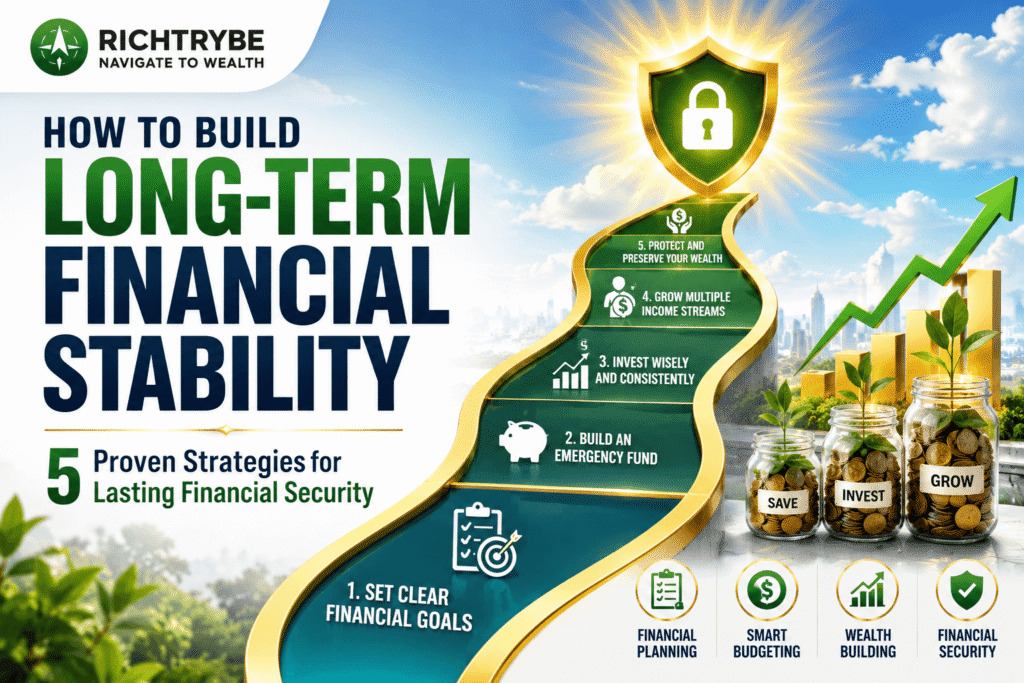
Long-term financial stability is the ability to consistently meet financial obligations, handle unexpected expenses, maintain healthy savings, and achieve future financial goals without ongoing financial stress.
It is built on reliable income, healthy savings, manageable debt, and strong money habits that support financial security over time.
With long-term financial stability, you can:
- Pay bills comfortably
- Handle emergencies without panic
- Save consistently for future goals
- Avoid excessive debt
- Plan confidently for the future
- Maintain financial peace of mind
In simple terms, financial stability provides security today while creating the foundation for wealth tomorrow.
Why Financial Stability Matters
Financial stability is the foundation of long-term financial success. Without it, even a good income can be undermined by unexpected expenses, debt, and financial uncertainty.
When your finances lack stability:
- Emergencies can quickly become financial setbacks
- Debt becomes harder to control
- Saving consistently becomes difficult
- Financial stress increases
- Long-term goals are often postponed
On the other hand, when you build long-term financial stability, you create a financial buffer that allows you to navigate challenges with confidence, make better financial decisions, and focus on future growth rather than short-term survival.
Simply put, financial stability gives you the freedom to plan ahead instead of constantly reacting to financial problems.
Financial Stability vs Financial Wealth
| Factor | Financial Stability | Financial Wealth |
|---|---|---|
| Primary Goal | Security | Growth |
| Focus | Managing risk | Increasing assets |
| Time Horizon | Present and future | Long-term |
| Main Tools | Budgeting, savings, debt management | Investing and asset ownership |
| Outcome | Financial security | Financial independence |
Both are important, but financial stability typically comes first.
Why Stable Finances Lead to Better Financial Outcomes
Research consistently shows that people who prioritize long-term financial stability are better equipped to handle economic uncertainty, unexpected expenses, and major life events. Households with emergency savings, manageable debt, and clear financial plans are often in a stronger position to achieve both short-term and long-term financial goals.
According to the Consumer Financial Protection Bureau (CFPB), consumers with emergency savings and consistent saving habits tend to report greater financial well-being, improved financial preparedness, and fewer difficulties meeting financial obligations. These findings highlight the important role that emergency savings and strong financial habits play in building long-term financial resilience.
This is why many financial experts recommend focusing on how to build long-term financial stabilitybefore aggressively pursuing wealth-building opportunities. A stable financial foundation allows you to invest with confidence, avoid costly financial setbacks, and make better long-term decisions.
By implementing proven long-term financial stability strategies, such as maintaining an emergency fund, controlling debt, and planning for future expenses, you can create long-term financial securitywhile improving your ability to grow wealth over time.
Simply put, financial stability provides the foundation that makes sustainable wealth creation possible. For a deeper understanding of setting financial goals and creating a sustainable money plan, read How to Build a Personal Money System That Actually Works.
How to Build Long-Term Financial Stability
Learning how to build long-term financial stability is not about finding a single budgeting trick or making one good financial decision. It’s about creating systems that protect your finances today while preparing you for future opportunities and challenges.
Many people focus on earning more money, but income alone does not guarantee financial security. Long-term stability comes from managing money effectively, protecting yourself from financial setbacks, controlling risk, and creating a plan that can withstand economic uncertainty.
Whether you’re trying to reduce financial stress, improve your financial habits, or create long-term financial security, the key is building a strong financial foundation that supports your goals for years to come.
Quick Answer: How to Build Long-Term Financial Stability
If you want to build long-term financial stability, focus on these five key areas:
- Create a Strong Financial Foundation
- Build Financial Protection Against Emergencies
- Improve Cash Flow and Control Debt
- Develop Consistent Wealth-Building Habits
- Plan for Long-Term Financial Growth
Together, these strategies help create a financial system that remains resilient regardless of economic conditions, unexpected expenses, or life changes.
Strategy 1: Create a Strong Financial Foundation
Every financially stable person starts with a solid foundation.
Before worrying about investing, passive income, or wealth building, you need a clear understanding of how money moves through your life. Without this foundation, even a high income can quickly disappear through poor financial decisions.
A strong financial foundation includes:
- Tracking income and expenses
- Creating a realistic monthly budget
- Paying bills consistently
- Building healthy saving habits
- Eliminating unnecessary spending
Many people assume financial problems are caused by insufficient income, but in reality, poor money management often creates financial instability regardless of earnings.
When you understand where your money goes each month, you gain more control over your finances and make better financial decisions.
If you’re working on improving your financial habits, read How to Track Your Money Without Stress.
Strategy 2: Build Financial Protection Against Emergencies
One of the most important long-term financial stability strategies is preparing for unexpected events.
Job losses, medical expenses, vehicle repairs, and economic downturns can happen at any time. Without preparation, even a minor emergency can create significant financial stress.
A strong protection plan should include:
- An emergency fund covering three to six months of expenses
- Adequate insurance coverage
- Easily accessible cash reserves
- A plan for handling unexpected expenses
Financial protection acts as a buffer between temporary setbacks and long-term financial damage.
The more prepared you are for life’s surprises, the easier it becomes to maintain financial stability during difficult periods.
Strategy 3: Improve Cash Flow and Control Debt
Healthy cash flow is essential if you want to achieve financial stability.
Financial pressure often occurs when too much income is committed to debt payments, recurring expenses, and financial obligations. Even people with relatively high incomes can struggle if their expenses continuously rise alongside their earnings.
Focus on:
- Paying off high-interest debt
- Reducing unnecessary recurring expenses
- Avoiding lifestyle inflation
- Increasing your savings rate
- Building additional income sources
The goal is simple: consistently spend less than you earn.
When positive cash flow becomes a habit, financial stability becomes much easier to maintain because you have more flexibility, greater savings capacity, and less dependence on credit.
Strategy 4: Develop Consistent Wealth-Building Habits
Financial stability is not only about avoiding problems. It’s also about creating habits that strengthen your financial position over time.
Small financial decisions repeated consistently often have a greater impact than occasional large actions.
Examples of wealth-building habits include:
- Saving automatically every month
- Investing regularly
- Reviewing financial goals quarterly
- Reinvesting earnings
- Continuously improving financial knowledge
These habits help transform short-term financial discipline into long-term financial progress.
Over time, consistent actions compound into stronger financial security and increased financial confidence.
Strategy 5: Plan for Long-Term Financial Growth
The final stage of creating long-term financial security is ensuring your finances continue growing rather than remaining stagnant.
Financial stability provides security, but long-term growth creates opportunities.
This stage may include:
- Investing in diversified assets
- Building retirement savings
- Creating additional income streams
- Acquiring income-producing assets
- Setting long-term financial goals
The purpose is to ensure your financial position improves year after year rather than simply remaining stable.
The combination of stability, growth, and consistent financial habits creates a system that supports both financial security and future wealth creation.
For the next stage of your journey, read How to Transition From Income to Assets.
The Real Goal
The goal of building long-term financial stability is not simply avoiding debt or surviving emergencies.
The real goal is creating a financial life where unexpected expenses, economic uncertainty, and future goals can be managed without constant stress or financial disruption.
When your finances are stable, you gain the confidence to invest, pursue opportunities, build wealth, and make long-term decisions from a position of strength rather than fear.
That is what true financial stability looks like.
Common Mistakes to Avoid
Even the best long-term financial stability strategies can fail when common mistakes repeatedly undermine progress. Financial stability is often lost through small, consistent missteps rather than a single major financial decision.
Avoid:
- Living paycheck to paycheck unnecessarily: spending all available income leaves little room for saving or future planning.
- Ignoring emergency savings: unexpected expenses can quickly create financial setbacks.
- Relying heavily on debt: excessive debt reduces cash flow and limits financial flexibility.
- Increasing spending with every pay raise: lifestyle inflation can prevent long-term financial growth.
- Investing before establishing stability: a weak financial foundation can force you to withdraw investments during emergencies.
- Neglecting long-term planning: without clear goals, it’s easy to drift financially.
The good news is that most of these mistakes are preventable. Consistent financial habits often matter more than perfect financial decisions.
How Financial Stability Changes Your Future
When you successfully build long-term financial stability, the benefits extend far beyond your bank account.
Over time:
- Financial stress decreases: you spend less time worrying about money.
- Emergency expenses become manageable: unexpected costs are less likely to disrupt your finances.
- Savings grow consistently: regular saving becomes easier and more sustainable.
- Debt becomes easier to control: improved cash flow allows faster debt reduction.
- Financial goals become achievable: major goals feel more realistic and attainable.
- Wealth-building opportunities increase: you can focus on growth instead of financial survival.
Most importantly, creating long-term financial security gives you confidence that your finances can support both today’s needs and tomorrow’s goals.
FAQs
How do I build long-term financial stability?
Build a strong financial foundation, create emergency savings, manage debt responsibly, improve cash flow, and establish long-term financial habits.
What is the first step toward financial stability?
The first step is understanding where your money goes by tracking income, expenses, and spending habits.
How much should I save for financial stability?
Most financial experts recommend maintaining an emergency fund covering three to six months of essential expenses.
Can I achieve financial stability on a low income?
Yes. Financial stability depends more on consistent financial habits than income level. Budgeting, saving, and managing debt effectively can improve stability regardless of income.
What is the difference between financial stability and financial security?
Financial stability refers to consistently managing financial obligations, while financial security typically refers to having sufficient resources to handle future financial needs confidently.
How long does it take to build long-term financial stability?
The timeline varies based on income, debt, expenses, and financial goals. For many people, noticeable improvements can occur within 6–12 months of consistently budgeting, saving, reducing debt, and following sound financial habits.
Final Thoughts
Learning how to build long-term financial stability is one of the most important financial decisions you can make because it affects every area of your financial life. Without stability, even a high income can be undermined by debt, unexpected expenses, poor financial habits, and a lack of long-term planning.
True financial stability is not achieved overnight. Learning how to achieve financial stability requires consistent financial habits, disciplined money management, and a long-term perspective.
It is built gradually through consistent saving, disciplined spending, strong financial protection, healthy cash flow, and a commitment to making decisions that support your future rather than just your present.
By applying proven long-term financial stability strategies, you can reduce financial stress, prepare for unexpected challenges, achieve important financial goals, and create long-term financial security for yourself and your family.
Most importantly, financial stability provides the foundation for everything that comes next. It allows you to invest with confidence, pursue wealth-building opportunities, and make long-term financial decisions from a position of strength instead of uncertainty.
Because before you can build significant wealth, you must first build stability. And once that foundation is in place, every other financial goal becomes easier to achieve.