
I want you to do a simple exercise, go to any major financial influencers social media page. Look at the content carefully. Then ask yourself: what is this person actually selling? Financial influencers advice has a structural problem that most creators will never acknowledge publicly.
In most cases, the answer is not financial education. The answer is aspiration.
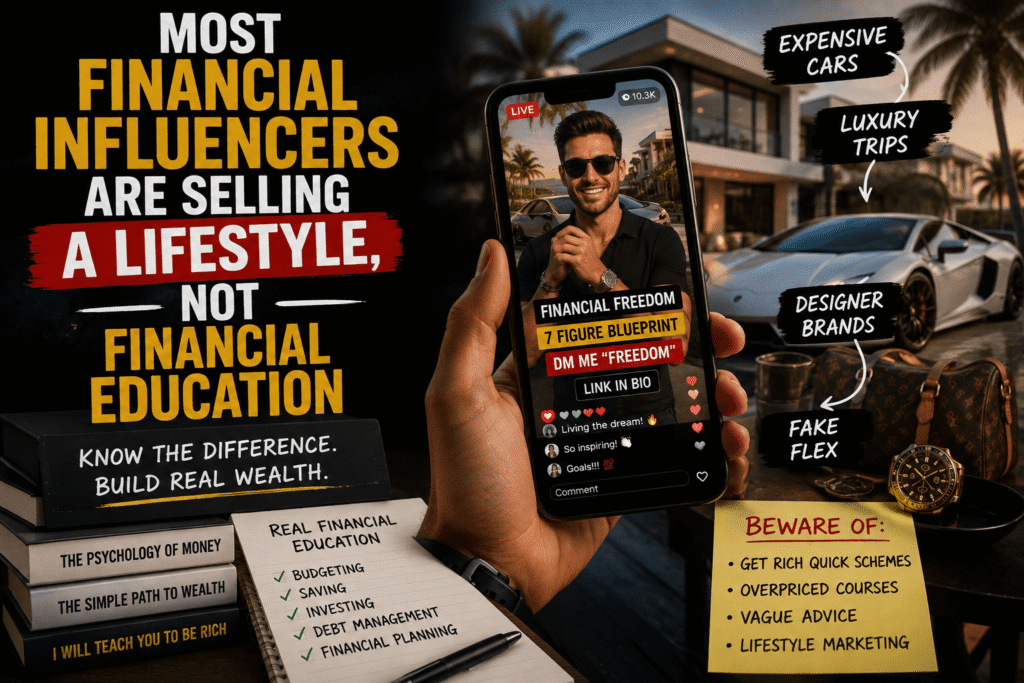
They show luxury cars. They show private jets. They show watches, penthouse apartments, and beachside offices. The message underneath all of this is clear: follow my advice and you can have this life.
I think this is one of the most damaging trends in personal finance content today. Here is why.
The Business Model of Financial Influencers
Most financial influencers do not earn their primary income from investing or saving. They earn it from content.
They earn money from advertising on YouTube. From affiliate commissions when you sign up for a brokerage using their link. From selling courses. From brand sponsorships. From speaking fees.
This matters because it creates a conflict of interest. The influencer profits when you watch, click, buy, or sign up. Not when you actually build wealth.
According to a 2023 report by the Financial Industry Regulatory Authority (FINRA), unregulated financial influencers, often called finfluencers, have become one of the primary sources of financial information for adults under 35. Yet most of them hold no financial qualifications. They are not licensed advisors. They face limited regulation. And they are not legally required to act in your interest.
The Lifestyle Is the Product
When a financial influencer shows you their Lamborghini, they are not sharing proof that their advice works. They are showing you what you want.
The car is an advertisement. It makes you think: if I follow this person, I could have that. So you subscribe. You buy the course. You keep watching.
This is a very old marketing technique applied to a new medium. Show people what they desire. Create an association between the desire and the product. Sell the product.
The influencer’s lifestyle content is not incidental. It is the strategy. Many of these creators invest heavily in production, props, and visual presentation to project a level of wealth that makes their financial content seem credible.
Some of them are genuinely wealthy. Others are performing wealth. And most audiences cannot tell the difference.
The Information Is Often Generic or Wrong
Here is what I have noticed about the actual financial content from many influencers: it is either very basic or occasionally misleading.
The basics, save more, spend less, invest early are true. But they are not unique. You can find that information in any library book for free.
The more detailed advice is where the problems appear. I have seen influencers recommend specific stocks without disclosing paid promotions. I have seen misleading claims about investment returns. I have seen real estate advice that ignores costs like taxes, maintenance, and vacancy.
In 2022, the Securities and Exchange Commission (SEC) in the United States charged multiple social media influencers with securities fraud. They had promoted stocks to their followers while secretly selling those same stocks at a profit. Their followers bought. They sold. The followers lost money.
This is an extreme case. But it shows what happens when people with large audiences and no accountability give financial advice.
Why Young People Are Most at Risk
People aged 18 to 34 are the primary audience for financial influencers. Research by CNBC found that 79 percent of Gen Z adults say social media is their main source of financial advice.
This group is beginning their financial lives. They are forming habits. They are making first decisions about savings, credit, and investing. These decisions will affect them for decades.
If the advice they receive is designed to sell them something rather than help them, and they cannot distinguish between education and marketing, the consequences are serious.
I think this is a genuine social problem. Not just an individual risk.
Not All Financial Influencers Are the Same
I want to be fair. Some financial creators provide genuine value.
They use clear disclaimers. They hold relevant qualifications. They do not sell products related to their advice. They recommend free resources as often as paid ones. They explain their own conflicts of interest openly.
These creators exist. They are worth finding. But they are often less visually exciting than the lifestyle-driven accounts. A qualified financial educator sitting in a plain room explaining compound interest will not go as viral as someone showing off a penthouse view.
The content that gets the most attention is often the content designed for attention, not education.
How to Tell the Difference
I use a simple test when I encounter financial content online.
First: does this person disclose how they make money? A trustworthy creator will tell you directly when content is sponsored, when links are affiliate links, and when they hold a financial interest in what they are recommending.
Second: does this person show credentials? Not all credentials matter equally, but a Certified Financial Planner (CFP), a Chartered Financial Analyst (CFA), or an equivalent qualification in your country shows that the person has passed regulated knowledge standards.
Third: does this person recommend free options as often as paid ones? Someone who genuinely wants to help you build wealth will point you to free resources when they exist. Someone who primarily earns from selling will push you toward products.
Fourth: does this person show losses and mistakes, not just wins? Real investing involves losses. Anyone who only shows profits is either very new to investing or selecting their results.
Frequently Asked Questions
Are financial influencers qualified to give financial advice?
Not always. Many financial influencers are content creators rather than licensed financial professionals, so it is important to verify their qualifications before acting on their advice.
What is the difference between a financial influencer and a financial educator?
A financial educator focuses on teaching concepts such as budgeting, investing, and financial planning, while a financial influencer may also earn money from sponsorships, affiliate links, courses, and other products they promote.
Can social media financial advice be trusted?
Some social media content provides useful financial education, but much of it is designed for engagement or marketing. Always verify investment or money advice using reputable financial sources.
What are finfluencers?
Finfluencers are social media creators who discuss investing, budgeting, saving, and other personal finance topics. Their advice may or may not come from regulated financial expertise.
How can I tell if a financial influencer is selling a lifestyle?
Look for excessive focus on luxury cars, expensive homes, travel, watches, or “get rich” messaging. If the content emphasizes aspiration more than education, it is likely selling a lifestyle rather than practical financial education.
Should I take investment advice from influencers online?
Treat online investment content as a starting point for research, not as a financial plan. For important decisions, rely on verified financial information and qualified professionals whenever possible.
Final Thoughts
I believe most financial influencer content is entertainment with a financial theme. Some of it is useful. Most of it is designed to keep you watching and buying.
This does not mean you should avoid all online financial content. It means you should approach it with the same scepticism you would apply to an advertisement. Because in most cases, that is exactly what it is.
Your financial decisions deserve better than viral content. They deserve verified information from qualified sources, combined with your own clear thinking about your specific situation.
The influencer’s Lamborghini is their business tool. Do not let it become your financial guide.