One of the biggest reasons beginners lose money in investing is not because the market is unfair. It is because they invest before doing proper research.
Many people buy stocks, cryptocurrencies, ETFs, real estate, or other assets simply because someone online recommended them, a friend mentioned them, or the price seems to be rising quickly. Unfortunately, that approach can become very expensive over time.
Learning what to check before investing in any asset can help you avoid emotional decisions, reduce unnecessary risks, and build stronger long term investing habits from the beginning. Smart investors do not invest based on hype alone. They study the asset, understand the risks, and make sure the investment fits their financial goals.
One of the first things to check before investing in any asset is whether you truly understand what you are buying.
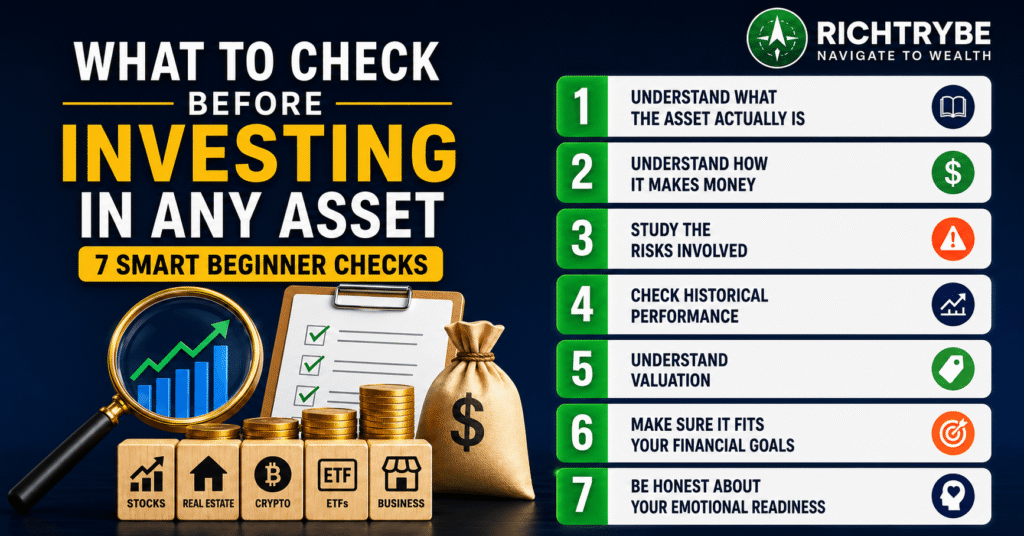
- What the asset is
- How it makes money
- The risks involved
- Historical performance
- Valuation
- Whether it fits their financial goals
- Their emotional readiness
These checks can help investors reduce emotional mistakes, avoid unnecessary risks, and make better long term investment decisions.
If you are still learning the foundations of investing, How to Start Investing Alone Without Making Costly Mistakes: 7 Smart Steps Every Beginner Should Take can help you build confidence before risking your money.
Why Beginners Often Invest in the Wrong Assets
Many beginners invest emotionally instead of logically. They see prices rising, hear success stories online, or feel pressure to join the trend before it is “too late.”
This often leads to poor investment decisions driven by:
- Social media hype
- Fear of missing out (FOMO)
- Friends recommending “hot” investments
- Lack of research
- Chasing quick profits
For example, many people bought cryptocurrencies during major price surges without fully understanding how the projects worked or the risks involved. When prices later declined, panic selling followed.
This is why learning how to research investments properly matters so much.
Smart investing starts with asking better questions before risking your money.
If you are serious about learning what to check before investing in any asset, developing a simple investment research process can help you make smarter financial decisions over time.
What to Check Before Investing in Any Asset
The good news is that you do not need to become a financial expert before you start investing. However, you do need a simple process that helps you evaluate opportunities carefully before risking your money.
Whether you are investing in stocks, ETFs, crypto, real estate, or other assets, asking the right questions before investing can help you avoid emotional decisions and build stronger long term habits.
These seven beginner investment checks can help you research investments more confidently and make smarter financial decisions over time.
1. Understand What the Asset Actually Is
Before investing, ask yourself a simple question:
What exactly am I buying?
Are you investing in:
- A stock
- An ETF
- Cryptocurrency
- Real estate
- A business opportunity
Too many beginners invest in assets they do not fully understand. If you cannot explain how an investment works in simple terms, you probably should not invest in it yet.
Before buying any asset, make sure you understand:
- What the asset is
- How it works
- Why people invest in it
- What affects its value
Understanding the investment itself is one of the most important parts of beginner investment research.
Practical Action
If you cannot explain the investment clearly to someone else, spend more time learning before investing.
2. Understand How the Asset Creates Value
Every investment should have a clear reason why it may grow over time.
Some assets generate value through:
- Business growth
- Rental income
- Dividends
- Interest payments
- Long term price appreciation
If you are evaluating an investment before buying, you need to understand where the potential returns come from.
For example, a stock may grow because the company increases profits over time. Real estate may generate value through rental income and appreciation. Bonds may produce returns through interest payments.
Many beginners buy assets simply because prices are rising. However, rising prices alone do not make an investment valuable.
If you are still learning investing basics, What to Do Before You Buy Your First Stock: 6 Smart Steps for Beginners can help you make more informed decisions.
Practical Action
Never invest in something only because people say it is “going up.” Understand the value behind the investment first.
3. Study the Risks Involved
Every investment carries risk.
The important question is not whether risk exists. The real question is whether you understand the risk you are taking.
When learning how to analyze investments, pay attention to risks such as:
- Market volatility
- Business risk
- Competition risk
- Economic downturns
- Liquidity risk
Some investments can fluctuate heavily in price. Others may become difficult to sell quickly during uncertain market conditions.
Many beginners who fail to learn what to check before investing in any asset often underestimate how much risk can affect their emotions during market downturns.
Understanding risk also means understanding yourself emotionally. Many people think they can handle investing losses until prices begin falling.
Practical Action
Ask yourself:
If this investment drops by 30%, will I panic and sell, or will I stay disciplined?
Your emotional tolerance matters just as much as the investment itself.
4. Check Historical Performance and Market Behavior
Past performance does not guarantee future results, but it can provide useful context.
When researching an investment, study:
- Long term price history
- Performance during market crashes
- Recovery speed
- Growth consistency over time
This helps you separate strong long term assets from temporary hype cycles.
For example, some investments experience massive short term price increases but collapse just as quickly. Others may grow more slowly but remain stable over long periods.
Strong investing is usually built on consistency, not excitement.
Practical Action
Look for long term patterns and stability instead of chasing short term trends.
5. Understand Valuation Before Buying
A great asset bought at the wrong price can still become a poor investment.
One of the most common beginner mistakes is confusing popularity with value. When prices rise quickly, many investors rush in because they fear missing out.
Before investing, ask yourself:
- Is this asset overpriced?
- Has hype pushed the price too high?
- Am I investing emotionally instead of logically?
Price matters, but value matters even more.
Many beginners buy investments after large price increases because they assume the growth will continue forever. In reality, emotional buying often leads to buying near market peaks.
Understanding valuation is an important part of learning what to check before investing in any asset because even strong investments can become risky when bought at inflated prices.
Practical Action
Never assume an asset is a smart investment simply because the price keeps rising.
6. Make Sure the Investment Fits Your Financial Goals
Not every investment is right for every person.
A good investment for someone else may not fit your situation, goals, or timeline.
Before investing, ask yourself:
- Am I investing for long term wealth?
- Do I want passive income?
- Am I investing for retirement?
- Is my goal financial independence?
- Am I focused on long term growth?
Your investments should support your personal financial plan rather than random trends online.
If you are still building confidence as a beginner investor, How to Build Confidence Before Investing: 7 Smart Steps Every Beginner Should Take can help you become more comfortable making investment decisions.
Practical Action
Only invest in assets that align with your financial goals and long term strategy.
7. Be Honest About Your Emotional Readiness
Sometimes the biggest investing problem is not the asset itself.
Sometimes the problem is emotional decision making.
Before investing, ask yourself:
- Can I handle market volatility?
- Can I avoid panic selling?
- Can I stay patient during downturns?
- Am I investing based on logic instead of hype?
Many beginners underestimate how emotional investing can become during market crashes or sudden price swings.
Successful investing often depends more on emotional discipline than perfect market timing.
Practical Action
Emotional control is one of the most valuable investing skills you can develop.
Quick Investment Checklist for Beginners
Before investing in any asset, ask yourself:
✅ I understand the asset
✅ I know how the investment creates value
✅ I understand the risks involved
✅ I researched the fundamentals
✅ I am not investing because of hype
✅ The investment fits my financial goals
✅ I am emotionally prepared for volatility
This simple investment research checklist can help beginners avoid expensive mistakes and make smarter financial decisions.
| What to Check | Why It Matters |
|---|---|
| Asset Type | Helps you understand what you are buying |
| Risk Level | Reduces emotional investing mistakes |
| Historical Performance | Shows long term consistency |
| Valuation | Helps avoid overpaying |
| Financial Goals | Keeps investments aligned with your plan |
| Emotional Readiness | Reduces panic decisions during volatility |
Common Mistakes Beginners Make Before Investing
When beginners skip research, they often:
- Buy because other people are buying
- Ignore investment risks
- Chase hype and trends
- Invest emotionally
- Focus only on price increases
- Expect fast profits
Many investing mistakes happen because people want quick results instead of long term growth.
Preparation creates confidence. Emotional decisions create costly mistakes.
Understanding what to check before investing in any asset can help beginners make more informed investment decisions and avoid common emotional mistakes.
Frequently Asked Questions
How do beginners research investments?
Beginners can research investments by understanding the asset, studying risks, reviewing historical performance, checking valuation, and making sure the investment aligns with their financial goals.
What is the most important thing to check before investing?
One of the most important things to check before investing is whether you fully understand the asset and the risks involved.
Why do beginners lose money investing?
Many beginners lose money because they invest emotionally, follow hype, ignore research, and chase quick profits instead of focusing on long term investing principles.
Should beginners invest based on social media advice?
Social media can introduce investment ideas, but investment decisions should always be based on independent research and personal financial goals.
Final Thoughts
Learning what to check before investing in any asset is one of the most valuable investing skills beginners can develop.
The goal is to make informed decisions that can build wealth over time.
Learning what to check before investing in any asset can help you avoid emotional mistakes, reduce unnecessary risks, and become a more confident investor.
The most successful investors do not blindly follow trends. They research investments carefully, understand risk, evaluate value, and make decisions that support their long term goals.
If your goal is protecting your money while building long term wealth, How to Avoid Losing Money as a Beginner Investor: 7 Smart Rules to Protect Your Money is an excellent next step in your investing journey.