Saving money and building wealth are not the same thing. A savings account keeps your money safe, but it rarely makes it grow fast enough to change your financial position.
The shift happens when you learn how to turn small savings into wealth-building assets. Instead of leaving money idle, you convert it into investments that can appreciate, generate income, or compound over time, even when you start with modest amounts.
This guide walks through five strategies that work regardless of how much you are starting with, and explains exactly how to put them into practice.
Before you begin, read Why Assets Matter More Than Income: 7 Reasons Wealth Builders Focus on Ownership to understand why ownership is the true driver of long-term wealth creation.
Quick Answer: How to Turn Small Savings Into Wealth-Building Assets

How to turn small savings into wealth-building assets starts with gradually moving money from cash holdings into investments that can grow your net worth over time.
Common ways to turn savings into investments include:
- Broad-market index funds
- ETFs
- Retirement accounts
- Fractional shares
- High-yield savings accounts
- Income-producing assets
The key is consistency. Even small amounts invested regularly can compound into significant wealth over time. Rather than allowing savings to sit idle, successful investors convert savings into assets that have the potential to appreciate, generate income, and support long-term financial freedom.
Why Saving Alone Is Not Enough
Saving money is an important financial habit, but savings alone rarely create substantial wealth.
Traditional savings accounts often struggle to outpace inflation, meaning purchasing power can decline over time. While emergency savings provide security, long-term wealth is usually built through ownership.
This is where many people get stuck. They successfully save money but never take the next step toward investing.
The difference between savers and wealth builders is simple:
- Savers accumulate cash.
- Investors accumulate assets.
The goal is not to stop saving. The goal is to use savings strategically to acquire assets that can grow in value over time.
As discussed in How to Build Assets Instead of Liabilities: 5 Smart Wealth-Building Strategies, wealth creation begins when money is directed toward ownership rather than consumption.
Why Small Savings Can Still Build Wealth
Many beginners underestimate the power of small investments.
A common misconception is that investing only becomes worthwhile once you have thousands of dollars available. In reality, the combination of consistency and compound growth often matters more than the size of your initial investment.
Small savings can become meaningful wealth because:
- Investing platforms have low entry barriers.
- Fractional investing allows small purchases.
- Compound growth rewards consistency.
- Time magnifies investment returns.
- Regular contributions build momentum.
The most important factor is getting started. Waiting until you have a large amount of money often delays wealth creation unnecessarily.
How to Turn Small Savings Into Wealth-Building Assets
Saving money is an important first step, but savings alone rarely create significant wealth. The real transformation happens when savings are converted into assets that can grow in value, generate income, or both.
Many people treat saving as the final goal. Wealth builders view saving differently. They see savings as temporary capital waiting to be deployed into productive assets. Every dollar saved represents future ownership, future cash flow, and future net worth growth.
The objective is not simply to accumulate cash. The objective is to gradually turn savings into investments that can compound over time and contribute to long-term wealth creation.
Strategy 1: Build a Financial Foundation First
Before focusing on growth, establish financial stability.
One of the biggest mistakes new investors make is investing money they may need in the near future. When unexpected expenses arise, they are often forced to sell investments at the wrong time or take on high-interest debt.
A strong financial foundation should include:
- An emergency fund
- Stable monthly cash flow
- High-interest debt under control
- Consistent savings habits
Think of this foundation as financial infrastructure. Just as a building requires a strong base before additional floors can be added, your wealth-building strategy needs stability before aggressive investing begins.
This is why the most effective small savings investment strategies start with risk management before focusing on returns.
Strategy 2: Invest in Broad-Market Index Funds
For most beginners, index funds represent one of the simplest and most effective ways to convert savings into assets.
Rather than attempting to identify individual winning stocks, index funds allow you to own a small piece of hundreds or even thousands of companies through a single investment.
This approach offers several advantages:
- Broad diversification
- Lower investment risk
- Minimal research requirements
- Low management fees
- Long-term growth potential
More importantly, index funds allow beginners to focus on the habit of investing rather than the stress of constantly choosing investments.
Historically, much of long-term stock market wealth has been created through broad ownership of productive businesses rather than trying to predict short-term winners. This makes index funds one of the most reliable tools for growing wealth from small savings.
Strategy 3: Use ETFs to Build Flexible Asset Ownership
Exchange-Traded Funds (ETFs) offer many of the same benefits as index funds while providing additional flexibility.
An ETF can give you exposure to:
- Entire stock markets
- Specific industries
- Dividend-paying companies
- Bonds
- International markets
- Real estate sectors
For beginners, ETFs simplify investing because they provide instant diversification without requiring large amounts of capital.
They also make it easier to invest consistently. Instead of waiting until you have substantial savings, you can gradually purchase ETF shares over time and steadily increase ownership.
This makes ETFs one of the most practical ways to turn savings into investments while keeping your portfolio diversified and manageable.
Strategy 4: Use Fractional Shares to Eliminate Capital Barriers
Many people delay investing because they believe they need thousands of dollars to get started.
That belief is one of the biggest obstacles to wealth building.
Fractional investing allows you to purchase a portion of a stock rather than an entire share. This means even small amounts of money can immediately begin participating in the market.
Benefits include:
- Extremely low starting capital requirements
- Access to high-quality companies
- Faster portfolio diversification
- Immediate investing experience
More importantly, fractional investing helps build the habit of ownership.
Successful investors rarely become wealthy because they made one large investment. More often, wealth is built through hundreds of small investing decisions made consistently over many years.
Fractional investing makes this process accessible to almost anyone and is one of the most effective ways to build assets with little money.
Strategy 5: Prioritize Retirement Accounts for Long-Term Growth
Retirement accounts are among the most powerful wealth-building tools available because they combine investing with long-term discipline.
Many retirement accounts offer benefits such as:
- Tax advantages
- Automatic contributions
- Long-term compounding
- Reduced emotional investing
- Structured wealth accumulation
What makes retirement accounts particularly valuable is time.
Small contributions made consistently over decades can grow into substantial asset portfolios through the power of compound growth.
Retirement investing also encourages a long-term mindset. Instead of focusing on short-term market fluctuations, investors learn to think in years and decades, which is often where the greatest wealth-building results occur.
For many individuals, retirement accounts eventually become their largest financial assets and one of the most important components of their overall net worth.
As discussed in The First Assets Every Beginner Should Focus On, retirement accounts are often among the best starting points for beginner investors.”
The Real Goal: Turning Savings Into Ownership
The common thread connecting all successful wealth-building strategies is ownership.
Every time you invest part of your savings into productive assets, you are purchasing future growth, future income, and future financial flexibility.
The amount matters far less than the process.
People often underestimate how powerful small amounts can become when invested consistently. A modest investment habit maintained for years can outperform sporadic large investments because consistency allows compounding to work uninterrupted.
This is why learning how to turn small savings into wealth-building assets is so important. The goal is not to save money forever. The goal is to use savings as a bridge to ownership, allowing your money to gradually become assets that work on your behalf and contribute to long-term wealth creation.
The Power of Compounding Small Investments
One of the most effective ways of growing wealth from small savings is through compound growth. Compounding occurs when your investments generate returns and those returns remain invested, allowing future growth to build on both your original investment and previous gains.
In simple terms, your money starts earning money, and over time, those earnings begin generating earnings of their own. This creates a powerful snowball effect that becomes stronger the longer you stay invested.
This is why successful investors focus on turning savings into investments as early as possible. What starts as a small amount of money can gradually grow into significant wealth-building assets simply because it has more time to compound.
Whether you’re using index funds, ETFs, retirement accounts, or other small savings investment strategies, consistency is often more important than the amount you invest initially. The key to converting savings into assets is starting early, investing regularly, and allowing compound growth to do the heavy lifting over the long term.
Common Mistakes to Avoid
Learning how to turn small savings into wealth-building assets is not just about knowing what to invest in, it’s also about avoiding the mistakes that prevent savings from becoming long-term wealth.
Some of the most common mistakes include:
- Waiting for the perfect time to invest: Many people delay investing while waiting for ideal market conditions, often missing years of potential compound growth.
- Keeping too much cash indefinitely: While savings are important, excessive cash holdings can lose purchasing power over time due to inflation.
- Chasing speculative opportunities: Trying to get rich quickly can lead to unnecessary risk and distract from proven small savings investment strategies.
- Investing emergency funds: Money needed for short-term expenses should remain accessible rather than being invested in assets that may fluctuate in value.
- Failing to invest consistently: One of the biggest obstacles to growing wealth from small savings is investing sporadically instead of building a regular investment habit.
The most successful investors understand that wealth creation is rarely the result of a single investment decision. It is usually the outcome of consistently turning savings into investments, avoiding major mistakes, and allowing time and compounding to work in their favor.
As discussed in Why Most People Never Build Wealth, the greatest risk is often not making a bad investment, it’s never getting started. Consistently taking small steps to convert savings into assets can produce far greater results than waiting indefinitely for the perfect opportunity.
The Long-Term Impact of Growing Wealth From Small Savings
Many people underestimate what consistent investing can achieve because the results are often invisible in the beginning. However, every contribution increases your ownership stake in wealth-building assets and creates more opportunities for future growth.
Over time, several powerful changes begin to occur:
- Net worth steadily increases as investments appreciate.
- Asset ownership expands across multiple investments.
- Compound growth accelerates portfolio growth.
- Passive income opportunities become more accessible.
- Financial confidence improves as wealth accumulates.
- Dependence on earned income gradually decreases.
- Financial freedom becomes increasingly achievable.
The most successful investors rarely start with large sums of money. They succeed because they consistently turn savings into investments, remain patient, and allow time to multiply their efforts.
How Small Savings Can Change Your Financial Future
Once you understand how to turn small savings into wealth-building assets, saving takes on a new purpose.
Instead of viewing savings as money that sits idle, you begin viewing it as future ownership.
Over time:
- Saving becomes more intentional.
- Investing becomes more consistent.
- Asset ownership grows steadily.
- Net worth increases.
- Wealth creation becomes more predictable.
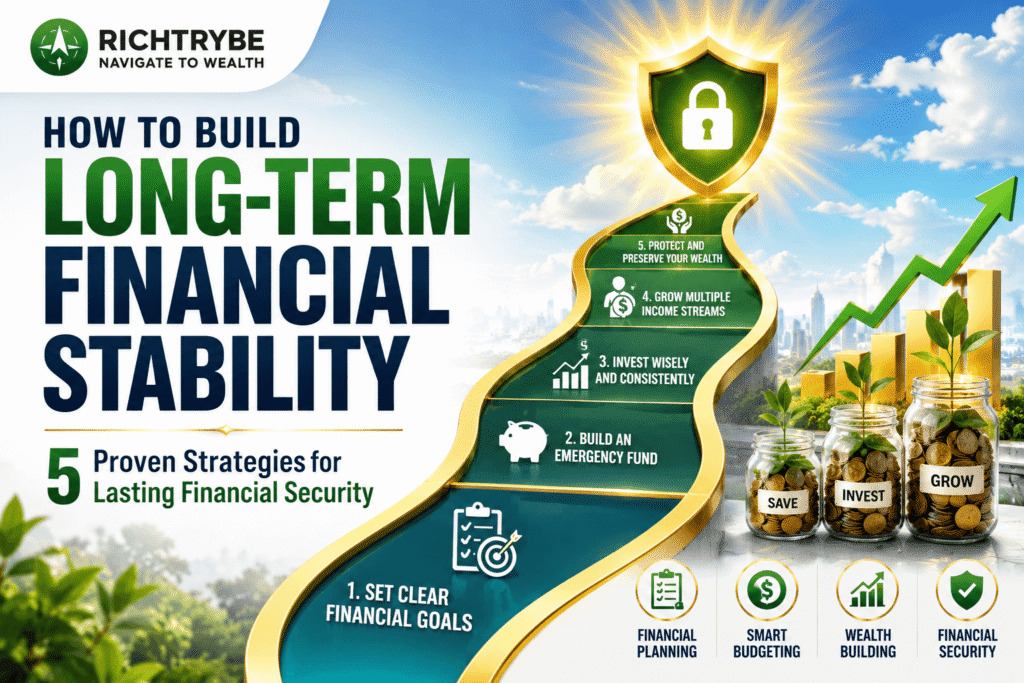
As discussed in How to Build Long-Term Financial Stability, lasting wealth is often the result of small financial decisions repeated consistently over many years.
FAQs
How can I turn small savings into investments?
You can start by investing in index funds, ETFs, retirement accounts, or fractional shares through low-cost investment platforms.
Can I build wealth with small amounts of money?
Yes. Consistent investing combined with compound growth can turn small contributions into significant wealth over time.
What are the best wealth-building assets for beginners?
Common options include index funds, ETFs, retirement accounts, fractional shares, and income-producing assets.
Why is saving alone not enough?
Savings provide security, but assets are what typically generate growth, appreciation, and long-term wealth.
How much money do I need to start investing?
Many platforms allow investors to begin with very small amounts through fractional investing and low-cost funds.
Final Thoughts
Learning how to turn small savings into wealth-building assets is one of the most practical financial skills you can develop.
The amount you start with matters far less than the habit you build. Small investments made consistently can become meaningful wealth when given enough time to grow.
The goal is simple: save consistently, invest wisely, and gradually transform cash into assets that work for you.
If you’re ready for the next step, read How to Transition From Income to Assets to learn how to systematically convert earned income into long-term wealth-building ownership.